
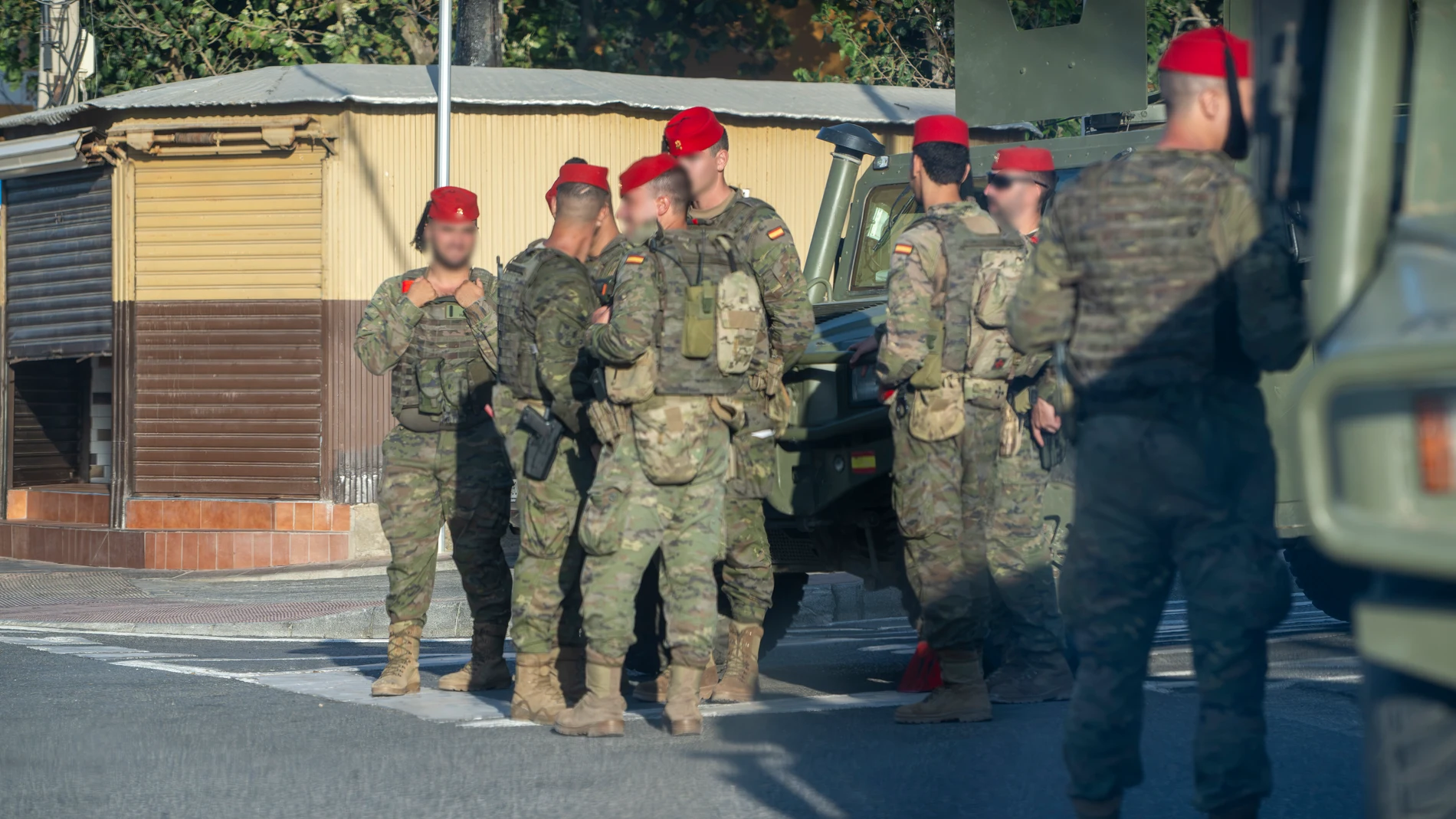
In May, the Ministry of Defense contracted a batch of vacations in Morocco for Army personnel which, by a coincidence of fate, was located in the middle of the largest migration crisis suffered by Ceuta in its history, where more than 3,000 members of the Armed Forces remain deployed.
LA RAZÓN yesterday contacted the department headed by Margarita Robles to find out if the tour, scheduled between August 3 and 10 – just four days after more than 72,000 people crossed the border irregularly – remained as planned or was suspended as a result of the crisis. Defense alleges that these are “vacation and cultural destinations that are always offered.” And he talks about “chance.” The trip was organized months before, included in the Army’s call, published in the Ministry’s Official Gazette, to which this newspaper has had access.
The call includes 30 places to travel to Morocco, among other international destinations such as Italy, France or Germany, within Social Action activities. And it establishes a fixed price of 966.79 euros per person on a full board basis. In addition, the call reserves six places for personnel assigned to the operations area.
These types of international trips are primarily aimed at military personnel, professionals from the Army and the Common Corps assigned to their Social Action on active duty, although other categories can also access as beneficiaries: reserve or retired personnel and some family members. For this reason, the documentation to which this newspaper has had access does not allow us to conclude that the 30 positions were occupied exclusively by active military personnel. In May, the BOE published the formalization of the International Travel Framework Agreement for the year 2026 of the Army, where Morocco appears as lot number 10 and was awarded to the Nautalia Viajes agency for an offer of 29,181.82 euros.
The program was also closed. The participants had to leave Madrid for Marrakech on August 3 to begin a tour of eight days and seven nights through different parts of the country. The itinerary included Marrakech, Ouarzazate, the Todra Gorges, Merzouga, Fez, Meknes, Chefchaouen and Tangier. There were sightseeing tours, 4×4 excursions, a camel ride through the dunes and accommodation in a desert camp.
But this paradisiacal route acquired a dimension after July 30 that no one could have foreseen when it was designed. The visit to Chefchaouen was scheduled for August 9, a town that the Army’s own brochure places «100 km from Ceuta». The next day, the group had to travel to Tangier to return to Madrid.
On the other side of the border, meanwhile, his Army colleagues were deployed. The massive entry on July 30 forced the mobilization of the troops of the General Command of Ceuta to support the Security Forces and Bodies and deal with the consequences of an avalanche that overwhelmed the ordinary response capacity of Ceuta.
Precisely on August 3, the date set for the beginning of the trip to Marrakech, military personnel participated in the transfer to the Tarajal border of hundreds of migrants located in different parts of the city. The call also established that those awarded the places had to pay the corresponding amount in full by transfer to the agency and set June 5 as the deadline to make the payment. It also expressly regulated resignations and cancellation costs: from no payment if waived more than fifteen days in advance to 100% of the amount when there were less than four days left..
The call also expressly left open the possibility of changing plans. Defense established that any of the trips could suffer “partial modifications due to unforeseen causes” or even their “complete cancellation” due to lack of demand “or for other reasons.” That is, the Army formally had mechanisms to cancel the activity if the circumstances after March so advised. The pressure on the troops deployed in Ceuta reached the point that Defense restricted the releases of the personnel of the General Command of Ceuta in response to the calls spread on social networks to try a new massive entry on the 15th.
The order forced the military to be kept available and left extraordinary releases limited to “exceptional cases, duly justified,” in addition to suspending the days of own business until further orders. The instruction, signed by the head of the Command, affected the different units deployed in the city, including the Group of Regulars, the Logistics Unit and the Engineer Regiment. And that wasn’t a vacation.