
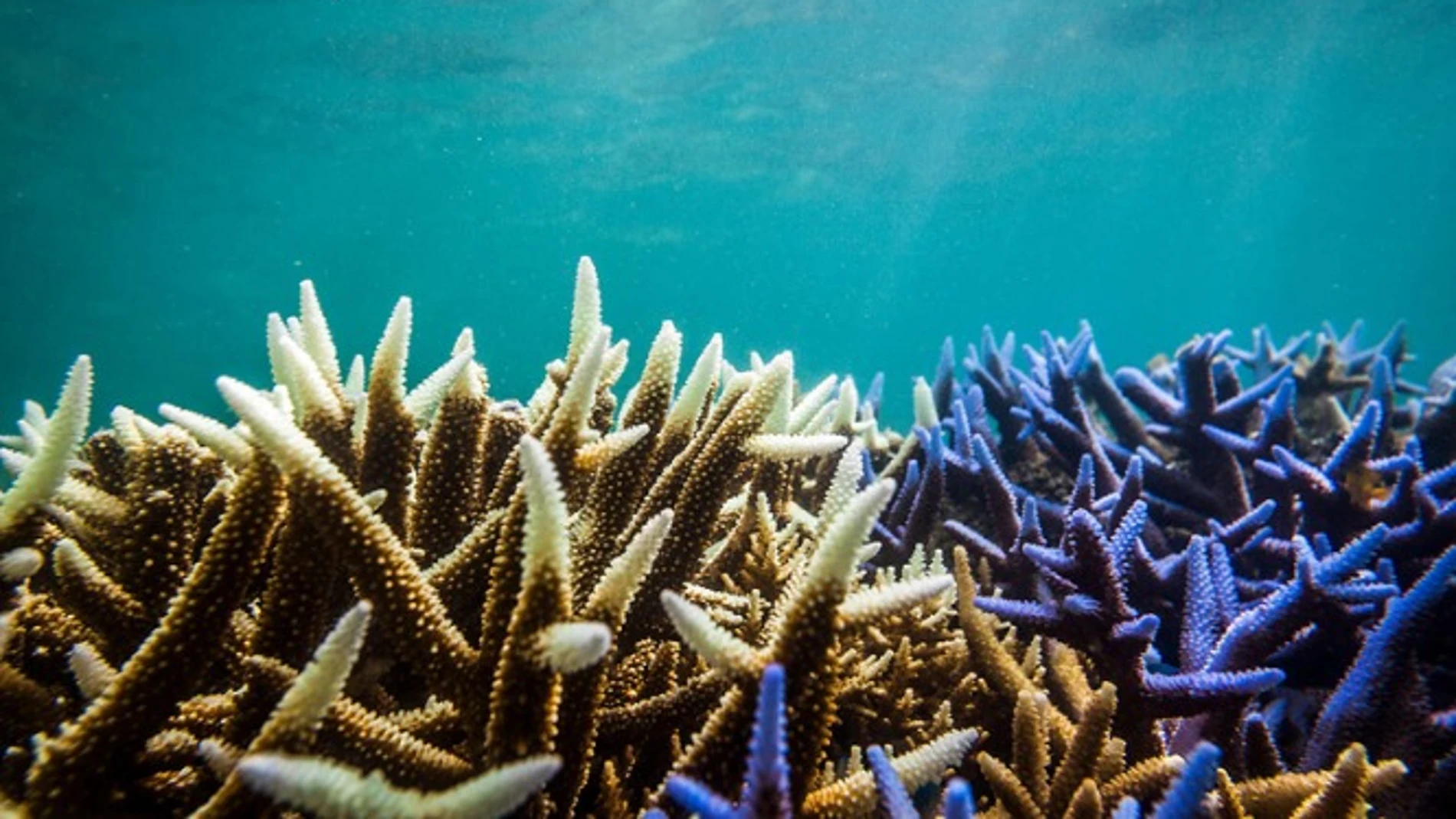
Over millions of years, the coral reefs They have been formed until they become one of the most valuable ecosystems on the planet. Although they occupy less than 1% of the seabed, they support nearly a quarter of all marine biodiversity, protect thousands of kilometers of coastline, feed hundreds of millions of people, and generate trillions of dollars in economic activity.
However, despite the multiple benefits they generate, today they face an unprecedented crisis and are disappearing at an alarming speed due to rising water temperatures. In the Australian Great Barrier Reef, various research supported by the International Union for Conservation of Nature (IUCN) highlights that, between February and April 2024, 80% of reefs suffered bleaching and that, just two months later, in July, 44% of the affected corals had already died.
Scientific forecasts leave no room for optimism if urgent action is not taken. The IPCC Sixth Assessment Report warns of extremely high risks of biodiversity loss in coral reefs and notes that, with With 2°C global warming, up to 99% of reefs could disappear of coral on the planet.
Huge consequences
According to data from United Nations Environment Program (UNEP)coral reefs are present in more than 100 countries and territories. Their ecological function is comparable to that of tropical forests on land; both act as a refuge and nursery for countless species, many of them essential for global fishing.
The ecological consequences of its disappearance are enormous. Reefs support extraordinary biodiversity and many fish species depend on them, so their deterioration directly threatens global fisheries and the food security of millions of people.
To the ecological dimension of this crisis we must add the economic and social losses. Various reports from the World Economic Forum estimate that coral reefs provide economic output valued at nearly $10 trillion annually from fishing, tourism and coastal protection. In addition, about a billion people depend on them for food, income, protection from storms.
In addition to their economic value, for the Reef-World Foundation, dedicated to the protection of coral reefs, these ecosystems function as natural barriers against hurricanes, storms and floods. Its structure reduces the force of the waves and protects numerous communities, which is why they warn that with its disappearance the damage caused by storms could multiply, flooding would increase significantly and millions of people would be much more exposed to natural disasters.
Save what’s left
The scientific community and international organizations agree that there are still options to avoid the total collapse of these ecosystems, although the margin for action is increasingly narrow. If they agree on the diagnosis, they also seem to agree when applying possible solutions. There are three lines of action proposed: reducing greenhouse gas emissions, combating pollution, overfishing and uncontrolled coastal development and accelerating coral restoration projects through the reproduction and reintroduction of more heat-resistant species.
The World Economic Forum has also highlighted the financial dimension of the problem. Despite the enormous ecological and economic value of reefs, there is a significant funding gap that is delaying global protection and restoration efforts. Experts insist that it is necessary to multiply international investment to avoid its irreversible collapse.