
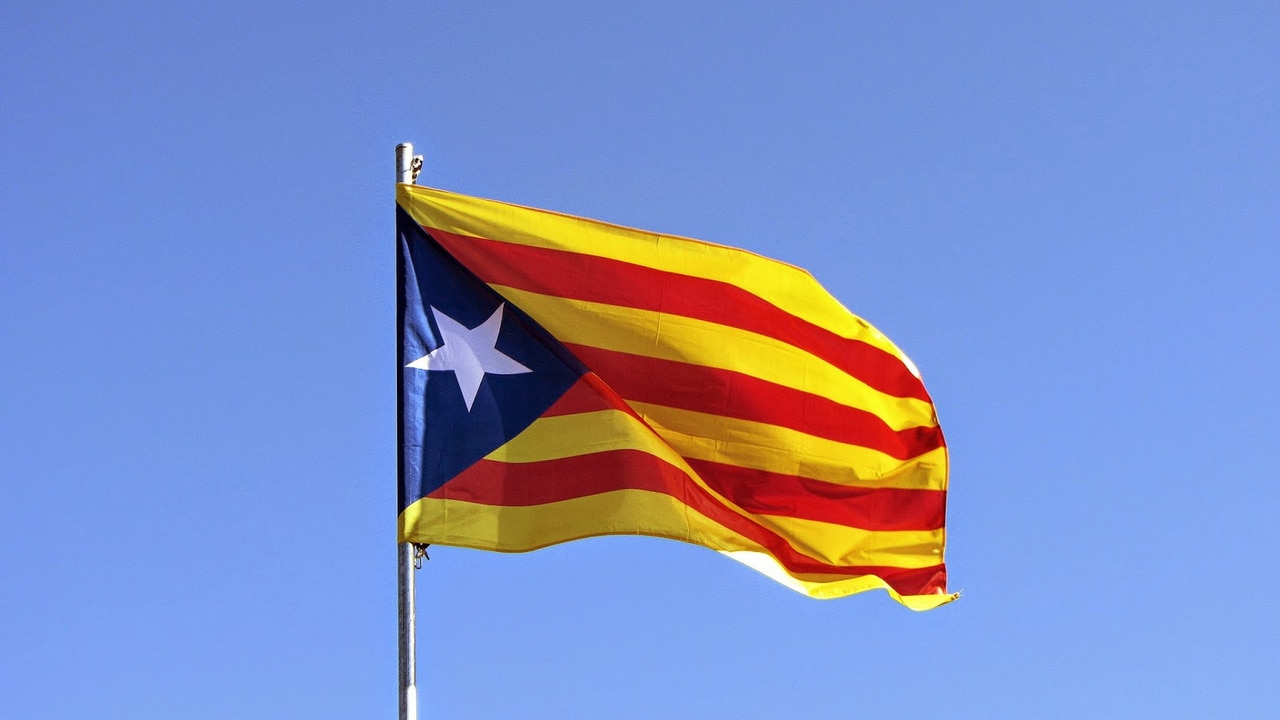
The trickle of companies that decide to move their headquarters outside of Catalonia has remained incessant since 2017, the peak year of the “procés” and 1-O, direct causes of this process of destruction of the Catalan business fabric. And the latest figures support that this relocation process maintains the region chaired by Salvador Illa as the one in which the most companies decide to leave this territory. Those who have moved their registered office from Catalonia to another community since the end of 2017 reach almost 5,000, according to the latest study by Informa D&B, although the College of Registrars raises that figure to above 10,000. In both cases, Catalonia leads the ranking of negative balance.
A total of 4,020 companies have moved their headquarters to another community during the first three quarters of 2024, 4% less than the previous year when they exceeded 4,180, but far from the figures at the end of 2017, when changes of address experienced a “boom” as a consequence of the independence referendum, reaching 6,276 in the accumulated number of 2018, according to the latest study by Informa D&B with data officers.
Since then, Catalonia has remained uninterruptedly the leader of this negative statistic, 39 quarters being the one that loses the most companies due to a change of headquarters, to the benefit of the Community of Madrid, which maintains 36 quarters with positive balances between arrivals and departures. company departures, followed by Andalusia (43), the Balearic Islands (32) and the Valencian Community (26), which are precisely the ones that have welcomed the most companies from Catalonia, which closed the third quarter with a negative balance of 75 companies and a cumulative of 185 company departures in the annual count – corresponding to 128 that have decided to settle in this region and the 203 that have left. Andalusia has the largest positive balance of the quarter, totaling 43, with a better performance than the 16 that remained in the third quarter of 2023, receiving 151 companies – the majority from Catalonia – compared to the 108 that have left the community. In global terms, 28% of the companies that have come to Madrid come from Catalonia and 15% from Andalusia. The community to which the most Madrid companies decide to move is Andalusia, 21%, followed by Catalonia where 17% leave.
Madrid also leads the balance in favor of sales of the transferred companies. According to the sales declared by the companies that have moved during the third quarter, Madrid is the one that adds the most difference due to these changes of address, 219 million euros. Galicia follows, adding 128 million euros, while Catalonia, despite being the one with the largest negative balance by number of companies, adds 114 million in the comparison of the sales of the companies that have moved their headquarters, to receive companies with greater economic weight. The ten companies with the highest turnover that have changed their address between June and September have sales of close to 900 million euros.
This continuous trickle of companies that decide to leave Catalan territory to settle in other regions has also had its effect on economic activity and the evolution of regional GDP. And one of the biggest beneficiaries has also been the Community of Madrid, which has continued to increase its distance from Catalonia, and continues to consolidate itself as the largest business engine in Spain and the one with the greatest weight on the national GDP, with 19. 6% of the total in 2023 – the last full year –, compared to the 18.8% that Catalonia has, according to the latest data from the Regional Accounting published by the INE.
Madrid’s GDP at current prices already exceeds 293,000 million euros, while the Catalan GDP does not reach 282,000. A difference that has increased by 2,331 million in the last year, for a total of 11,224 million, 26% more compared to last year and 123% compared to 2022.
Since 2017, the year of 1-O, Madrid achieved the economic “sorpasso” by one tenth and, since then, the weight of its economy continues to rise, increasing a minimum of one tenth each year, while the Catalan GDP has been three exercises staying stagnant with the same percentage. In just two years, the gap between the two largest regional economies has widened in favor of Madrid, which has distanced itself by 6,206 million since 2022.
The community chaired by Isabel Díaz Ayuso is also the one with the highest GDP per capita, with 42,198 euros per inhabitant, while Catalonia is almost 7,000 euros lower, with 35,325 euros per inhabitant. The national average is 30,968 euros.
This has made Madrid the community with the most solidarity with the rest of the regions, since it contributes 25% of its tax revenue to the entire regional financing system, about 3.5 times the contribution of Catalonia and the Balearic Islands together, the two that They follow him in the ranking, despite Catalan complaints regarding taxation.
The Madrid community is also the one that exerts the least tax pressure on families and companies. Quite the opposite of Catalonia, which exerts the highest tax pressure in Spain. The total calculation of national collection is close to 272,000 million, of which Madrid contributes 45% of the total, more than double the 20% of Catalonia. This would be another reason why companies and large assets prefer to settle outside the Catalan region and move to Madrid.