
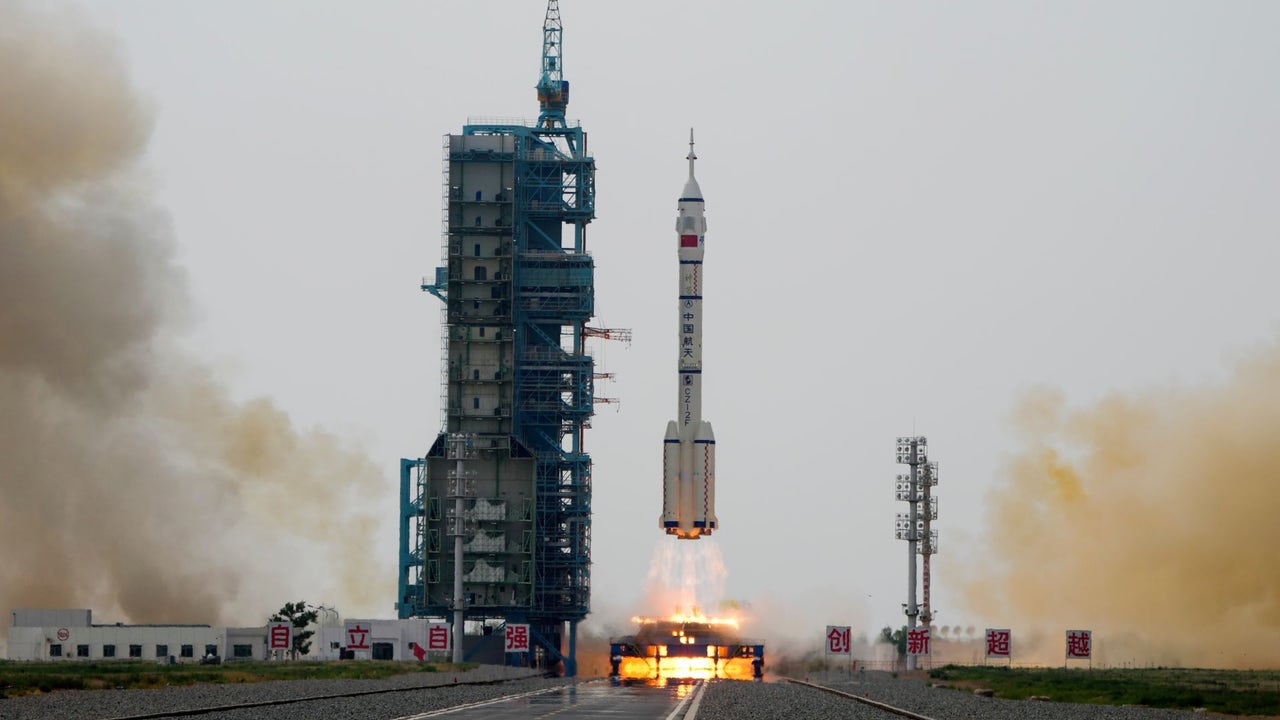
China has been planning its Moon for years and has now taken a giant step by completing a fundamental test of its Long March-10 rocket. This test approaches country one more step to its ambition to carry Chinese astronauts to the lunar surface for 2030.
In the recent test, the first stage of the rocket was lit on land on the island of Hainan (China coastal space). This stage, equipped with seven YF-100K engines, It was lit for 30 seconds, generating approximately 900 tons of thrustaccording to Chinese media.
It is important to highlight that engines worked synchronized, which is crucial for stability. The test also provided a lot of data to prove the concept and help improve future rocket iterations.
https://www.youtube.com/watch?v=-_vo3ki1vtu
“The test confirmed that engines They could work synchronized both in normal and high potenti conditionsA, and provided a complete set of data, ”said China’s manned space agency.
The Long March-10 It is significantly more powerful than any rocket that China has used before, with approximately three times the thrust of his current great march-5. With a height of 92 meters, it will have 21 engines functioning simultaneously: seven in the nucleus and seven in each of its two propellers.
The development of the Long March-10 began in 2017 and is based on decades of research and development of liquid rocket engines. The recent test is also based on a previous milestone achieved in June last year, When three engines of the first stage YF-100K lit simultaneously for several minutes.
“The existing test banks could not support the huge loads generated by the rocket’s thrust, so The team used a real launch platform to carry out the thrust test of almost 1000 tons“said Guo Wei, subcomandante in chief of the rocket, to China Daily.
The rocket You can send 27 tons (approximately the mass of a small house) towards the moon. This rocket is essential for China’s plan to alunizar astronauts in the late decade.
In total, the mission will require two separate releases: one, called Mengzhou, to transport the crew, and the other, Lanyue, to carry the landing module. According to the plan, both vehicles will be found and attached to lunar orbit, which will allow astronauts to transfer to the landing module and descend to the surface. Beyond the initial moanation, China and its partners (including Russia) they want to build a lunar base in the South Pole by 2035, called the International Lunar Research Station (Ilrs).
This was the first real -scale static firefire test on a real launch platform, since conventional test banks could not support the immense thrust. During the test, The engineers also evaluated heat -resistant coatings, failure detection systems and multimotor system reliabilityall of them crucial before the launch of humans.
According to reports, China is also working in a reusable version (Long March-10a) For Missions in Earth orbit. Similar in concept of the Falcon 9 of Spacex, this version will not be used for the lunar mission, but for trips to the space station.
This test served as a general trial for the power of the lunar rocket engine. China is well aimed to bring humans to the moon around 2030 and then build a permanent base. This test successfully demonstrated that it can handle the gross power necessary to achieve these objectives.