
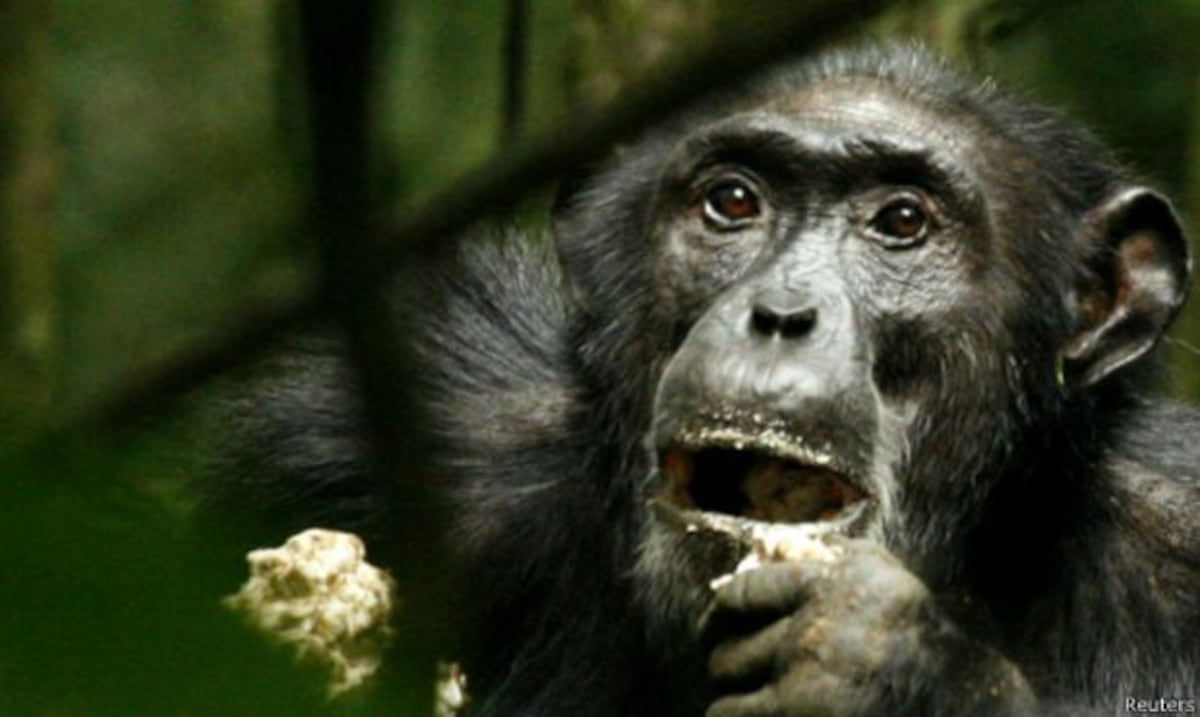
They are not aware, but through the fermented fruit they ingest, chimpanzees drink alcohol. Specifically, they take the equivalent of about two standard daily alcoholic beverages, according to a study published Wednesday in the journal Science Advances.
The research, conducted by an international team of scientists coordinated by the University of California in Berkeley, has been carried out with wild chimpanzees in Uganda and Ivory coast.
The study has verified that male and females chimpanzees consume about 14 grams of pure ethanol per day, “which is equivalent to a standard American alcoholic beverage”, a measure that, adjusted to body weight, a chimpanzee It weighs about 40 kilos of average in front of the 70s of an average human, it means that they take “almost two drinks per day,” explains Aleksey Maro, from the University of California and main author of the study.
Although it is not clear if animals look for fruits with high levels of ethanol -it is found in the most mature pieces with more sugars to ferment -the truth is that alcohol is a usual part of their dietA, and probably also was part of the diet of our human ancestors, the authors conclude.
Almost two drinks a day
Scientists believe that studying this behavior in non -human primates in nature could help explain why the attraction of human beings for alcohol persists today.
Therefore, the team examined the amount of alcohol that chimpanzees ingested through food and quantified ethanol concentrations in 21 fruits collected in Ngogo (Uganda) between 2017 and 2018 and Taï (Ivory Coast) in 2021 and saw that, on average, they had 0.32 % and 0.31 % of ethanol, respectively, in the samples of each country.
The most consumed fruits in each place – the fig, Ficus Musuco, in Ngogo, and the fruit similar to the plum in Taï – were the ones that had the most alcohol.
Since chimpanzees usually eat around 4.5 kilograms of fruit per day, they estimated that animals would ingest the equivalent to around 1.4 standard drinks per day according to international standards.
“Chimpanzees eat between 5% and 10% of their body weight per day in ripe fruit, so even low concentrations produce a high daily total, a considerable dose of alcohol,” says Robert Dudley, a professor at the University of California at Berkley and co -author of the study.
Fruit consumption occurs throughout the day and chimpanzees do not show obvious signs of intoxication. In fact, the authors clarify – to get drunk, they would have to eat so much fruit that their stomach would swell.
The drunk monkey
For the authors of the study, the consumption of ethanol by these animals in the wild supports the hypothesis (raised in 2016 by Dudley) of the ‘drunk monkey’, which suggests that the attraction of humans by alcohol is based on the behaviors of the first hominids.
According to Dudley, animals seek ethanol because their smell helps them find food with a higher sugar content, which provides them with greater energy performance over time.
In addition, Alcohol can also increase the pleasure of eating, similar to when he takes wine with dinnerand it is possible that sharing fruit with alcohol influences social ties between primates or other animals.
For Dudley, this study, which demonstrates that chimpanzees consume ethanol in a chronic way, the common ancestors of humans and chimpanzees could be extrapolated, which were also exposed daily to alcohol from the fermentation of the fruit.
“Chimpanzees consume an amount of alcohol similar to what we would consume if we ate fermented foods,” says Maro. “Human attraction for alcohol probably arose from this food heritage from our common ancestor with chimpanzees.”