
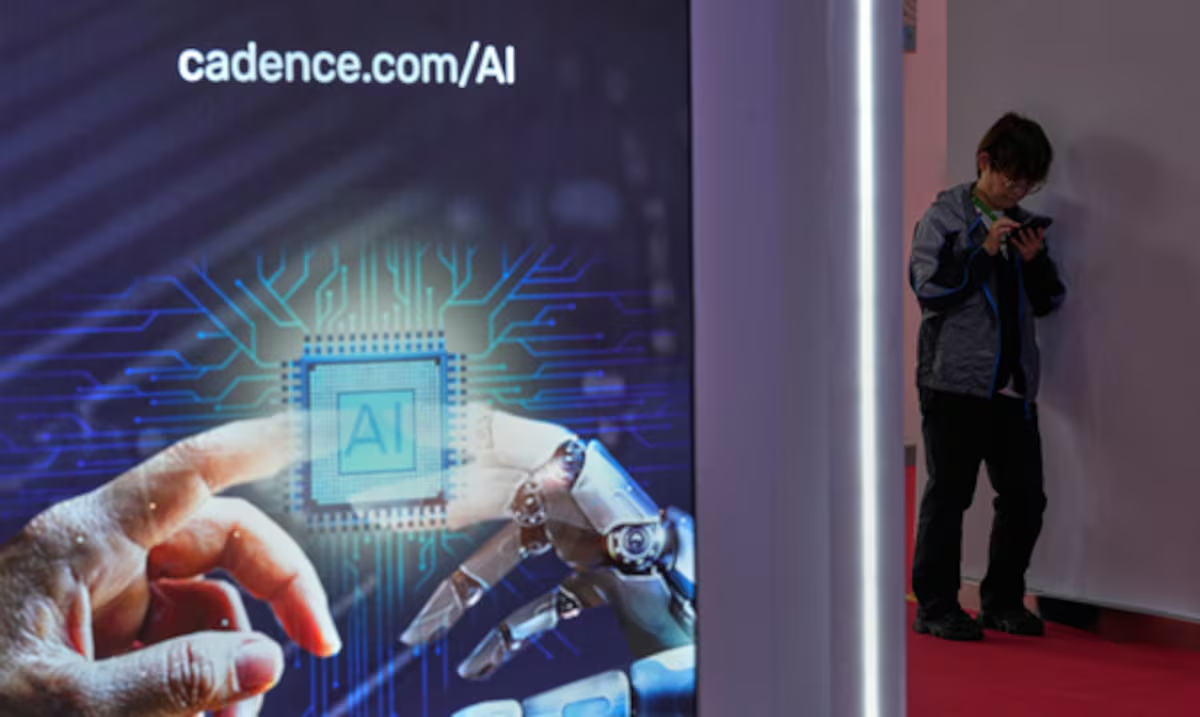
LONDON — Fears about artificial intelligence have led the Cambridge Dictionary to reach back to the 15th century in search of the word that best reflects the zeitgeist of 2026.
“Human”, the dictionary’s word of the year, is not only a return to the past, but also a kind of reaction that reflects the debate about how artificial intelligence has blurred the lines between machines and people.
“AI is changing the way we talk about what it means to be human,” said Colin McIntosh, the dictionary’s lexicographer. “Fears about what humans might lose by delegating our thinking have led us to rethink the extent to which we rely on AI: from top mathematicians to teachers of young children.”
The adjective, derived from the Latin “humanus” and in use since the 1450s, is defined in the Cambridge dictionary as “having the qualities, defects and feelings peculiar to people, as distinguished from gods, animals or machines.”
Dictionaries often choose a new word—sometimes a colloquial term that has entered common language—or an existing word that has taken on a new meaning.
Artificial intelligence has had a great weight in the Word of the Year elections of several dictionaries in recent years.
The term “AI” itself was chosen by the Collins dictionary in 2023, a year in which Cambridge opted for “hallucinate”, in reference to AI’s tendency to invent information. Last year, Merriam-Webster named “slop” as its word of the year for low-quality content produced by AI, while Collins opted for “vibe coding” for the AI-assisted software development method.
“AI is making us think more deeply about what it means to be human”said Microsoft co-founder Bill Gates—who has promoted the responsible use of AI—in a comment about the inclusion of this term in the Cambridge Dictionary. “The success of AI should be measured by how much it improves people’s lives.”
Other words that were competing for the title of “word of the year” for 2026 were “agent”, in reference to an artificial intelligence system capable of making decisions and functioning without human control, and “analogue”, to refer to experiences or objects that do not involve the use of the Internet or digital technology.
This story was translated from English to Spanish with an artificial intelligence tool and was reviewed by an editor before publication.