
For years, batteries have occupied a strange place in technology. They are essential, but invisible. Nobody buys a phone thinking about its electrochemical cells or looks with fascination at a power bank while it remains in their pocket.. We only remember they exist when the dreaded 5% notice appears.
But there is something that is changing. As the power of devices and the speed at which we want to charge them increase, a battery can no longer be limited to storing energy. has to know how much to receive, how much to give, how to do it without getting too hot and, increasingly, when it is appropriate to do it. That is precisely the path that Anker has shown at IFA 2026. The company, which began manufacturing replacement batteries for laptops before becoming one of the big names in chargers and external batteries, has presented a new generation of devices in which energy management takes on almost as much prominence as the storage capacity itself.
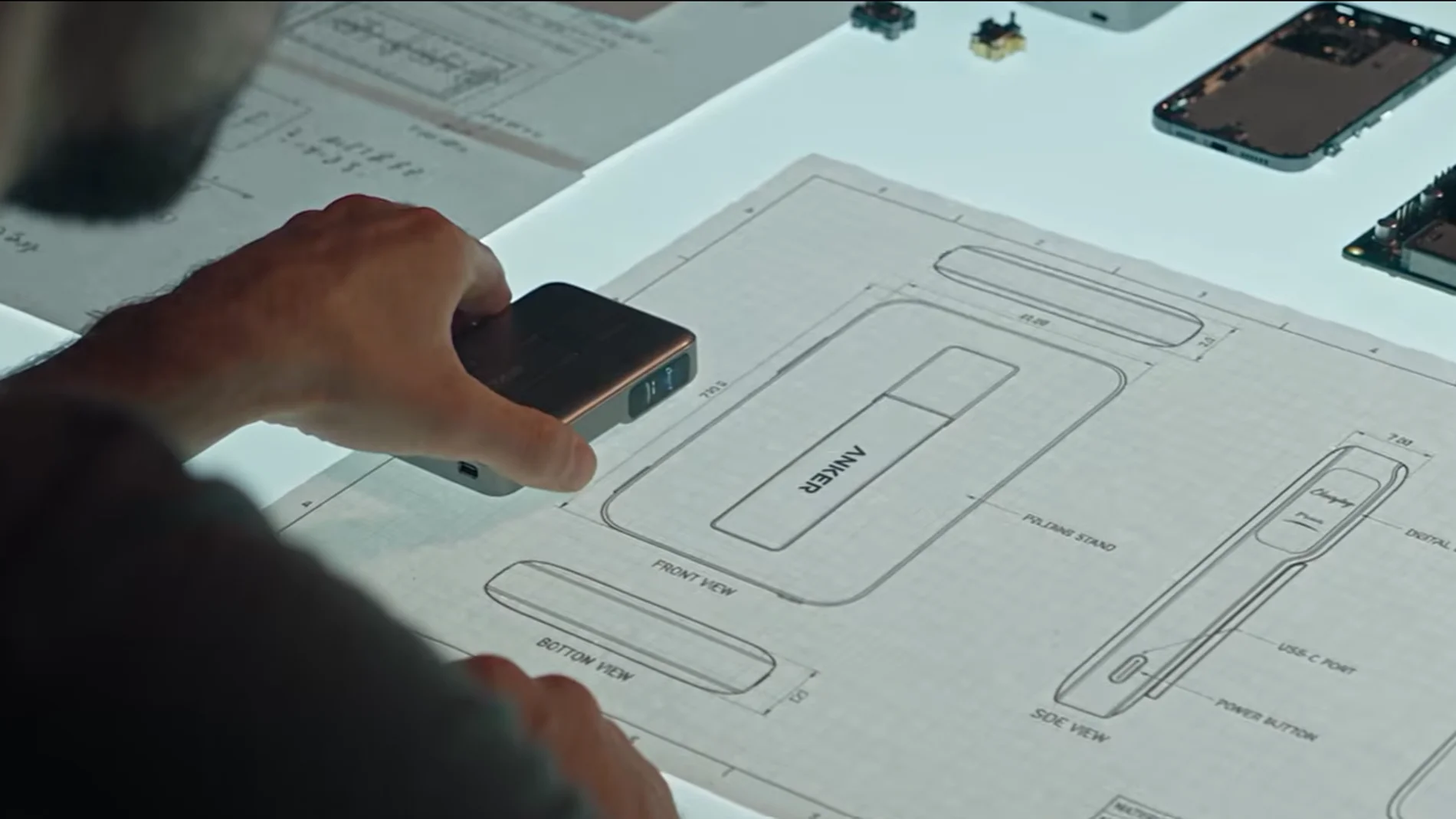
The most striking example fits in the hand. The new Anker MagGo Power Bank 2 Pro has a capacity of 10,000 mAh and uses the Qi2.2 standard to offer up to 25W wireless charging. According to Anker, can take an iPhone 17 Pro up to 50% in 25 minutes. It also features a USB-C port for wired charging and an integrated stand that allows you to place the phone at different angles.
But the real novelty is in a component that we would normally associate more with a computer than with a portable battery: a fan. This powerbank incorporates active cooling using a small fan, two air circulation channels and a layer of graphene. The goal is to keep the temperature below 36°C while charging the phone. Anker also ensures that the system automatically adjusts the fan speed based on load conditions.
It may seem like an extravagant detail until you remember one of the inconvenient laws of electronics: power has a thermal price. The faster the energy moves, the more difficult it is to manage the heat generated during the process. AND Heat is not a good companion for lithium-ion batteries, because it accelerates processes that contribute to their degradation.
That’s why the battle to achieve faster and faster charges is not just about increasing watts. It also requires monitoring what happens in and around the battery. In the MagGo 2 Pro, Anker has taken that logic to a very visible solution: if the battery needs to stay cool to sustain a High-power wireless charging, the battery itself incorporates the necessary system for cooling. Smart management goes one step further. The powerbank has a screen that shows information such as charging power, temperature and battery level. It can also recognize the status of the connected device and apply charging profiles aimed at optimizing the process and taking care of the battery.
It is a small but significant change in the philosophy of these accessories. For a long time, a powerbank was essentially a reservoir: it stored energy and waited for someone to ask for it. Now it’s starting to look more like a small energy system capable of making decisions about how to use it. And Anker is taking the exact same idea to a completely different scale.
The Anker SOLIX Solarbank Max introduced at IFA turns a home battery into something that’s more like a small private power station. Part of a storage capacity of 7 kWh and can be expanded up to 42 kWh using additional modules (the light that a home consumes in approximately five days). Its system can receive up to 10 kWp of solar energy and manage up to 20 panels using three MPPTs, while its output can reach 3,500 W with proper connection.
Here the battery definitely stops being an accessory. It becomes a piece of a home’s energy infrastructure. The system also uses an AI-based energy management system that analyzes factors such as solar production, household consumption, weather forecast and electricity prices to decide when to store energy and when to use it. The logic is simple: save electricity when it is most convenient and use it when it is needed or when its price is higher.
The Solarbank Max can grow from 7 to 42 kWh, allowing storage to be adapted to the size and needs of each home. Anker thus proposes an intermediate solution between small batteries associated with domestic solar installations and larger storage systems that have traditionally required more complex installations. There is an enormous distance between both products. One is designed to accompany a telephone and the other to store enough electricity for a home. However, They share the same idea: energy should no longer be limited to being stored.
It has to circulate intelligently. The paradox is that the company that made chargers and powerbanks its calling card is now trying to get us to stop thinking of them as simple accessories. At IFA, Anker has presented more than twenty new products and, at the same time, has announced the unification of its different brands under the Anker name, grouping them into two large families: Anker For You, for personal devices, and Anker Home, for products for the home.
Deep down, it has a certain logic. A telephone, headphones, a robot vacuum cleaner, a security camera and a home powered by solar panels seem to belong to different technological worlds. But they all have something in common: they need energy and, increasingly, they need to manage it. Maybe that’s why The future of batteries does not depend solely on being able to store more electrons in less space. The next revolution may be getting them to know when to store energy, when to release it, how fast to do it, and how to protect themselves while doing it. The battery would thus cease to be the silent reservoir that keeps our technology alive and become something much more interesting: the nervous system that decides how energy moves.