
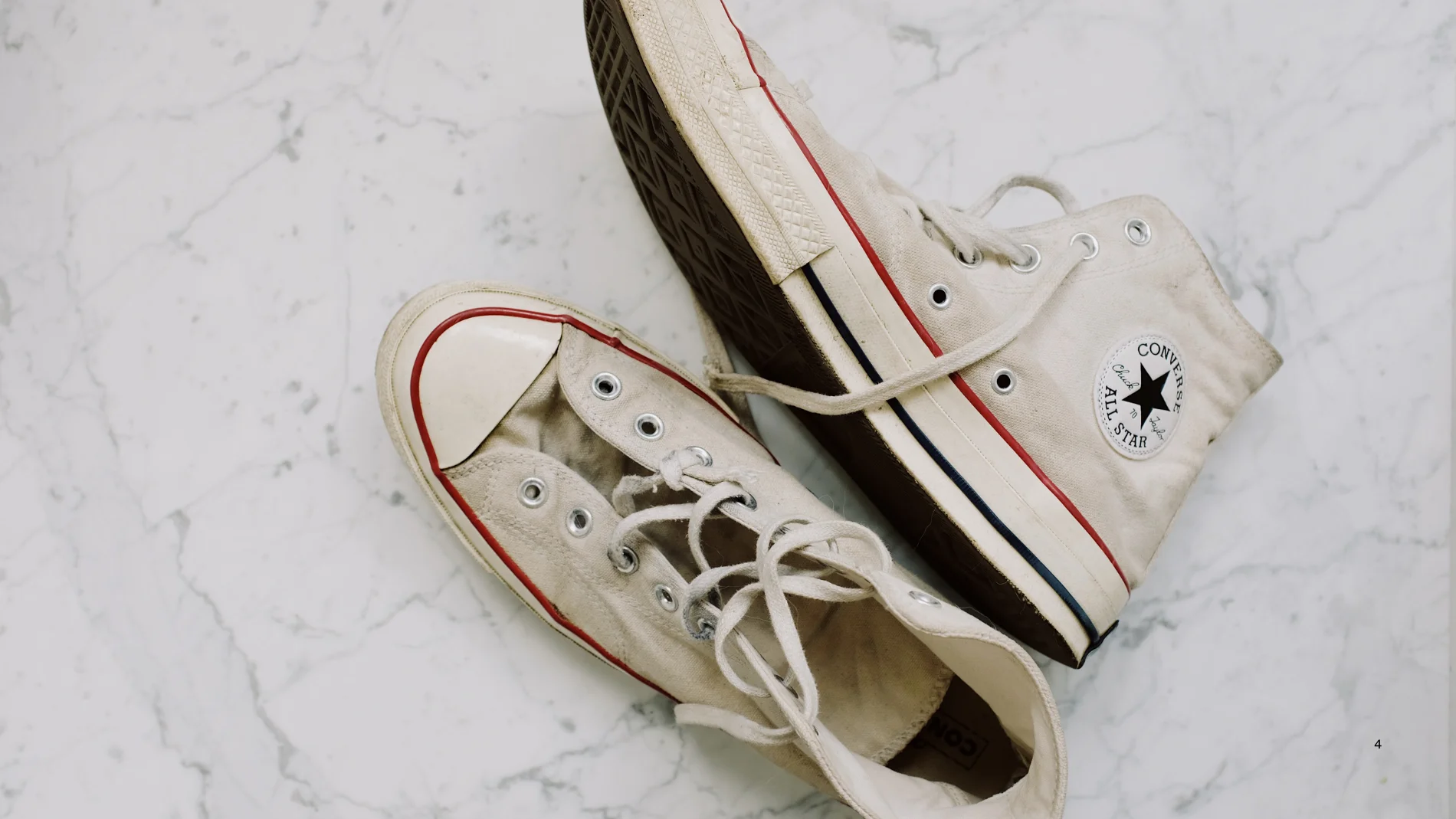
Wearing dirty shoes can provoke immediate judgment about a personeven before talking to her. Sneakers with stains or traces of dust can be interpreted as a sign of neglect. However, that impression leaves out information about how they have been used and the circumstances of the wearer.
Cleaning your shoes can take a secondary place among the tasks of the day. It may also have gotten dirty during a trip or a work day. They are possible explanations, but none can be deduced just by looking at shoes. Nor does their appearance allow us to conclude that someone is lazy or has low self-esteem.
What psychology studies about shoes and personality
The relationship between footwear and first impressions was the subject of research published in 2012 in the Journal of Research in Personality. The work, titled Shoes as a source of first impressionsincluded Omri Gillath among its authors and analyzed what observers could find out about unknown people from photographs of their shoes.
The owners provided images of the shoes they usually wore and completed questionnaires about their personal characteristics. The researchers compared this information with the assessments made by those who had only seen the photographs.
The results showed some precision when estimating aspects such as age, income, and attachment anxiety. The research was about the information that footwear transmits and the accuracy of those impressions. It did not establish a single psychological cause that would explain why someone wears dirty shoes.
An impression does not explain why they are dirty
There is a difference between observe a stain and attribute meaning to it. The first is visible. The second requires knowing something more about the person. Shoes can end up dirty after a walk, even if their owner had cleaned them before leaving.
It is also worth distinguishing between dirt and wear. Old sneakers may be clean and retain marks from use that no longer disappear. Grouping both aspects under the idea of carelessness can lead to interpreting different situations in the same way.
Something similar happens with priorities. Someone may put off cleaning their shoes because they have other tasks pending or because they do not consider it necessary to do it yet. This specific decision does not allow us to know how take care of your home, how you work, or how much attention you pay to other responsibilities.
What can we conclude when looking at the footwear
The appearance of the shoes provides limited information. To interpret their condition we would have to know where they have been used, for how long and if what we see is something specific or habitual. Even when it is repeated, it still does not explain why on its own.
Dirty shoes are not a measure of self-esteem or proof of laziness. Before turning it into a personality trait, there is a simple question that a photograph cannot answer. What has that person done with those shoes before we saw them.