
The landscapes of the Monte Alén National Park, the city of Batete or the banana of organic and family farming. Equatorial Guinea, the country located in Central Africa, about 3,600 kilometers from Madrid and the size of Galicia, has a lot to offer: that is what made clear the speakers of the round table “Green economy: role of agriculture, the environment and ecotourism in the takeoff of Equatorial Guinea”, organized by reason.
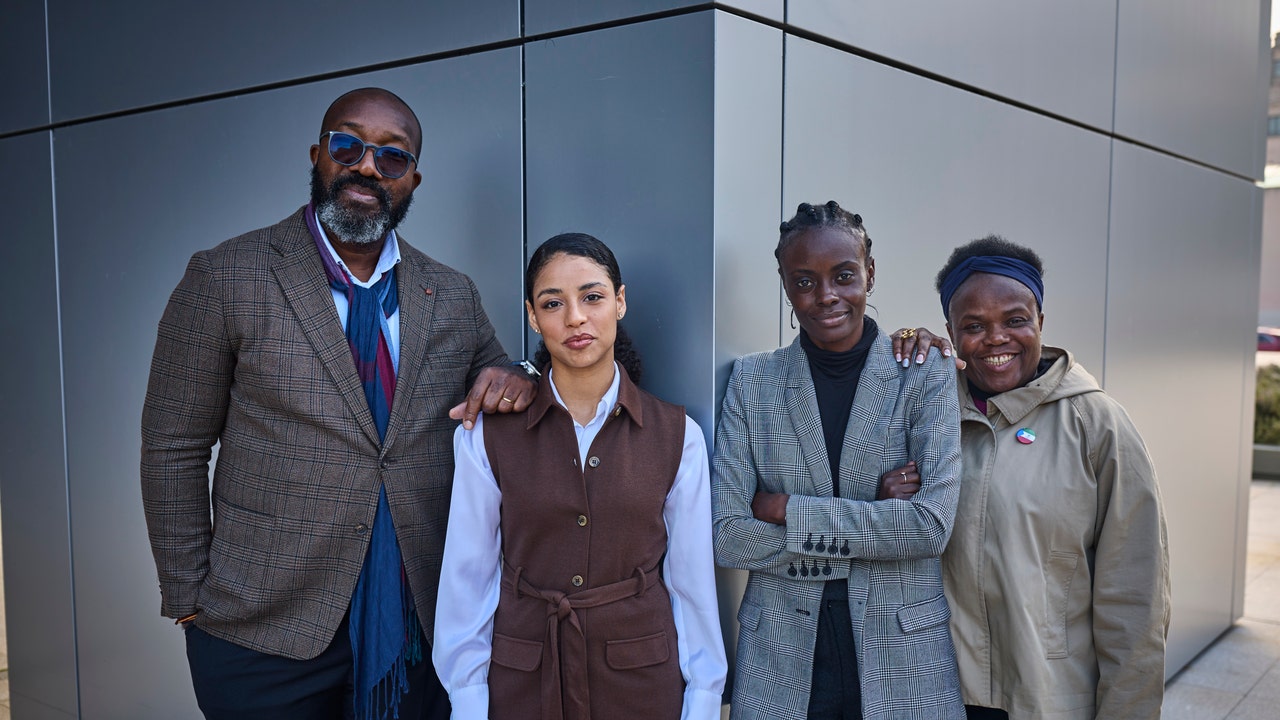
The debate, which was moderated by the journalist and editor of La Razón Eva M. Rull, was attended by Telenciano Ondo Abaga Nchama, CEO of Aphrom Exports, of Arantxa Bartolomé, responsible for Ilende & Partners, of Nuria Obiang, Sales Director of Rumbo Malabo, and of Astan Roben, Manager of Food Hac.
But how to convert the natural resources of Equatorial Guinea into a development engine? According to the UN Human Development Report 2023/2024, Equatorial Guinea is in 133 of 193, in the “Middle Human Development” section. Tourism marked the start of the talk. The Agency Rumbo Malabo, “a small family agency”, tries to “guide the Spaniards to return to Equatorial Guinea,” as Obiang explained. Return because the African country was a Spanish colony until 1968. «How do we do it? With trips in which they have contact with the Guinean population, ”I continue. In addition, they insist on making “personalized trips.” Something they have realized is that «people lately want natural trips to go to virgin areas; It is the most demanded ». Regarding this, Bartolomé explained that on the trips of course Malabo “you think about the detail, on the routes”, thanks to what “that local impact is generated in each community is noted.” From course Malabo explained that this type of trip to a not so massive area is the most requested, ecological travel tourism to virgin beaches.
On Spanish travelers to the African country, Obiang considers that “experience is very beautiful because we are the same culture. A Spanish when it goes to Guinea does not notice anything different. He is in his land: because we speak Spanish, we are Catholics ». To which Bartolomé added: «I will be able to interact with people because we speak the same language. It is being in Africa but with the added value of feeling at home ». The elimination of the idiomatic barrier can open commercial horizons.
Astan Roben raises food ax as a trip: a family business that arises from the need to enjoy its own cuisine, on its Guinea-Spanish trips. The company sells fried banana snacks, ginger drink, red habanero and cocoa liquor. Roben explained that «the agricultural sector in Guinea is subsistence. There are many small actors with small portions of land that work in a traditional way ». Despite “not having great technical resources,” they have a strong potential: the earth. «This form of culture can traditionally mean a disadvantage, but at the same time it is an added value: The conductive thread of the narrative to continue producing as our ancestors did and give it the artisanal product. It must be positioned as an ecological product, which is working in being able to have any certification or denomination of origin ».
Regarding enhancing certifications, Tenciano, whose company is dedicated to “contributing to the establishment of bridges between the two shores, In the field of importation and distribution of goods and services, “he explained:” We have already located the problem and what we have to get. What is missing is how. He said that the important thing was “how to transform family subsistence agriculture in economics.” He spoke of the “cooperatives”, which “generate advantages: we avoid migrations to cities because you have it there.” Therefore, you must first create a cooperative to agglutinate the offer ».
Then, he continued, «you have that structure based on local consumption. And through state institutions we seek equivalents in Spain. And we get sitting and see what each one has ». As for public institutions, Tenciano referred to two already existing: the National Institute for Agricultural Promotion for Equatorial Guinea (INPAGE), that could “acquire all production and be responsible for certifying.” This could “together with the Official Chamber of Commerce, Agricultural and Forestry of Bioko (Equatorial Guinea) carry out the export.” In this sense, according to Tenciano, “the risk of decline falls substantially.” And gave an example of “dramatic cases”: “Mothers go to local markets with 100 or 200 banana clusters. They can’t sell it. They mature, and they have to throw or malvender ». Although: «I know that food conservation cameras are already being created. That is the way ».
And, in the words of Tenciano, “if we are not able to generate expectations in that cooperative, in that local producer, in this young man who lives in his town, he will move for a vital issue.”
Bartolomé supported Roben on the idea that the fertile soil is an advantage. And he said: «You cannot compete with other countries in terms of quantity. Now, in terms of quality, as Astten pointed out, it could be a very interesting market. “If we see it in the face of certification, it is a country that has products of great added value, such as cocoa, banana, cassava, dragon fruit, handle …”
In addition, he said that, in his opinion, we must differentiate between consumer agriculture and export agriculture. Bartolomé commented that “there are certain products that can be interesting that equatorial guinea.” That is, “it is not dedicated to producing it because it will not go on account.” He added: «But I could improve a lot in the final production phase. At the end of the day it is not the same as they sell you lemons to you sell you lemonade. We have a lot of local fruit. I sincerely believe that there would be a lot of potential for the export of natural juices ».
In this sense, Tenciano Ondo highlighted the direct relationship between agriculture, fishing and culture, and highlighted the importance of showing foreigners how the product is worked in a more authentic way. In his words, “all products and services related to Earth are directly linked to culture.”
The Business Tourism Branch
For Bartolomé, this type of activity in Equatorial Guinea has a “tourist potential.” The head of Ilende & Partners added: «It has a low impact on natural resources, because it is always a tourism that has a purpose, an objective; but still allows you to enjoy landscapes and nature ». In short, what is about, in Bartolomé’s words, is that “you can take advantage of that duality of the trip: enjoy everything that Equatorial Guinea can offer and that you can verify what its resources and potential are when it comes to doing business, which are many. There is much to do, but there is a lot of potential for what is done, if it is done well, it has an impact on an economic value for both the investor and the premises ».