
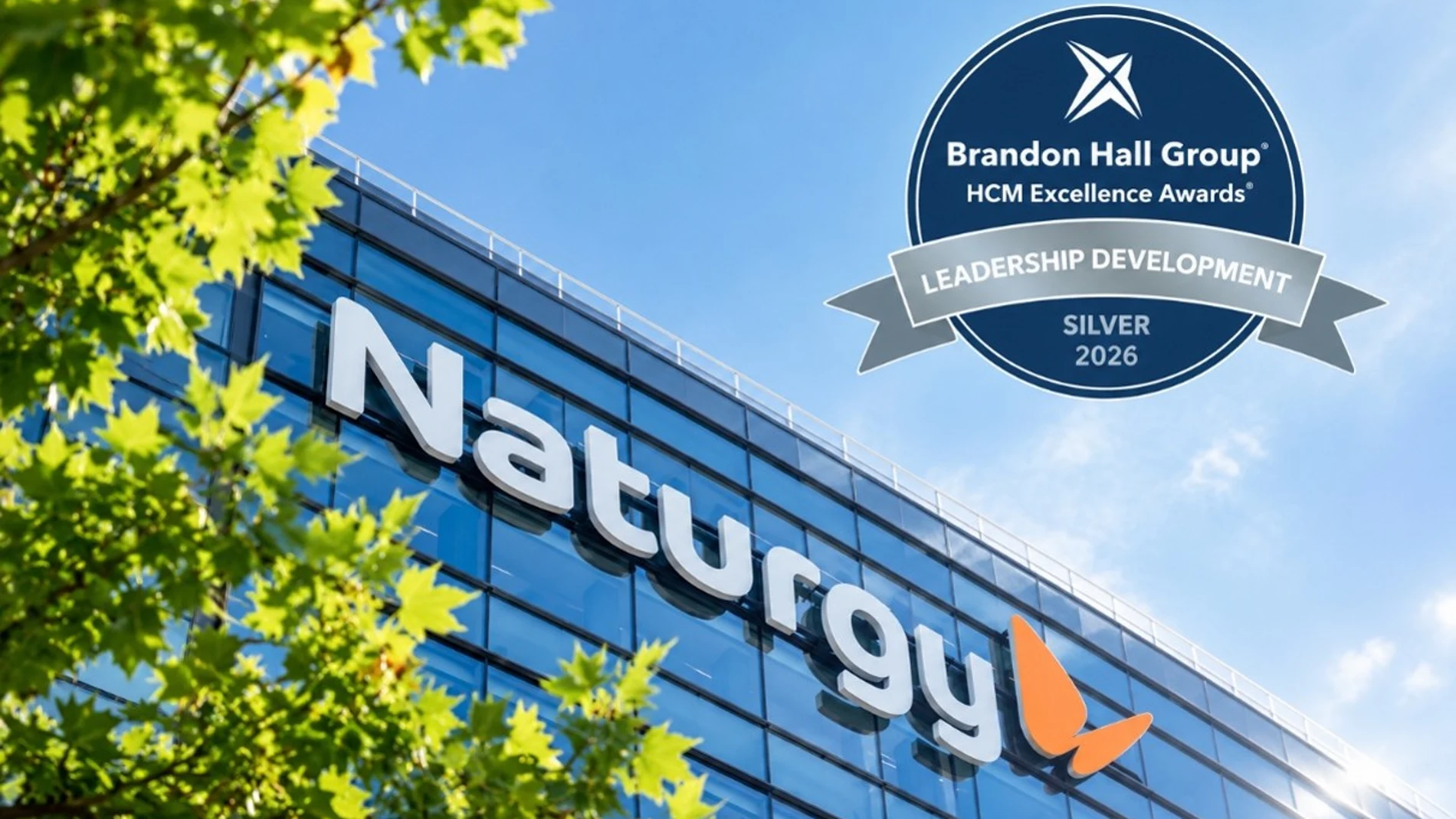
Naturgy has been awarded a Silver Award at the Brandon Hall Group HCM Excellence Awards 2026, in the Best Program for Upskilling Employees category, thanks to its Master Data Science program. This recognition distinguishes talent development initiatives that generate a tangible impact on the business, drive innovation and promote excellence in people management.
The Brandon Hall Group Excellence Awards are considered one of the most prestigious international recognitions in the fields of talent, learning, leadership and human resources. Since 1994, they have awarded organizations around the world whose programs and strategies demonstrate measurable and sustainable results.
The program
The energy company’s Master Data Science program, developed over twelve months, has had the participation of more than 80 professionals from different areas of the company, who have completed a total of 520 hours of training. As a result, 50 participants have obtained certification as Data Analysts and 32 as Data Scientists.
The initiative was born with the objective of reducing the gap in advanced data analysis skills, one of the most in-demand and scarce skills in the current labor market. Instead of resorting exclusively to external hiring, the company chose to develop these profiles from within, taking advantage of the business knowledge of its staff and complementing it with new technical skills.
The program is structured as a progressive itinerary that integrates computational thinking, data analytics and data science. During the training, participants have acquired skills in Python, machine learning and generative artificial intelligence, applying them at all times to real business challenges. This practical approach has made it possible to transfer learning directly to the company’s daily activity and accelerate the adoption of a data-oriented organizational culture.
Strategic profiles
Data analysis, machine learning and generative artificial intelligence have become key competencies for companies in all sectors, and the labor market already reflects this. According to the World Economic Forum’s Future of Jobs 2025 report, the three professions that will grow the most in percentage terms until the end of the decade are big data specialists, fintech engineers, and artificial intelligence and machine learning specialists. The same study estimates that AI and data processing alone will create 11 million jobs and replace 9 million, and places AI and big data at the top of the fastest growing skills.
In Spain, the adoption of these technologies is accelerating. According to the National Institute of Statistics, 21.1% of companies with ten or more employees used artificial intelligence in the first quarter of 2025, 8.7 percentage points more than a year before. This expansion collides with a talent deficit: according to the OECD, included in the Experis Tech Cities 2026 report, in Spain there are three technological job offers for every available professional, and the demand for Data Engineers has grown by 42%.
In the energy sector, these capabilities have especially relevant applications, from demand forecasting and the integration of renewable energies into the grid, to predictive maintenance of infrastructure, operational efficiency or the design of more personalized services for customers.
For professionals, mastering these tools represents an opportunity for long-term growth and employability. Their value is even greater when combined with in-depth knowledge of the business, a hybrid profile that is difficult to find in the market. That is why more and more companies are betting on the retraining of their teams. The World Economic Forum itself points out that continuous learning, upskilling and reskilling programs allow companies to better anticipate and manage their future skills needs.
With this recognition, according to the company itself, Naturgy reinforces its commitment to placing people at the center of its digital transformation. The energy company considers that investment in continuous learning not only responds to the current needs of the business, but also allows it to build the talent it will need in the future, promoting professional growth, innovation and the ability to adapt in a constantly evolving environment.