
In April, more than 146 million people in India endured an extreme heat wave with temperatures of up to 47°C. In Europe, provisional estimates put heat deaths during the summer at more than 30,000, about 16,000 of them in a single week, June 22 to 28. And in late August, the collapse of a Himalayan glacier caused a flash flood that claimed more than 1,300 lives in Nepal.
These are not isolated episodes, but rather the symptom of what the World Meteorological Organization (WMO) describes as a new era of climate extremes, in which records continue to fall and the human cost continues to grow. Its State of the Climate Update 2026, released just days before the COP31 climate summit in Turkey, predicts that exceptional temperatures, melting ice and rising sea levels will continue until the end of the year, and that a very strong El Niño event will unleash more extreme events well into 2027.
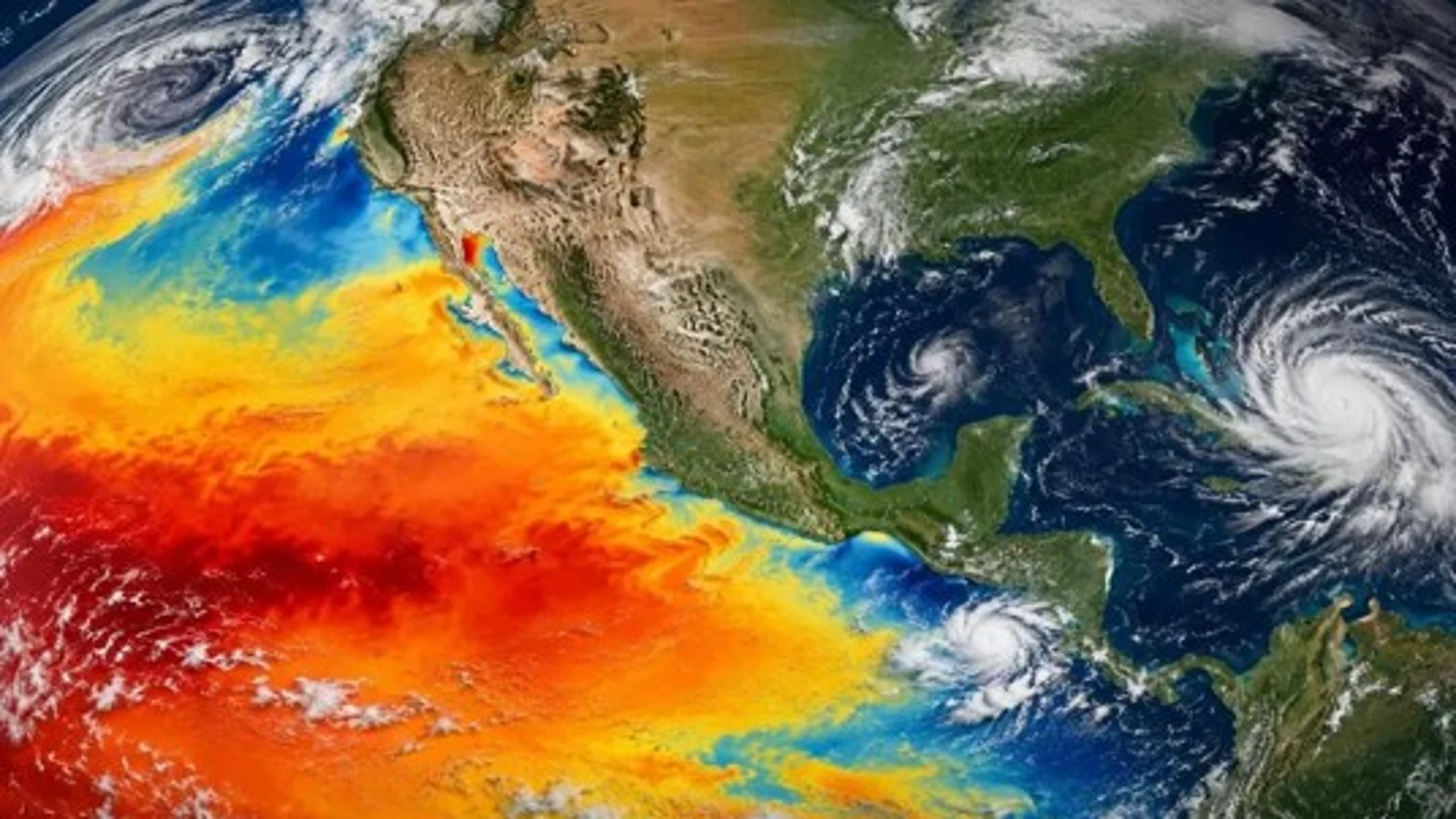
The report confirms that the last 12 years have been, one by one, the warmest on record, with the most recent four at the top of the list. Between January and September, the average global surface temperature was around 1.47 °C above the pre-industrial average and the figure will continue to rise in the coming months due to the effect of El Niño. The phenomenon, which has been spreading since August, will reach, according to forecasts, the greatest intensity ever recorded in December.
The key is in the sea
The ocean absorbs about 90% of the excess heat trapped by greenhouse gases, and 2026 is on track to become the 10th consecutive year of record ocean warming.
“El Niño does not add new heat to the planet. It releases heat from the ocean, which is the warmest ever measured. There is simply more heat available to release,” explains the Secretary General of the World Meteorological Organization (WMO), Celeste Saulo.
The data supports his claim. Sea level is the highest on record and sea surface temperatures have broken monthly records throughout the year. The glaciers, meanwhile, continue their retreat; the ice they lost in 2025 would have been enough to fill five Olympic swimming pools every second of the year.
A risk multiplier
Saulo warns that El Niño will act as a risk multiplier; heat waves, tropical cyclones and storms intensify faster than historical references would allow.
“Hundreds of millions of people this year have been exposed to unbearable extreme heat, while the catastrophic ice and rock collapse and flash floods in Nepal highlighted the compounding risks faced by communities in fragile and warming high mountain terrain,” it says.
The health consequences are already visible. For the first time, the World Health Organization (WHO) has classified the expected health impacts of El Niño as a health emergency. The phenomenon also threatens agriculture, especially in regions with high food insecurity and crops that depend on rain.
All indicators in red
The X-ray of the World Meteorological Organization (WMO) does not leave much room for doubt. All the big climate indicators point in the same direction. Greenhouse gases hit a record high in 2025 and continued to rise in 2026. Ocean heat also peaked in 2025 and continues to rise, with warming projected to last for hundreds or even thousands of years. And the global average sea level, in record numbers, is rising faster and faster.
In the poles and mountains, the outlook is no more encouraging. Antarctic sea ice recorded the third lowest winter peak in the historical series, and the Arctic, the lowest or the second lowest. Glaciers lost more than 400 gigatonnes of ice in 2025, the equivalent of about a millimeter of sea level rise. Fresh water is not immune to the trend either. Water stored on land has decreased on a global scale since 2014 and, in 2025, 42% of the assessed area had levels below normal.
Against this backdrop, UN Secretary General António Guterres has called on leaders gathered at COP31 to “take seriously” a faster reduction in emissions, to accelerate the abandonment of fossil fuels and to provide the funds and protection that “vulnerable countries need.”