
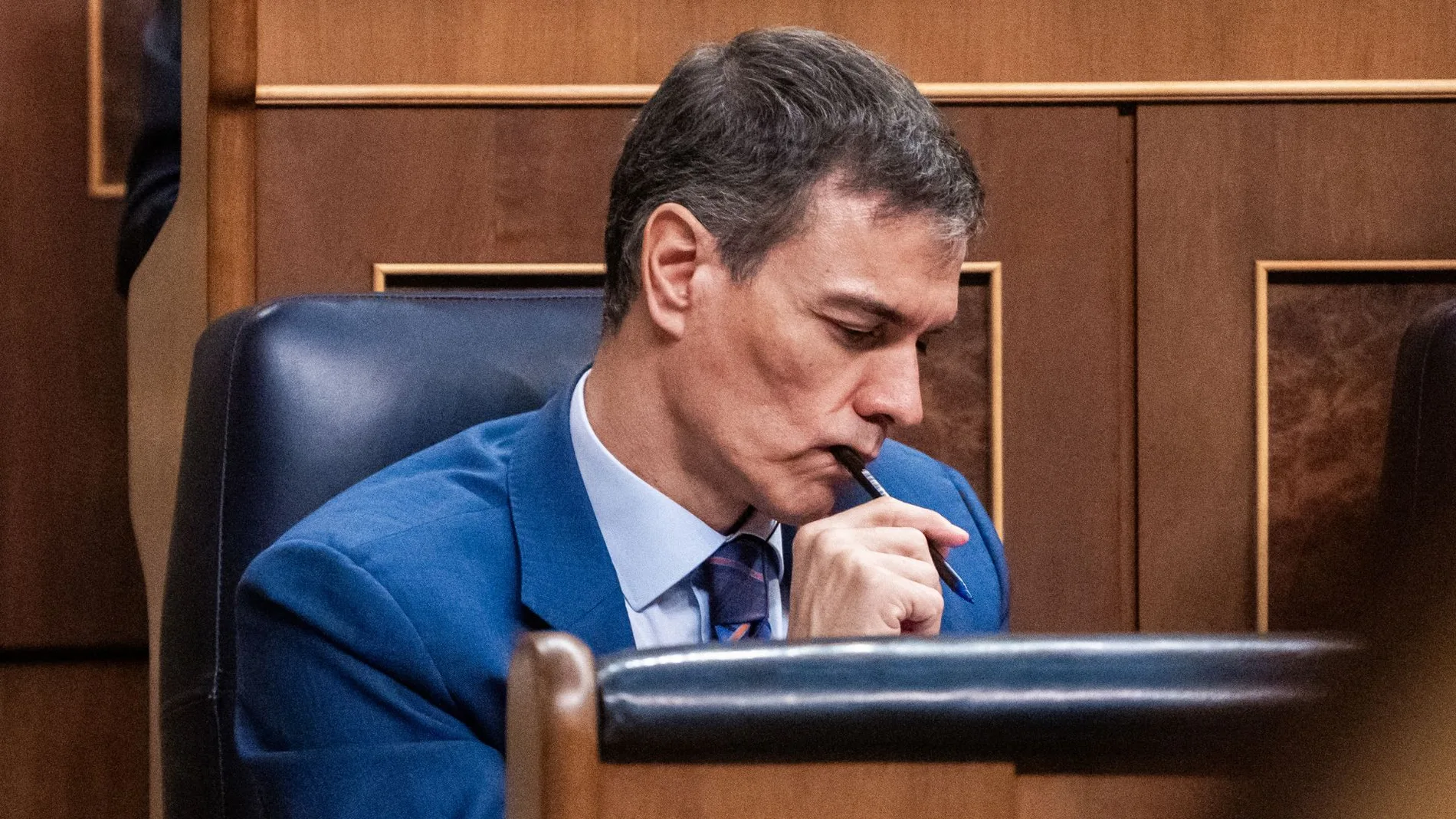
Pedro Sánchez faces the November 29 elections with a problem that goes beyond the wear and tear of the Government and the advantage that polls attribute to the right. The idea that His time at La Moncloa has come to an end He has consolidated himself among the voters of the parties that made his investiture possible, including those who would still prefer the continuity of the Executive. Moncloa is aware of this difficulty and has among its priorities to combat a perception that threatens the mobilization of its own electorate.
The president’s campaign team does not have any data that confirms the expectations of a comeback that they are sowing through their media satellites. Quite the opposite, if we look at the results of the first surveys published after the outbreak of the housing crisis. These polls suggest that the social mobilization of a left, also disaffected with the PSOE, can act as another incentive to activate a right that is already very electorally activated.
In this unfavorable framework, socialist concern has a particularly delicate dimension because it affects the trust of their own voters in the continuity of the current president. According to the data they manage, around 30% of those who voted for the PSOE in 2023 consider a change of Government preferable, but the expectation that Sánchez will not continue in La Moncloa reaches half of his voters.
Furthermore, the forecast that there will be a replacement in the Presidency It is also assumed by the former voters of Sumar and the nationalist and independence groups that contributed to supporting the investiture. This does not mean that these voters have decided to support the right, but it does reflect that the expectation of Sánchez’s continuity has been weakened to extreme levels within the entire electoral space that allowed his permanence in the Government.
The PSOE thus faces a difficulty that cannot be resolved solely with a campaign of mobilization and dispute due to the unrest over the housing crisis. You need to convince your own voters that Sánchez is not politically amortized, and must do so in a scenario in which the idea of alternation is no longer exclusive to those who want a change of Government.
Besides, the precedent of the July 2023 elections is not directly applicable today. The accumulation of wear and tear of a party that in 2023 managed to mobilize its electorate against the possibility of a PP and Vox Government and that now has to defend its own management, explain the cases of alleged corruption that affect former leaders and face the weakening of its entire territorial structure weighs heavily – although it is also true that the latest polls continue to confirm that, despite everything, the socialists maintain firm ground.
In 2023, Sánchez reached the general elections after a very important defeat in the municipal and regional elections on May 28. However, he managed to make the principle come true that in the first ballot the wear and tear on the party is paid for, and, in the second, the electorate is less critical because it has already let off steam. He also got change the axis of the campaign. The discussion stopped focusing exclusively on the balance of his Government and began to revolve around the consequences of an eventual coalition between Alberto Núñez Feijóo and Santiago Abascal, an agreement that today, by the way, seems to be fully normalized.
In the PP, meanwhile,The concern that conditions the electoral strategy is in Voxboth because of the consequences it may have for the balance of forces within the right and because of Abascal’s ability to alter the development of the campaign. The Popular Party wants the elections to become a trial of Sánchez’s management, but they fear that his competitor will introduce issues that shift the debate towards issues that are not part of his priorities, as already happened in the last general elections.
The hardening of the PP’s discourse responds, in part, to that competition, and the difficulty is that the popular party must contest that electoral space without getting caught in a confrontation that ends up giving Vox excessive prominence. Feijóo needs to maintain the political initiative and present himself as an alternative government, while Abascal competes to increase his weight within the right-wing bloc.
Precisely here appears one of the opportunities contemplated by the socialist strategy. If Vox acquires a growing role and forces the PP to discuss its positions or demands, Ferraz believes that it will have more arguments to try to turn the elections into a decision on the consequences of a right-wing government. That is to say, Genoa’s concern about Abascal’s movements thus coincides with one of the needs of the PSOE: move the debate from the continuity of Sánchez to the alternative that could replace him.
The axis that conditions the battle for the vote today can be summarized in that the socialists need to alter a dynamic that still shows no signs of recovery and combat the perception that Sánchez has reached the end of his stage. While the popular ones intend to keep the debate focused on the wear and tear of the Executive and prevent Vox from introducing elements that mobilize the left.