
One of the direct consequences of forest fires is the loss of soil. As important as that of the vegetation and animal species that inhabit the affected territory, because it is the substrate on which the vegetation settles and on which it feeds, where microorganisms live that are essential for the health of the ecosystem and protect against erosion and desertification. A study by the CSIC, the Higher Council for Scientific Research, published in 2025, confirms that forest fires cause profound and long-lasting alterations in the biogeochemistry of soils, which can last more than 50 years.
According to the European Forest Fire Information System (EFFIS), between January 1 and September 23, 299,501 hectares burned in Spain, an area that is added to those of the immediately previous years. In this context, if there is a possibility, it is important to help nature recover those soils more quickly.
In parallel, the water and sanitation sector faces a growing regulatory challenge in the management of sludge generated in Wastewater Treatment Plants (WWTP), of which about six million tons are produced annually in Spain, according to MITECO. European regulations and regional laws are now more demanding by limiting the presence of heavy minerals, new emerging contaminants, microplastics, pharmaceutical waste and other micropollutants, and reduce the traditional ways of using sludge from wastewater treatment processes in agriculture, which increases management costs.
R&D to the rescue
In this situation, Aqualia’s Innovation department decided to transform this regulatory challenge into an environmental opportunity based on the circular economy: take advantage of the high organic matter, nitrogen and phosphorus content of biosolids – solid or semi-solid organic waste obtained after the treatment and purification of wastewater – to return fertility to the burned ecosystems and accelerate their natural regeneration.
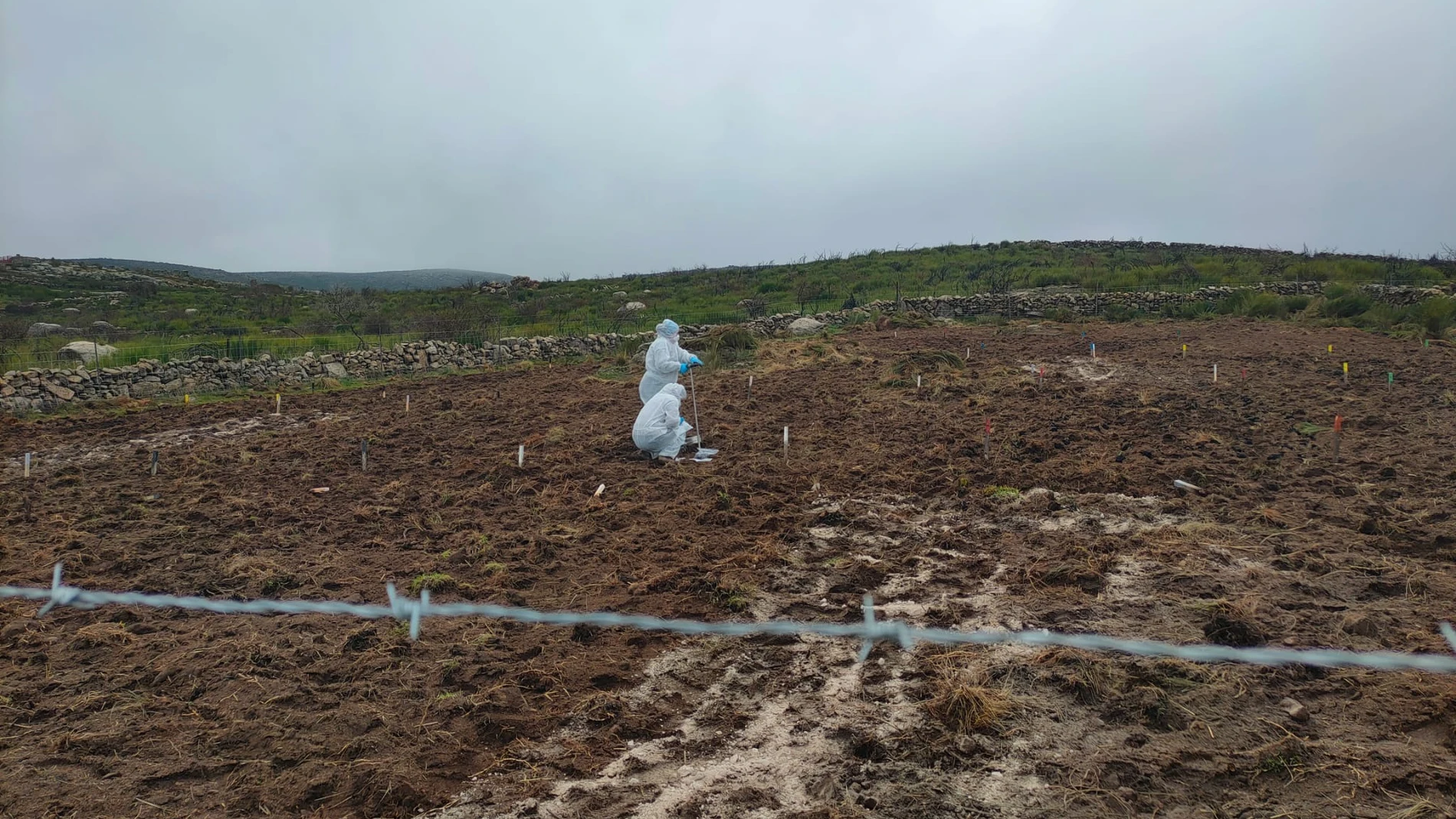
In collaboration with the Composting Research Group (UBUCOMP) of the Faculty of Sciences of the University of Burgos and under the scientific direction of researcher Carlos Rad Aqualia launched an ambitious four-year R&D project in 2022 in Riofrío, Ávila, where the Sierra de la Paramera fire devastated more than 22,000 hectares of forest and vegetation in August 2021, becoming the most serious fire recorded in Spain that year. year.
In an experimental plot of 1,200 square meters subdivided into twenty subplots of 30 m², various types of biosolids from treatment plants managed by Aqualia in Ávila, Guijuelo, Salamanca, Fontiveros and Jerez de la Frontera were applied.
Dehydrated WWTP (Wastewater Treatment Plant) sludge was applied to the different grids; biochar, pyrolyzed WWTP sludge to improve nutrient retention and soil structural stability; and struvite, a mineral fertilizer rich in phosphorus and magnesium.
The project, which was developed in several phases and included extensive monitoring of the effects of the applications, resulted in a series of five scientific reports consolidated in July 2026.
Promising results
The reports accredit the biochemical and ecological benefits of incorporating biosolids for the recovery of degraded lands: more homogeneous, dense and diverse recovery of spontaneous vegetation in the treated plots, in which the amount of organic matter, phosphorus, sulfur, organic carbon, calcium and magnesium increased. Likewise, the scientists verified a greater activity of the soil microbiota, which results in a greater presence of bacteria and fungi. The reactivation of microbial metabolism is the first biological indicator that the ecosystem has recovered its natural biogeochemical functionality.
For Víctor Monsalvo, Aqualia’s Innovation Director, “this project suggests that these actions could advance the complete natural and functional recovery after a fire. It is estimated that between 5 and 15 years could be gained, with an average reduction of 30%. “A new use for sewage sludge with very promising potential.”
For the company, “with this project, the treatment plants become ecofactories that provide nature-based and safe solutions to the threat of forest fires and desertification.”