
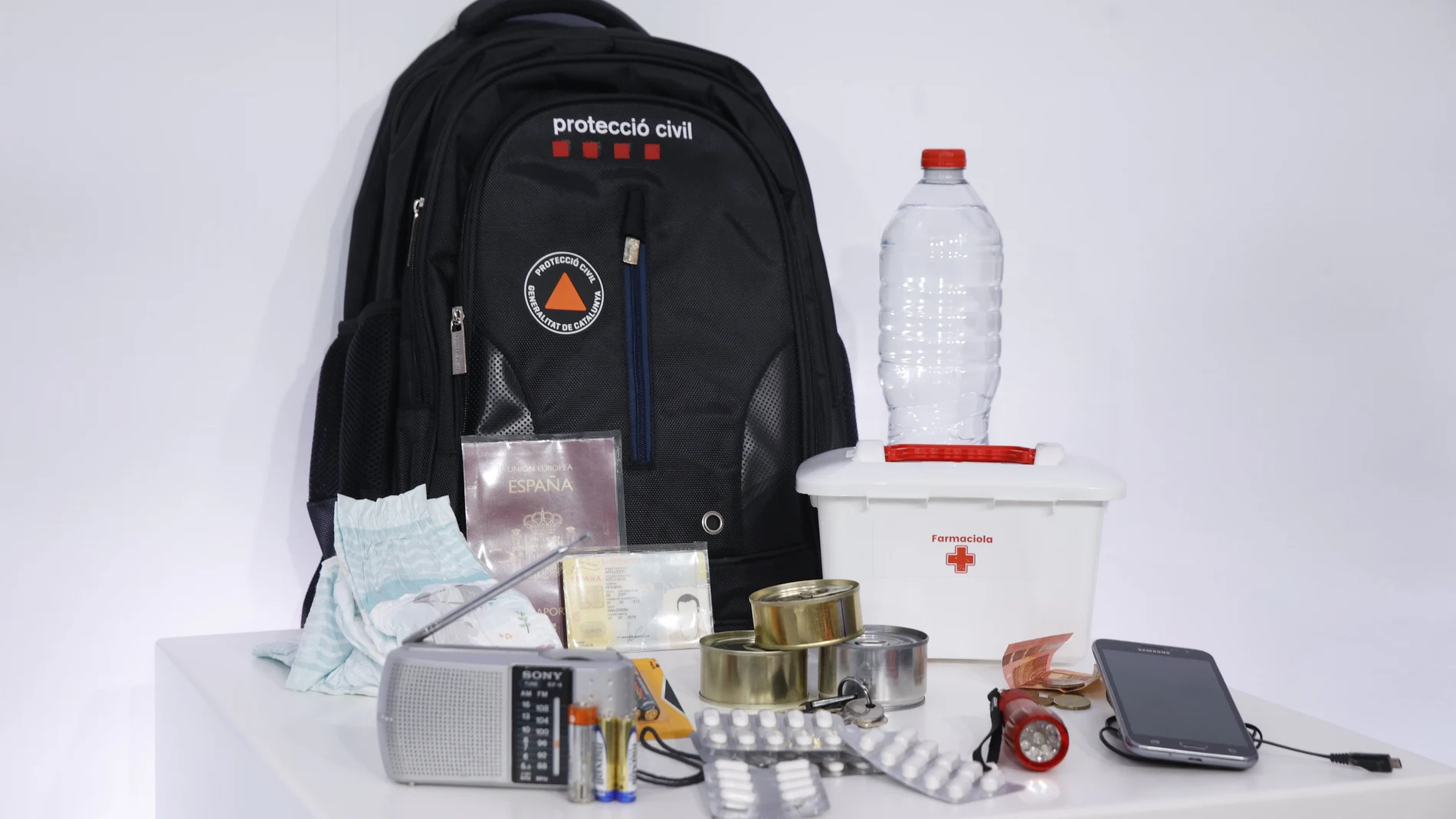
Shortly after a week of the strong storms that affected the region of Catalonia, the General Directorate of Civil Protection of the Generalitat of Catalonia He has shared, through his social networks, everything necessary to prepare a basic emergency kit. All this, so that the residents of the region can spend several days without electricity, water or gas or face an evacuation due to climatic incidents, warning that “having an emergency kit prepared can help you act quickly and calmly.”
The public entity clarifies that The kit should be easily accessible and everyone in the household should know where it is.
Basic emergency kit
The items that every family should have prepared are:
- Drinking water (minimum 1.5 liters per person per day)
- First aid kit and chronic medication
- Flashlight with spare or front batteries
- Radio with batteries or crank
- Personal documentation (ID, health card, insurance policies…)preferably in a waterproof bag
- Cash and bank card
- Mobile phone with charger and, if possible, an external battery
- Support products, such as glasses, crutches, cane, walker, hearing aid and batteries, breathing device, etc.
If you have to stay home, also include:
- Long-lasting foods that do not require cooking.
On the other hand, Civil Protection confirms that if the authorities order evacuation, families should complete the basic kit with these additional elements, thinking that they will not return home for a few days:
- Spare clothes and shoes
- Waterproof
- Personal hygiene products
- House and car keys
They also confirm that families must take into account the specific needs of the members. If there are children, elderly people or people with disabilities, they will have to prepare diapers, baby food and identification bracelets.
If you need to use the car
If, in the event of a weather emergency, a family member needs to leave the house and it is essential that they use the car, they must prepare for a risk situation that may be encountered on the road. Therefore, the General Directorate of Civil Protection suggests that all cars have an emergency kit. The car emergency kit should include:
- Drinking water
- Spoil-safe, high-energy foods, such as unsalted nuts, dried fruit, and hard candies
- Blanket or warm clothing
- Wheel chains
- Multipurpose tool box
- Flashlight with spare batteries
- V16 emergency light (as of January 1, 2026 replaces reflective triangles) and brightly colored clothing to make your vehicle more visible.
- First aid kit with gauze, duct tape, bandages, antibiotic ointment, pain reliever, latex-free gloves, scissors, hydrocortisone, thermometer, tweezers and instant cold compress
- Snow shovel or brush
If you have a pet
The public entity also leaves a section for pets, since they They may become stressed or scared during an emergency situation. The pet must be part of the emergency plan before, during and after to minimize the impact it may have during risk situations, since it can be injured, lost or even escape.
- Documentation of identification or ownership (General Pet Registry) and photograph with the pet
- Food, water and dishes for several days
- Medical record, updated veterinary record and any medication you may be taking
- Cage or carrier
- Leash, muzzle
- Blanket, sheet or toys that can make her feel calmer
Furthermore, it gives a series of Recommendations for pet owners:
- Use toiletries to collect stool and wash it if necessary, such as wet wipes
- Make sure that the pet is well identified with the chip and that the data is up to date.
- Provide someone responsible, such as neighbors or relatives, who can take charge of their evacuation if the owners are not at home or if the place where they will be evacuated does not accept animals.
- Make a list of places such as hotels or shelters that accept pets in case you have to spend a night away from home and no one can take care of them.
- Practice moving her in a carrier or cage from time to time so that she is used to it if necessary.
This would be all you need to spend a few days at home in the event of an evacuation.