
He astronomical summer comes to an end this Wednesday, September 23, when at 2:05 a.m. (peninsular time) autumn will officially begin in the northern hemisphere. The new season will last for 89 days and 21 hours, until December 21, according to calculations by the National Astronomical Observatory, belonging to the National Geographic Institute.
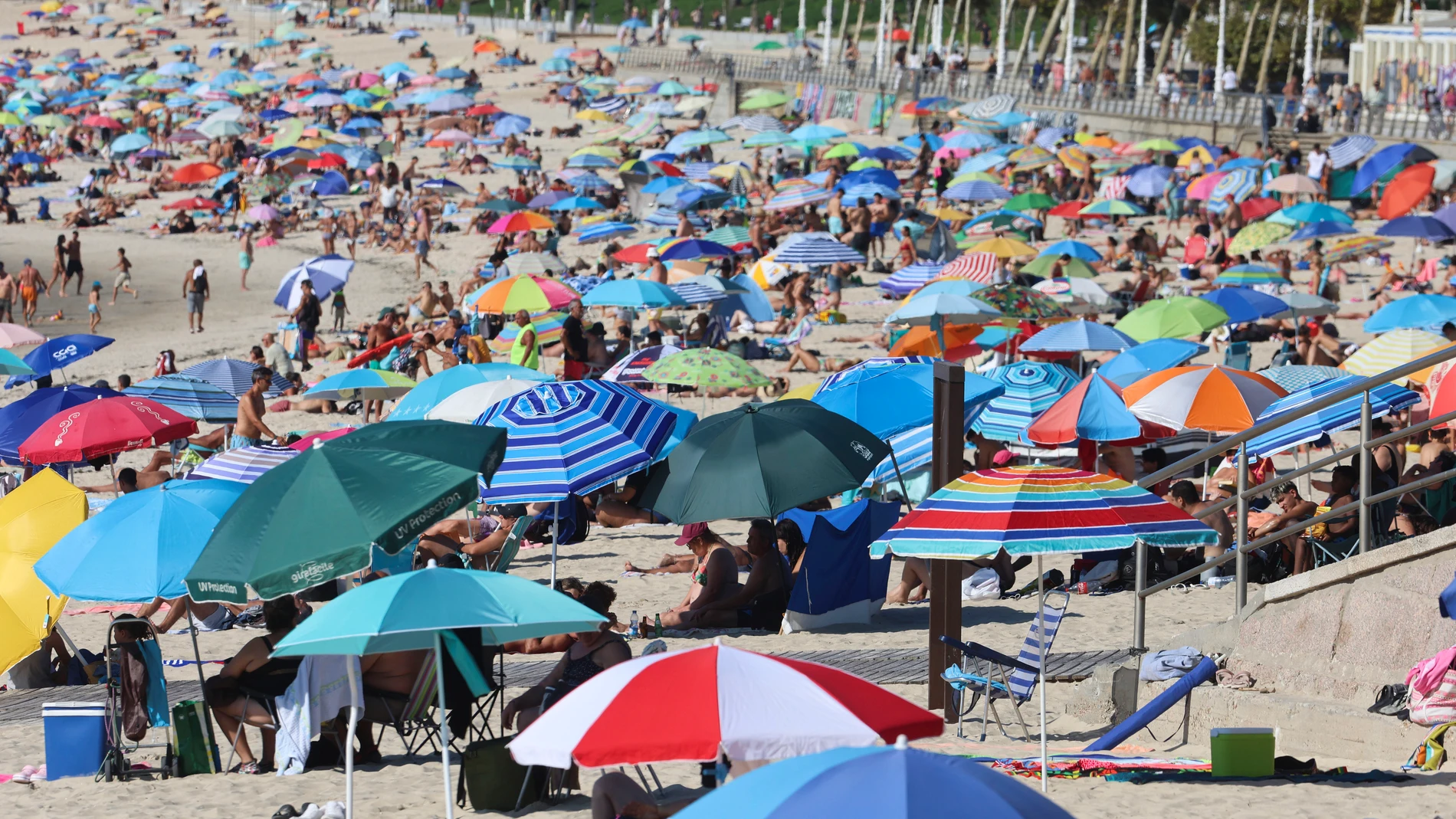
However, the change of season It will not mean an immediate farewell to the heat. The beginning of astronomical autumn will coincide in Spain with summer temperatures, that may exceed 35 degrees in the valleys of several large rivers and reach values between 5 and 10 degrees above what is usual for these dates in large areas.
What happens during the autumn equinox?
Autumn begins at the moment when the Earth reaches the point in its orbit at which the center of the Sun crosses the celestial equator in its apparent southward motion. It is what is known as autumn equinox
During this day, the length of day and night is practically the same. At the same time, while autumn begins in the northern hemisphere, spring begins in the southern hemisphere.
The equinox does not always occur on the same day. According to the National Astronomical Observatory, it can occur between September 21 and 24although during this century the beginning of autumn will take place on September 22 or 23. These variations are due to how calendar years, including leap years, fit with the length of Earth’s orbit around the Sun.
From the beginning of the season, in addition, The hours of daylight are getting shorter and faster. In the Iberian Peninsula, The Sun rises more than a minute later each day and sets more than a minute earlierso at the beginning of autumn daylight time decreases almost three minutes a day.
Autumn begins with midsummer temperatures
The astronomical change will not immediately bring an autumn atmosphere. According to the State Meteorological Agency (AEMET), The beginning of the season will be marked by stable weather, slightly cloudy or clear skies and scarce rains in much of Spain.
Temperatures will be especially high. AEMET spokesperson Rubén del Campo points out that daytime values will be between 5 and 10 degrees above usual, with anomalies greater than 10 degrees in some points of the northern half.
The 35 degrees They will be overcome in different valleys and areas of the west and south of the peninsula, as well as in areas of Galicia, the northeast and the Canary Islands. The highest predicted records will reach 39 degrees in Badajoz this Wednesday, while Córdoba and Seville could reach 38 degrees on Friday and Saturday.
They are also expected temperatures of 35 degrees or more at some point during the week in capitals such as Cáceres, Girona, Granada, Huelva, Huesca, Jaén, Lleida, Logroño, Murcia, Pamplona, Pontevedra, Santa Cruz de Tenerife, Toledo and Zaragoza.
On the contrary, the environment will be cooler in the northwith maximums that will be around the 21-23 degrees in cities like A Coruña, Santander and San Sebastián on different days.
The heat will continue during the first days of autumn
This Monday temperatures will rise in the north and east of the peninsula, the Balearic Islands and the Canary Islands. Tuesday and Wednesday will barely change in general terms, although there will be some drops and rises depending on the areas.
During both days you will be able to achieve moree 36 degrees in the Tagus, Guadiana and Guadalquivir valleys, while on Thursday and Friday the intense heat for the season will continue.
On those days, maximums of at least 34 degrees in the interior of Galicia and the Cantabrian Sea, the Ebro valley and a good part of the southwest, and more than 36 degrees in the Tagus, Guadiana and Guadalquivir valleys.
Furthermore, the Nights will be especially warm on the Mediterranean coast and areas of the southern half, where temperatures will not drop below 20 degrees, giving rise to tropical nights.
The heat will also persist in the Canary Islands, with values between 32 and 34 degrees in much of the archipelago and more than 34 degrees in the south of the islands.
Facing the weekend increases forecast uncertainty. The forecast points to the possible arrival of an Atlantic front to the northwest of the peninsulawhich would favor a drop in temperatures, although they would still be high for the time.
The time change will arrive in October
Autumn will also bring with it the usual time change. On Sunday, October 25, at 3:00 a.m. the clocks will have to be turned back until 2:00 a.m. in mainland Spain, while in the Canary Islands the corresponding change of one hour less will be made.
Although Spain, the European Parliament and the European Commission have been in favor of eliminating time changes, there is still no final decision, so in 2026 winter time will continue to apply.
The station will also have its first full moon on September 26, followed by those on October 26 and November 24.