
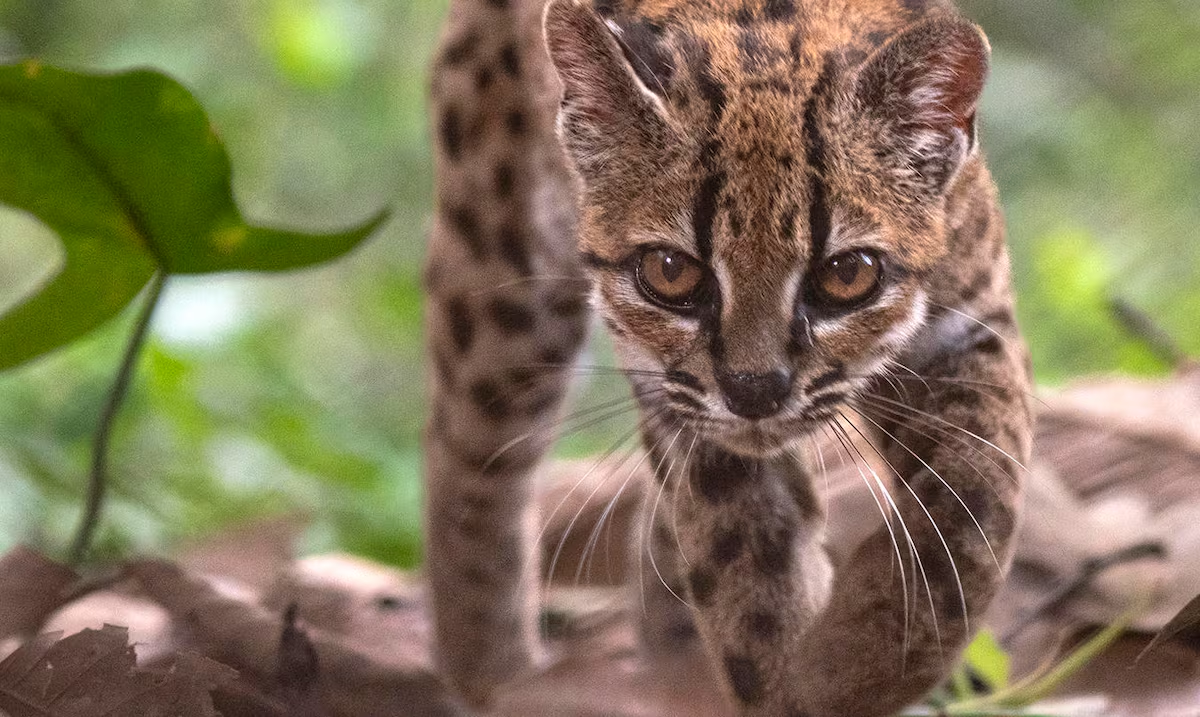
An international team of scientists has identified a new species of wild cat in the Yungas cloud forests of Bolivia, a finding that marks the first scientific description of a new species of wild cat in more than a century.
The species, named Leopardus tilcayo or tilcayo cat, was identified through DNA analysis of historical specimens preserved in museums and samples of live animals, according to National Geographic.
The researchers determined that what was until now considered a single, widely distributed group of cats is actually made up of at least five different species.
The study, published this Thursday in the scientific journal Current Biology, was carried out by an international team that includes scientist Eduardo Eizirik, researcher Jonas Lescroart and National Geographic explorer Paola Nogales Ascarrunz.
The Tilcayo cat is a small feline that measures approximately 1.5 feet from the head to the end of the body and weighs about 3.1 pounds, less than the average domestic cat.
It is distinguished from its relatives, the oncillas, by its larger spots, a longer and thinner tail and a duller coat.
The specimen used for the research is a ten-year-old male that currently lives in the Senda Verde Wildlife Sanctuary, in Bolivia.
The animal arrived at the center around 2017, after a local family who was keeping it in their home handed it over for care. Nogales Ascarrunz met the feline while volunteering at the sanctuary.
The scientific name Leopardus tilcayo pays tribute to the local communities that found and cared for the animal.
The inhabitants of the area called it Tilcayo, a name that the researchers decided to keep to recognize the ancestral knowledge and the relationship of the communities with the feline.
The genomic analysis also allowed us to formally validate four other species of this group: Leopardus guttulus, L. emiliae, L. pardinoides and L. tigrinus, in addition to identifying a new subspecies in the Yungas of Peru, L. tigrinus antisuyo.
The scientists used complete genome sequencing and used genetic material from specimens preserved in museums in Europe and the United States.
Researchers still do not know how many specimens of Leopardus tilcayo live in the wild.
Nogales Ascarrunz is installing camera traps in the forests of the Yungas to document the species, understand its distribution, behavior and habitat needs, in a region threatened by deforestation and mining.