
The trip of the Kings to Ceuta continues to find space in the calendar. Almost two weeks after Pedro Sánchez solemnly announced in Congress that Felipe VI would visit the autonomous city “in the coming weeks”, Zarzuela and Moncloa have not yet set a date.
Government sources explain that the respective heads of the King’s House, Camilo Villarino, and the Presidential Cabinet, Diego Rubio, are “squaring agendas” to accommodate the displacement of Felipe VI and Letizia. The decision is already moving in “higher spheres”, with a direct dialogue between both to find a date compatible with the institutional agendas of the Executive.
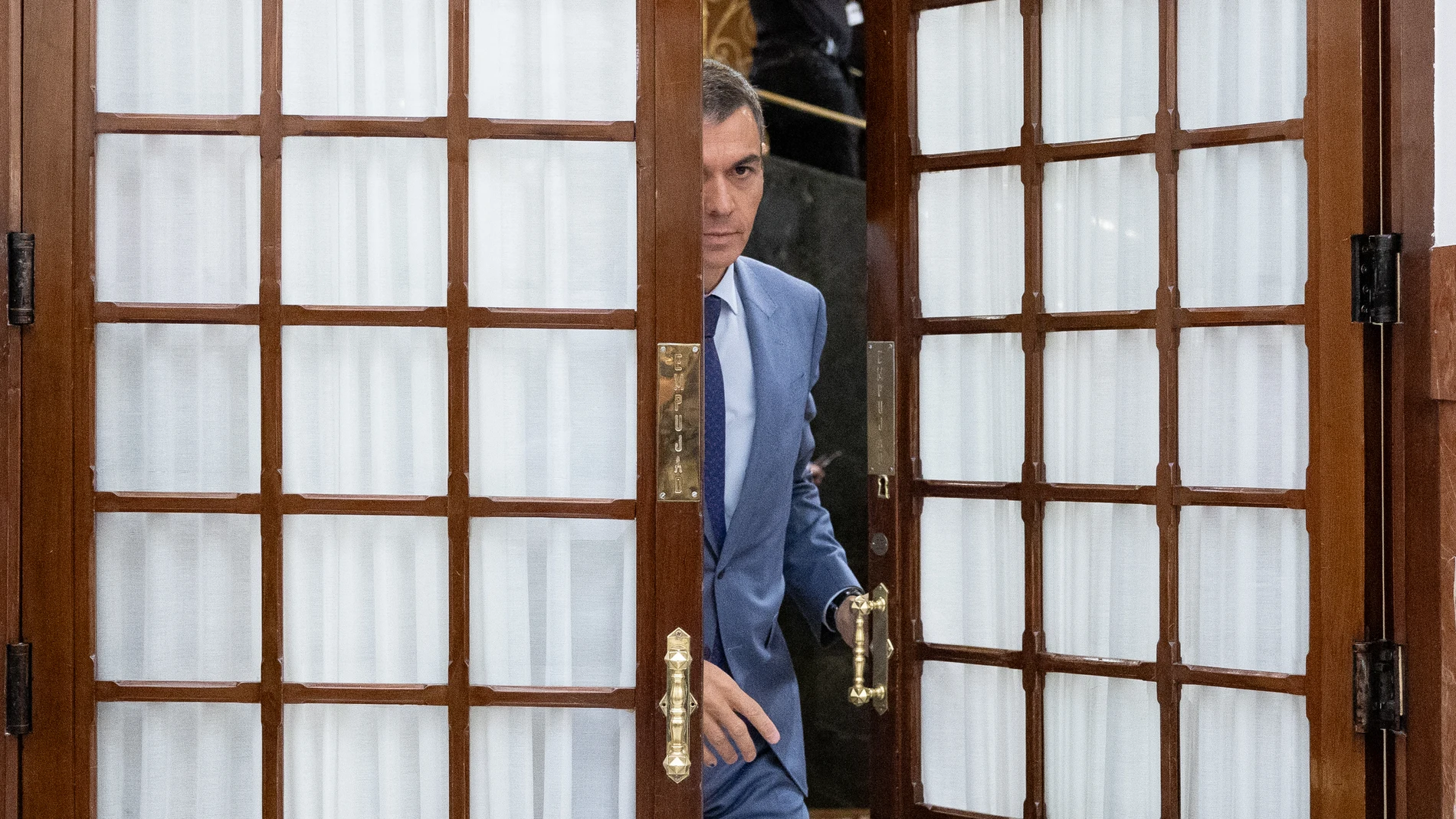
The Government explains that Sánchez is considering accompanying the monarchs, although his presence is not closed. Diplomatic sources familiar with the preparations stated, however, that “the most likely thing” was that the president would refrain from accompanying Felipe VI and Letizia.
The international agenda makes it difficult to fit in. The state visit at the end of September by the French president, Emmanuel Macron, to Madrid and Sánchez’s trip to New York next week to participate in the United Nations General Assembly determine the calendar. “Due to hierarchy, a minister can change his agenda completely before the Royal House, but not the president,” they explain in Moncloa.
Displacement also has an institutional and political burden that is impossible to separate from the crisis that Ceuta has been going through since July 30. Felipe VI and Letizia have never officially visited the two autonomous cities since the King’s proclamation in 2014. The last visit by a head of state occurred in 2007, when Juan Carlos I traveled to Ceuta and Melilla and provoked a strong diplomatic reaction from Morocco.
Zarzuela has specified that the trip was already being prepared before the migratory avalanche. But the crisis has given displacement an extraordinary dimension. Casa Real confirmed on September 10 that Felipe VI will travel accompanied by Letizia and the monarch has shown a special interest in visiting the cities since the massive entry. It was Sánchez who publicly introduced a deadline. On September 3, he assured Congress that the Government had “shared the need” for the head of state to visit Ceuta and Melilla “in the coming weeks” to convey “the State’s absolute commitment” to both cities.
Six days later he maintained the commitment, but lowered the temporal precision. Asked on TVE if the trip would take place in September, he avoided confirming it: “The dates will be communicated jointly by the Government and the Royal House.” He limited himself to pointing out that both institutions were working “in the near future.” The lack of calendar coincides with an exceptional situation.
The Government continues to try to get the thousands of migrants who remain without accommodation off the streets and recognizes that fully returning to normality will take time.
Moncloa sources, however, deny that the visit is being delayed until the migrants disappear from the streets. The Presidency tries to separate both issues, although it recognizes that “security is one of the aspects that most concerns” and relates that dimension to the humanitarian need to provide accommodation. Felipe VI has been personally informed of the situation.
The King met in Zarzuela with the Minister of Defense, Margarita Robles; the chief of the Defense Staff and other military officials, including the general commander of Ceuta. Casa Real explained that the meeting responded to the King’s will, as captain general of the Armed Forces, to learn about the operations deployed. On Monday he took another step by publicly referring to Ceuta for the first time since the beginning of the crisis.
Felipe VI recognized the work of public servants and volunteers in a situation that he described as “extraordinary complexity” and highlighted the response offered by the city. The Government continues to investigate what happened during the hours in which the Moroccan forces stopped containing the entrances and still does not attribute to the neighboring country an active decision to cause the avalanche.
The trip will also have an inevitable external reading. Morocco reacted harshly to the visit of Juan Carlos I in 2007 and Rabat is now at the center of the unknowns opened by July 30. The eventual presence of Sánchez would add another political dimension. It would turn the displacement into a joint image of the head of state and the president of the Government after weeks of controversy over the institutional management of the crisis.