
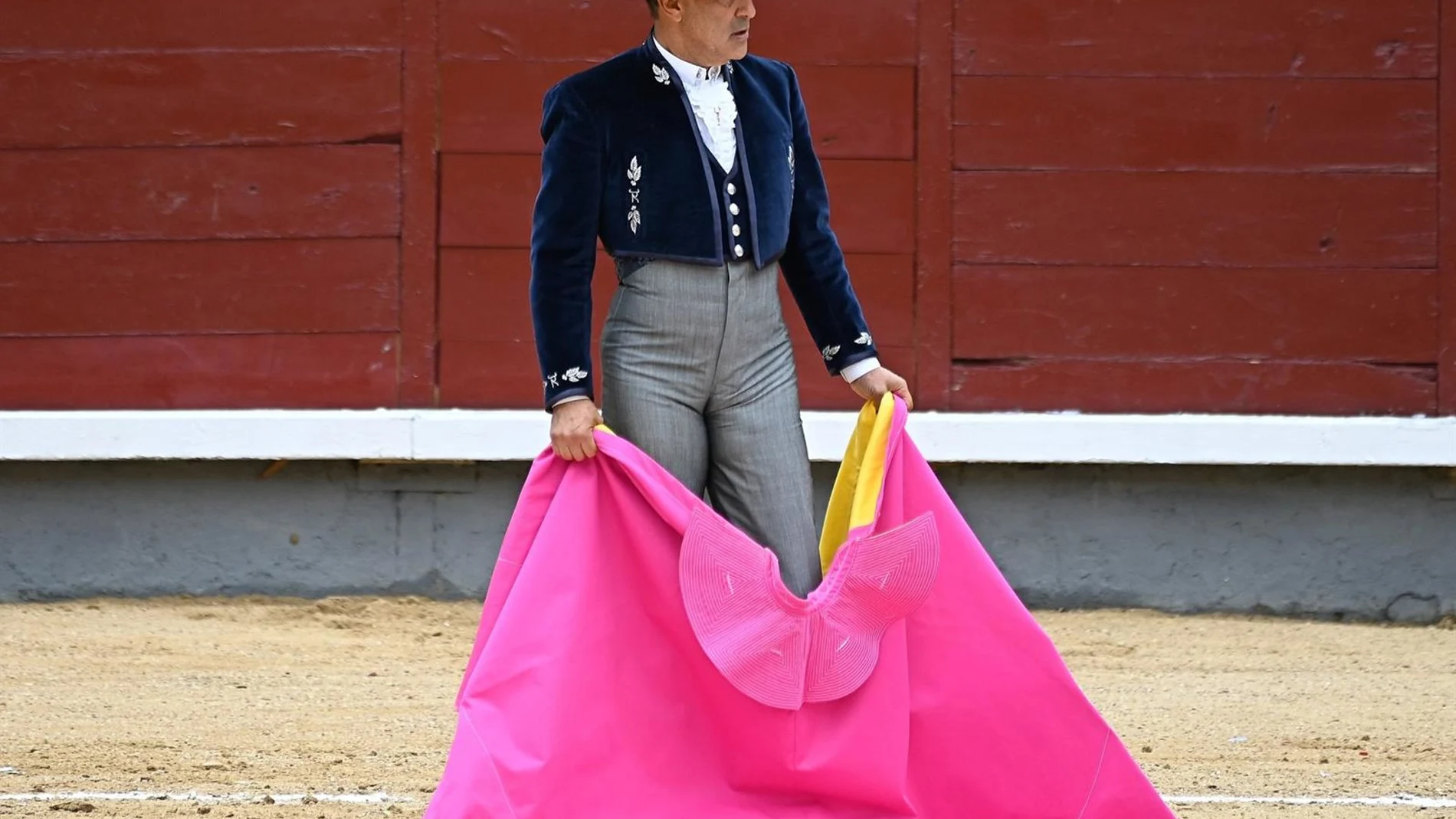
The name of Cesar Rincon is back in the news after the death of Luis Álvarez, one of the men who were linked to the career of the Colombian bullfighter during the years of greatest projection of his career. Rincón, who became one of the great figures of bullfighting during the nineties, later found another place, far from the bullrings, closely related to his professional life.
It is about The Towerhis livestock located in Santa Cruz de la Sierra, in Cáceres. It was there where the Colombian most intensely developed his role as a rancher after leaving the bullring and where he found a landscape that, despite being thousands of kilometers from his native Bogotá, made him feel close to his roots.
The farm is located about 15 kilometers from Trujilloin the province of Cáceres. Rincón went on to explain that settling in Extremadura meant for him a return to his origins due to the similarities he found between the Extremaduran landscape and the land in which he was born.
El Torreón, César Rincón’s livestock farm in Extremadura
The story of The Tower It began long before cattle ranching came into the hands of the Colombian bullfighter. Its origins date back to the mid-20th century and it went through different owners until Rincón took over it.
The exploitation is currently listed in Santa Cruz de la Sierra and is dedicated to raising brave cattle. Their badge is yellow and scarlet and the sign of their cattle is prominent on both ears.
For Rincón, livestock farming was a way to remain linked to the world of bullfighting from a different position. After his retirement, he dedicated a good part of his time to the care and selection of the animals, a task that he himself related to the possibility of returning to the festival part of what he had received during his career.
An Extremaduran landscape that reminded him of Colombia
The choice of Extremadura also had a personal component. Rincón claimed that that area allowed him to feel closer to Colombia because of the similarities he found between both landscapes.
His connection with the farm thus ended up becoming something more than just a livestock activity. After spending a good part of his career traveling and bullfighting, he found in the Extremaduran countryside a place to concentrate on breeding the fighting bull and lead a different life from the one he had maintained during his years as a matador.
At that stage he explained that he enjoyed observing the animals in freedom in the field and following their evolution until he verified which ones met the conditions he was looking for for livestock farming.
A shopping plaza for about 500 people
The Rincón project in Extremadura was not limited only to cattle raising. On the farm he even proposed the construction of a shopping plaza with capacity for more than 500 people.
The intention was that that space could be used for the work of livestock farming and, at the same time, become another point of interest within an area historically closely linked to the countryside and the fighting bull.
The Torreón thus allowed César Rincón to remain connected with the bullfighting world even after leaving the bullrings. For years, the Colombian found a new routine there focused on the field, the animals and the selection of cattle.
César Rincón returned to the ring in 2026
That withdrawal, however, has not meant a definitive goodbye. César Rincón announced in 2026 his intention to fight again at the age of 60, almost two decades after his retirement.
The Colombian explained that his return was related to the situation of bullfighting in his country and his intention to defend Colombian bullfighting culture. Its purpose was to participate in different bullfights both in Colombia and in Europe.
The return opens a new stage for those who had found in livestock farming a different way to continue linked to the bull. The Towerin the Cáceres countryside, remains one of the most personal pieces of that trajectory and as the place where Rincón found an unexpected connection between Extremadura and the Colombia in which he was born.