
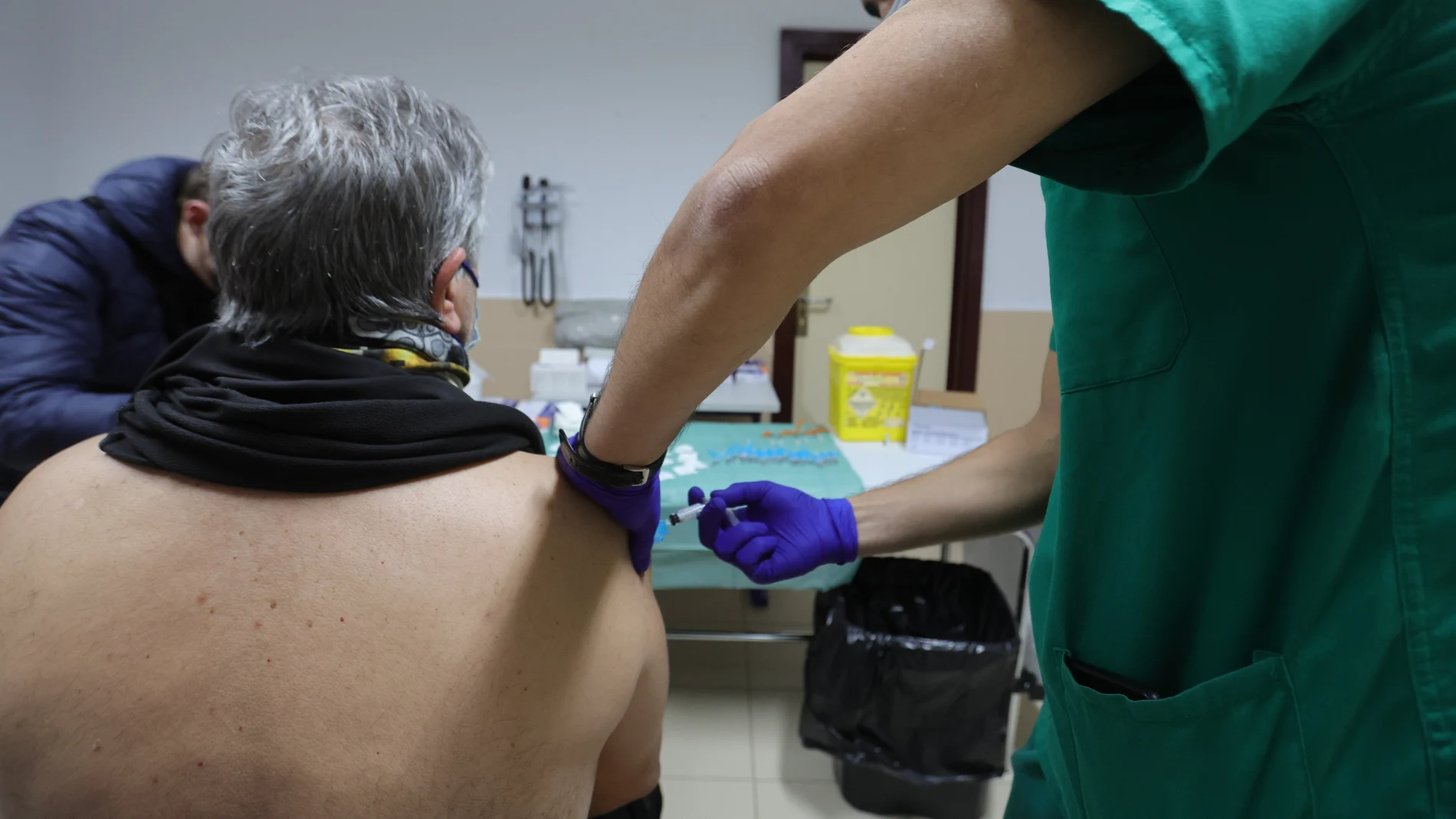
One of the technologies that saves the most lives in the world every year is also one of the oldest and most in need of updating. The most widely used flu vaccine production method is based on innovations from more than 80 years ago. Most current formulas are made by injecting the virus into fertilized and disinfected chicken eggs, where they are left to grow for a few days. Then, the liquid obtained is extracted to purify it and inactivate the viruses. This modality may have an uncertain future. Researchers at the University of Michigan have developed a new, faster, cheaper and safer process that uses yeast as a culture medium. At the moment, results from studies with mice have been presented that suggest that this technology could provide long-range flu vaccines that would not need to be renewed every year like the current ones.
“It sounds like science fiction, but we are really impressed with the ability of yeast to serve as a catalyst for the mass production of vaccines,” said the lead author of the work, chemical engineer Fei Wen, enthusiastically.
It is surprising how little flu vaccine manufacturing has advanced compared to other current medical technologies. Today we can sequence viruses in a matter of hours, design antigens through bioinformatics and manufacture recombinant therapies, but a large part of flu vaccines still depend on chicken eggs. That does not mean that the control, engineering and purification processes have not improved greatly, but the base production platform still needs updating. Especially if you want to offer protection against multiple variants of the pathogen and for long periods of the patient’s life.
Most current vaccines target hemagglutinin, a protein on the surface of the virus that activates the immune response. But that protein mutates too frequently, preventing vaccines from having universal and long-term effectiveness. Each new season, manufacturers analyze the most common mutations of the current year and choose a few to create therapies. Not all variants can be included in the vaccination schedules and patients are forced to get injected every year.
The Michigan team has now chosen another therapeutic target, the viral protein M2. This substance, involved in the virus replication cycle, is less prone to mutation. Since the viral variant that caused the 1918 flu pandemic, misnamed “Spanish flu”, M2 has remained practically stable in all varieties of influenza A viruses that have affected humanity.
This stability is a great advantage for medical science because pandemics generally occur when a pathogen jumps from one individual to another thousands of times and acquires new infectious qualities.
In addition to selecting the M2 protein, the team of chemical engineers looked for a cheaper and more accessible method for growing viruses that did not require incubation of chicken eggs.
For this they used Saccharomyces cerevisiae, the bread yeast. With it, they made particles similar to a virus in the laboratory on which the M2 protein can be deposited. Yeast particles mimic the shape, size and behavior of a virus, but do not contain the genetic makeup that makes them infectious.
It was not clear, however, that the final product obtained was capable of activating the immune response in the vaccinated organism in the same way as current vaccines.
To verify this, the authors of the work vaccinated 18 mice with purified M2 protein vaccine. After a few days, the rodents’ blood turned out to contain large amounts of antibodies against M2. The animals were then exposed to three different types of flu viruses and 100% protection was observed: none of the mice contracted the disease.
This new therapy could allow vaccines to be made much faster and cheaper, so that the pharmaceutical product that reaches the market can be updated more often. But the most important thing is that it focuses on a part of the virus that barely mutates. If M2 has remained stable almost since 1918, that means that a person vaccinated then with such an immunization would still be immune to the flu today.
At the moment, it is not clear whether the effect observed in mice can be replicated in humans. The next step will be to investigate how long immunity against M2 really lasts in mice. Researchers will need to determine whether the protection is longer lasting than that of current vaccines.
But can it be life-long protection? Experts do not rule it out. If so, in the not-too-distant future, vaccination against the flu could be similar to that used against diseases such as measles, chickenpox or mumps… A dose or two throughout life could end the risk of suffering from the disease.