
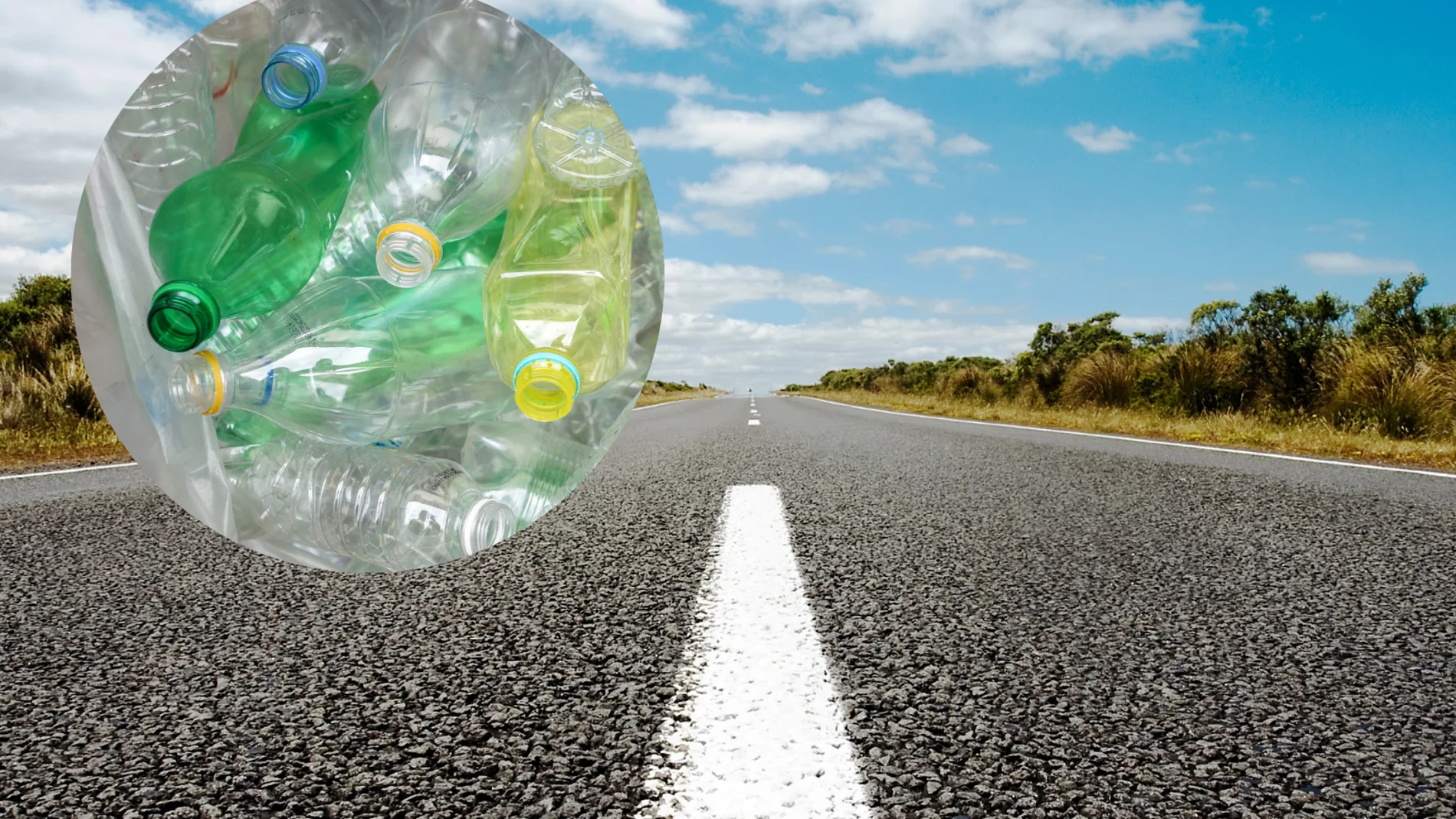
Single-use plastic bags are one of the most harmful elements for the environment. Its convenience and low cost have caused massive consumption of this type of products, which are often forgotten in streets, parks or natural spaces. In order to give them a second life and avoid their polluting effects, a city in Nebraska decided to reuse this material to pave a road.
In June 2025, the city of South Sioux City, located in Dakota County, United States, announced what is the first road paved with plastic bags in Nebraska, according to its mayor, Rod Koch. To achieve this, they had to crush two million units of this productwhich were mixed with more traditional materials such as asphalt or gravel.
In total, they managed to pave a 1,200-meter stretch of what is known as Foundry Road, near Siouxland Freedom Park, as well as the Al Bengston bicycle lane. An initiative that arose after research carried out at the University of Nebraska-Lincoln, in which they were experimenting on the introduction of plastic waste into asphalt. And it could be carried out thanks to an investment of $500,000 from the Environmental Fund.
A mixture of crushed plastic and recycled asphalt
As explained by Jamilla Teixeira, associate professor of civil and environmental engineering at the University of Nebraska-Lincoln, to the media “Nebraska Today”, this is a pilot project with which they intend to test the durability and its resistance to humidity and the extreme weather conditions of the state. All with the intention of incorporate this type of materials to promote their reuse.
However, plastic bags are not the only recycled component of the mix they used, they also included 25% reused asphalt, a material that is already widely used by the Nebraska Department of Transportation. The objective of this test is check if plastic waste can be integrated into infrastructure more durable to avoid their harmful effect on the environment.
For Lance Hedquist, municipal administrator of South Sioux City, this project responds to a growing global trend to reuse such polluting materials as plastic. “We are putting products to good use that would otherwise be thrown away and pollute the environment. So we are using plastic bags in a positive way“he explained to Nebraska Public Media.
Other countries are already changing asphalt for other alternatives
Well, although this city is the first to carry out this type of initiative in the state of Nebraska, it is not the first in the United States. Similar projects have been carried out in Colorado and Wisconsin, where they also used shredded plastic to incorporate it into the asphalt of some of their roads. Likewise, outside the North American country, Countries like India have been using this material for more than 25 years.
The differentiating element of this project is that different researchers will be evaluating how this mixture responds to both use and humidity and weather conditions, all to determine if it is an effective solution to the accumulation of plastic bags and if it can be used in other types of infrastructure. If not, They will continue to look for another use for this type of waste.
For its part, another of the solutions that is attracting the most attention internationally is the one implemented in Marrakech, a city whose maximum temperatures are close to 48ºC. The high temperatures, added to the impermeability of the asphalt, generate a heat island effect in their urban centers, and to avoid this, they began to use olive pits to improve the filtration of water to the ground. Mixtures that, although surprising, They will be essential for the roads of the future.