
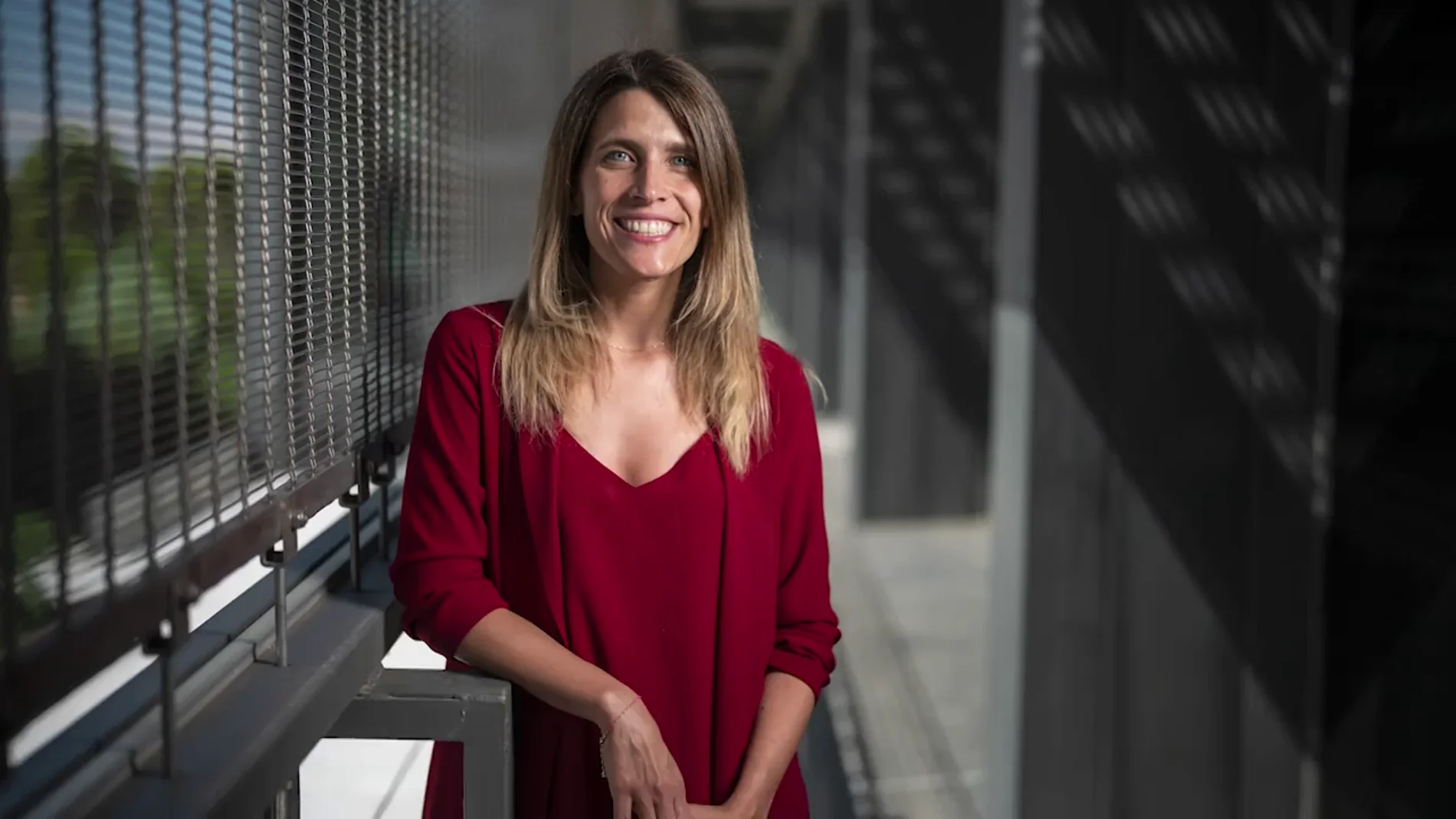
Originally from Vigo, Ana Gago-Veiga, head of the Headache Unit at the La Princesa University Hospital, in Madrid, participates in research on the prediction of migraine attacks. Yesterday was the International Day of Action against this disabling neurological disease.
Although it affects 12-14% of the population, there is still a lot of stigma around this disabling disease. Because?
One of the reasons is that it cannot be seen even with an image test. Many times society, even some colleagues, do not understand this. But this pain can be highly disabling. Thus, it is the first most disabling disease of all those in women of childbearing age. Furthermore, it has become trivialized as it is more prevalent in women.
“It is the most disabling disease of all those in women of childbearing age”
75% of patients take more than two years to obtain a diagnosis. What is it due to?
Many times the patient himself normalizes his pain. It is not uncommon for a patient to come to the clinic after 10 years with more than 15 days of pain per month because they have seen their mother suffer from this pain and have assumed it as something normal that they have to accept. Imagine suffering more than 15 days of pain a month for more than 10 years… It is extremely important that neurologists, not only those headache experts and primary care doctors, emphasize how important it is to diagnose a patient early because it can radically change the course of the disease. When the bonfire is small and the fire takes a short time, it is very easy to cut it. When a huge fire has already broken out, it is more difficult, because the brain that has been suffering for so many years is much more resistant to the medications we can use.
The migraine does not hurt from minute 1. In what phase does it hurt?
Pain is one of the main symptoms, but it is not the only one. A migraine attack is divided into four phases. The first is the premonitory phase, which can appear up to 48 hours before the onset of pain. And it has very non-specific symptoms such as changes in character, appetite… Then comes a phase called aura, which is not present in all patients, and which are usually visual symptoms such as flashes of light, vision through water, vision through a tunnel. Then comes the pain phase and then what patients call a hangover, the postdromic phase, in which they are very tired, it is difficult for them to concentrate…
What rare symptoms are also part of a migraine?
Those that occur in the premonitory phase, such as character changes or being very tired for no reason, as well as craving certain foods or having difficulty concentrating without pain.
What myths are there?
Until recently, it was said that chocolate was what caused migraine attacks and it is possible that in some patients there are certain food triggers, but these are few cases. Most patients do not have a specific food that triggers a migraine. In fact, now with more recent studies it has been seen that this desire for sweets probably already indicates that the patient is entering their migraine attack. There are other myths, such as that it is an exclusive disease of women or that it disappears in them with menopause. And although it does happen in a large percentage, especially in those whose migraines improved during pregnancy or worsened during their periods, in the rest of the cases it is not common.
What are the most common comorbidities? And how are these patients approached?
The risk of a depressive syndrome in these patients is between 2 and 4 times more prevalent than in the rest of the population. As for the approach, it always has to be personalized. Not only because of comorbidity, but also because of hobbies. You cannot give certain treatments to someone for whom sport is key in their life than to a patient who works in blast furnaces. And in relation to mental health, there are treatments that have a dual effect, that is, if I use it for migraine it is also good for anxiety and depression.
How do healthy habits improve the course of the disease?
You should never blame yourself for having a migraine attack. It is a disease that sometimes appears even if we do everything rigorously perfect. Aside from this, I always insist on a magic word to patients: routine. The more routine it is, the less likely the migraine brain will be to suffer an attack. In relation to sleep, sleeping less, but also sleeping more has an impact, as well as waking up early one day and late on another. Diet is also very important. There are only 20% of patients who have migraines in relation to a food. I say this because we should not restrict what we eat. You must have a balanced diet. The better we are nourished, the less ultra-processed foods we eat, the better off we will be. Prolonged fasting can promote migraine attacks. Hydration is also very important, and not only in summer, because dehydration can lead to an attack. In addition, it is scientifically proven that physical exercise also improves and can reduce the number of migraine events, and the less stress the better.
How much do genes weigh?
There is an important genetic component. If you have two parents with migraines, the risk is around 70% and if only one of them has migraines the risk is close to 50%. But it’s not all genetics. Environmental and hormonal factors also influence the evolutionary course of the disease.
Information prepared in collaboration with Teva