
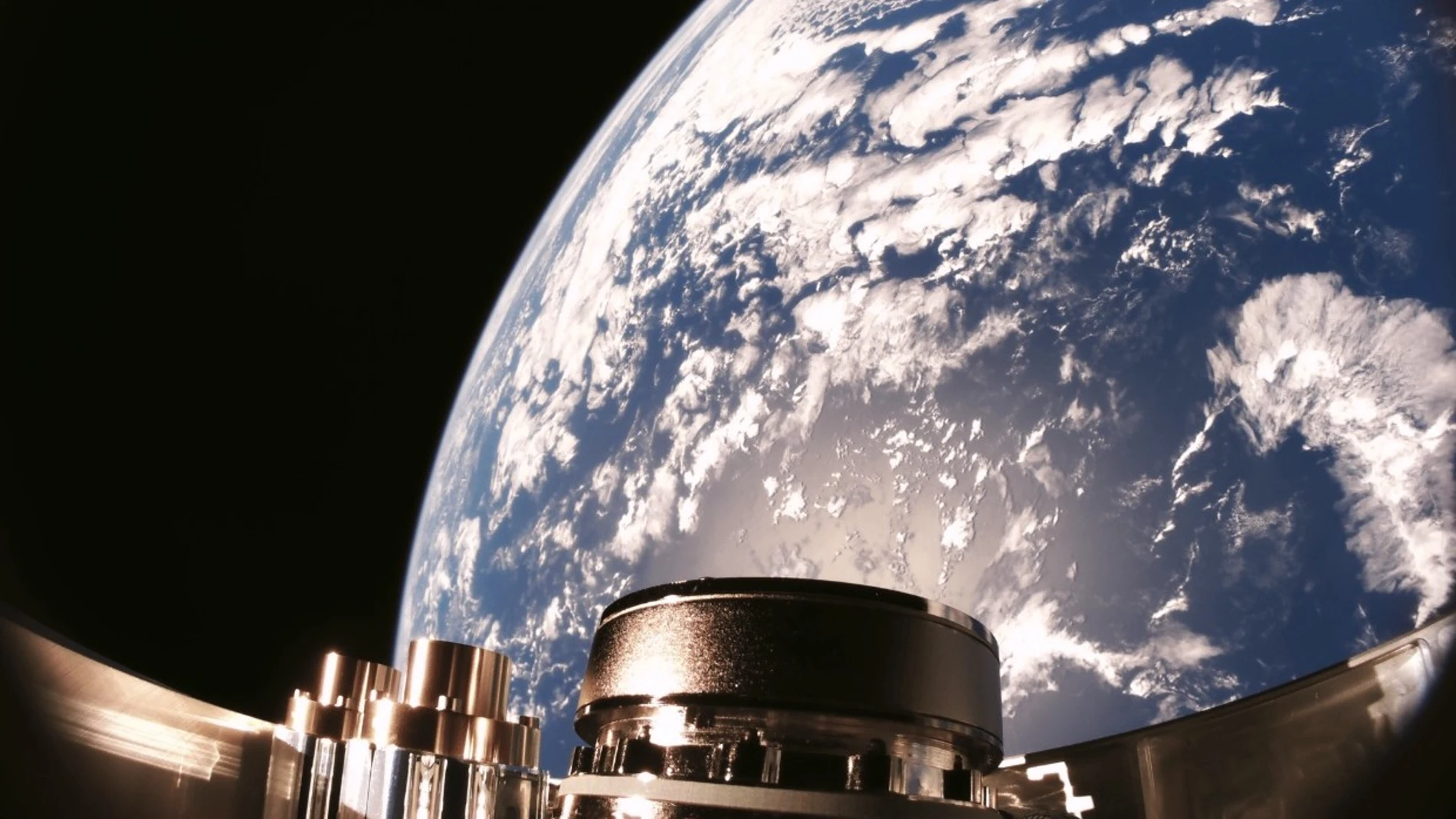
Muon Space has announced the first successful in-orbit ignition of a zinc-fueled Hall effect thruster. Your system starlight It worked on the first try and produced a measurable change in the trajectory of the vehicle carrying it, SERT-III. Although the test was carried out on July 1, the company announced the achievement on September 10.
Hall effect thrusters have been used in space since the 1970s and allow move satellites consuming little propellant. They operate using electricity and electric and magnetic fields, providing a small thrust that they can maintain for long periods to modify an orbit. Its greater use of propellant allows consume less than with chemical propulsion to perform the same maneuveran advantage for vehicles that must perform maneuvers for years.
The main difference of Starlight is in replacing the xenon or the krypton common for zinc stored in solid state. These gases require high-pressure deposits, while the metal remains stable at room temperature without pressurization. To use it, the system vaporizes it before ionizing it and expelling it.
The advantages that Muon highlights have to do with price and ease of storage and supply. Zinc is cheaper and has a wider supply than these noble gases. Dispensing with pressurized tanks can also simplify system installation and ground operations. The savings are especially relevant for operators that deploy dozens or hundreds of satellites.
According to Muon, Starlight allows you to raise the orbit, maintain the orbital position and perform controlled deorbits on small and medium-sized satellites.. These last maneuvers help to deorbit the vehicles at the end of their mission. The information released does not provide specific figures for electrical power, thrust or mass of the system that would allow its performance to be compared with other thrusters.
The company designed the SERT-III experimental vehicle to test how Starlight behaved in real orbital conditions. Its sensors needed to measure performance and interactions with the satellite itself without having to put a customer’s mission at risk. According to Muon, the delivery and vaporization of zinc worked correctly and the data coincided with the predictions from the ground tests.
The engineers also monitored the unwanted zinc buildup on the vehicleone of the aspects that must be controlled when expelling this metal. They used sensors capable of measuring minute amounts of deposited material. Near the propeller they detected less accumulation than expected by the models prepared before the flight, a result that will allow us to refine the estimates for future satellites.
The CEO of Muon, Johnny Dyerconsider the proof an important milestone for electric propulsion. Its relevance lies in having tested an alternative in orbit that could reduce costs and supply difficulties, but its reliability still needs to be verified during prolonged use and preparation for its manufacture.
Muon plans to incorporate the current generation of Starlight into customer missions before the end of 2026. In parallel, it is developing Gen2, a larger second generation intended for larger space vehicleswhose orbital test is scheduled for the first quarter of 2027.