
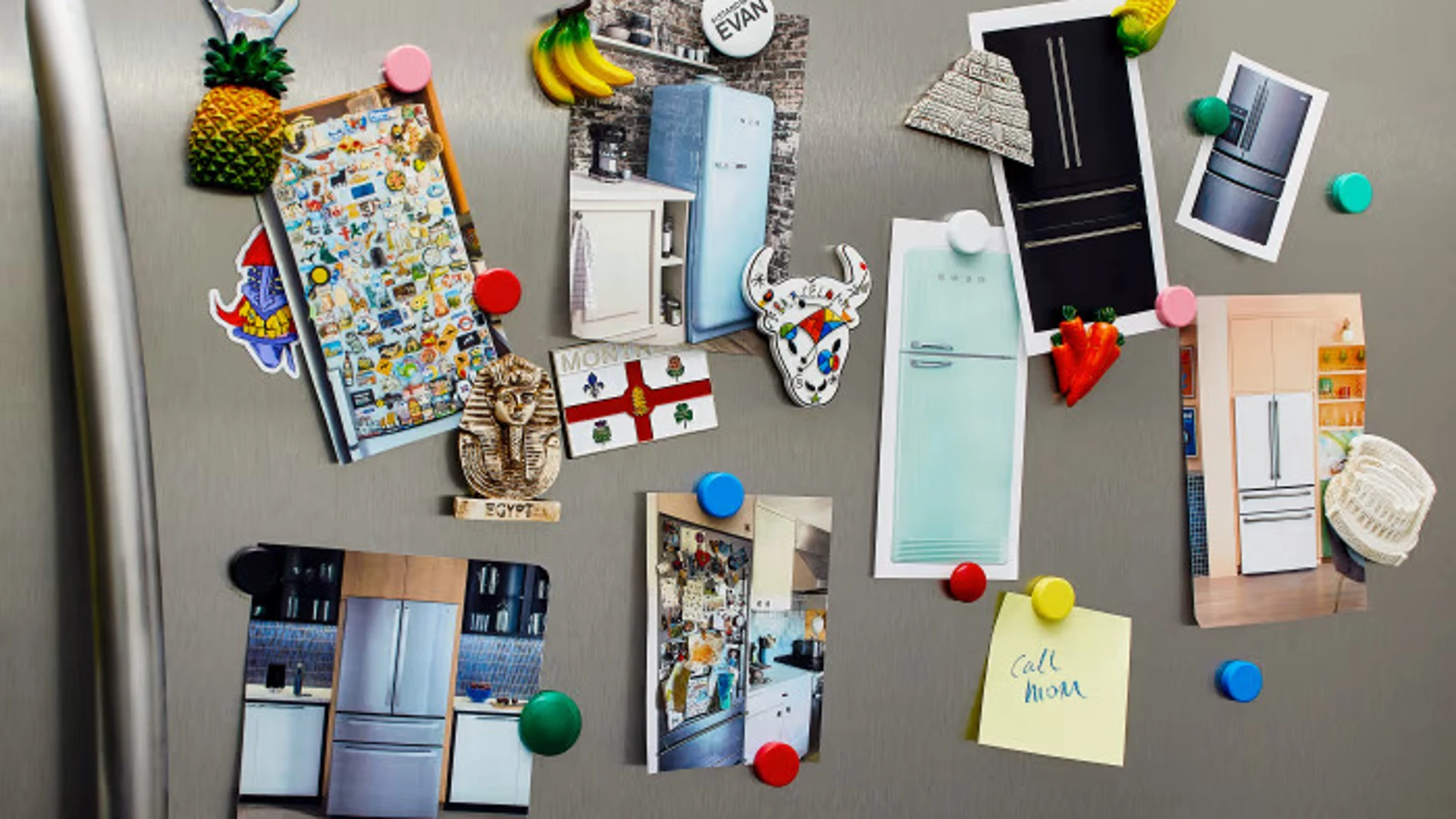
In many homes, the refrigerator door ends up becoming a place reserved for what the family considers special. Photographs, drawings made at school, good grades or a medal coexist among magnets and everyday reminders. For parents it may simply be a sign of pride, but for a child seeing something you have done there may have a different meaning.
During childhood, adults’ reactions help children interpret their own abilities and the value of what they do. Therefore, choosing a drawing and placing it in a space where the whole family passes can function as a small form of recognition.
It is not necessary to accompany it with a great celebration. The decision to keep it and make it visible already allows the child to verify that his parents have noticed something that could be important to him.
What a child can interpret when seeing their drawings on display
The children they do not value their creations in the same way as an adult. A seemingly simple drawing can be the result of an entire afternoon of work, while a medal can commemorate weeks of training or the effort to learn something they were previously unable to do.
When these objects occupy a visible space at home, recognition stops occurring only at the moment the child hands them over to their parents. The drawing is still there the next day and the medal is still part of the family space weeks later.
This kind of recognition connects with psychological needs how to feel capable and perceive yourself integrated within a group. The self-determination theory of Edward Deci and Richard Ryan precisely places competence, autonomy and relationships with others among the basic psychological needs.
The key, therefore, is not in the refrigerator as an object. What is relevant is the response that the child receives and the meaning that this recognition acquires at home.
Not everything should depend on winning a medal
There is an important difference between exclusively celebrating results and paying attention to the path that led to them.
A medal allows a child to be congratulated for having won a competition, but it also opens the possibility of recognizing the hours you have trained, your perseverance or the difficulties you have had to overcome. The same thing happens with a drawing. The result may be more or less pleasing, while behind it there may be learning, patience and several attempts.
Putting too much emphasis on qualities like being “the smartest” or “the best” can cause all the attention to end up focusing on the result. Also recognizing practice and perseverance shifts part of that focus towards what the child can control.
This becomes especially important when a worse result arrives. There won’t always be a medal to hang or an outstanding grade to celebrate. If family recognition has also been present during learning, Making mistakes no longer means that all previous effort has lost its value..
The danger of associating parental pride solely with winning
Showcasing your children’s achievements does not have to be positive in any circumstance either. Much depends on the message that adults build around them.
A child who continually hears that his parents are proud when he wins may end up interpreting that approval as dependent on his results. That is why it is relevant that the recognition does not appear only when a prize arrives.
The difference can be found in something as simple as asking how you managed to finish that drawing, being interested in what was most difficult for you, or recognizing how much you have improved since you started.
In this way, a medal continues to be a cause for celebration, but does not become the only reason to value what the child has done.
The drawings on the refrigerator also talk about family
There is also a much simpler explanation for why so many parents accumulate their children’s work in the kitchen. They are memories of stages that pass quickly.
The first recognizable drawing may end up being replaced by a more elaborate one. Then come photographs, school work, diplomas or memories of sports activities. The objects change as the objects do too. children’s interests and abilities.
For parents they represent moments that they want to preserve. For your children, finding them in a place where the whole family passes can convey to them that what they do deserves attention and that his parents are interested in it.
That doesn’t mean that putting a drawing on the refrigerator will automatically improve the self-esteem of a child. There is also no direct relationship by which accumulating more rewards in sight produces greater psychological benefits. The meaning depends on how the family responds to successes, attempts and also failures.
Therefore, behind that seemingly small gesture there may be something more than pride. The important thing is not so much that a medal ends up hanging on the refrigerator as that the child perceives that he has also seen everything he did to get it.