
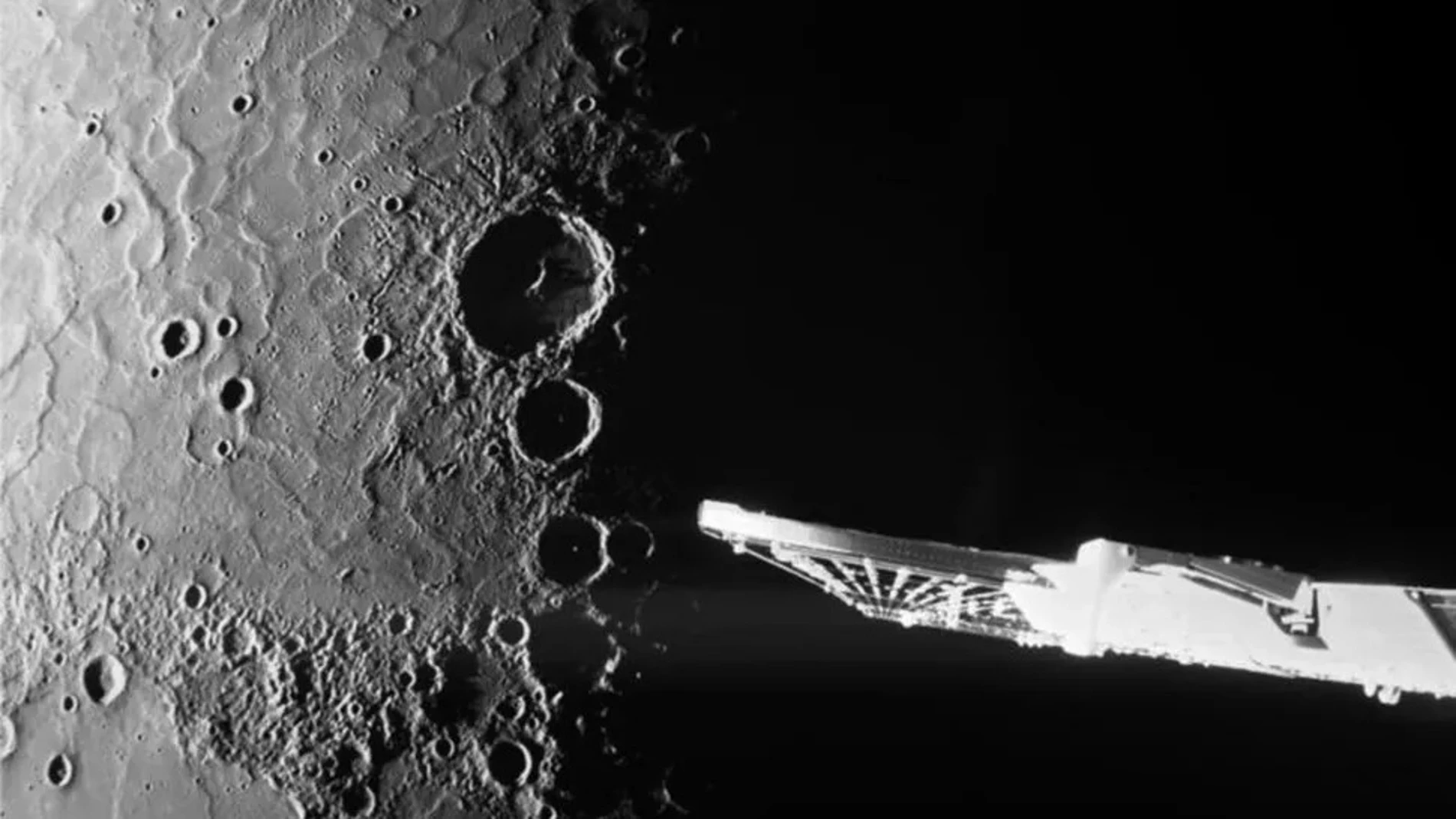
After almost eight years traveling through the inner solar system, the mission BepiColombo has begun the main stage of its mission in Mercurythe least explored planet in the inner solar system. This Thursday, September 3, its two scientific probes separated from the transport modulean essential step so that both can enter orbit around the planet on November 21.
BepiColombo is a joint mission of the European Space Agency and the Japanese space agency JAXA that took off in October 2018. Its objective is to study Mercury with two specialized orbiters that will work in coordination and allow different aspects of the planet and its environment to be observed simultaneously.
During these eight years the two probes have traveled in the Mercury Transfer Module or MTM, a European module responsible for providing energy and propulsion during the interplanetary journey. The set has used gravitational assistance from the Earth, Venus and Mercury itself to progressively modify its trajectory and reduce the speed necessary to be trapped by the gravity of the planet closest to the Sun.
Before separating from MTM, BepiColombo had already carried out six Mercury flybys between 2021 and January 2025. Some instruments were able to take advantage of these encounters to collect data, although the configuration used during the trip prevented much of the scientific equipment they transported from working.
The two probes They still stay together after separation carried out this Thursday and will continue like this when they enter orbit of Mercury on November 21. He Mercury Planetary Orbiter European and the Mercury Magnetospheric Orbiter Japanese, known as Mio, will separate between December 9 and 10. Scientific operations themselves will begin in April 2027.
The Mercury Planetary Orbiter will carry the burden of direct study of the planet through its 11 scientific instruments. It will map the surface and minerals of the crust, measure the gravitational field and study geological formations such as volcanic deposits and peculiar depressions with a lighter surface than the surrounding terrain, known in English as hollows. It will also analyze how charged particles from the Sun affect Mercury.
The Japanese Mio probe will focus mainly on the magnetosphere, Mercury’s extremely tenuous atmosphere and the dust present in its surroundings. Both ships also have instruments to measure the magnetic field, so They will be able to study it simultaneously from two different places instead of depending on observations made from a single position.
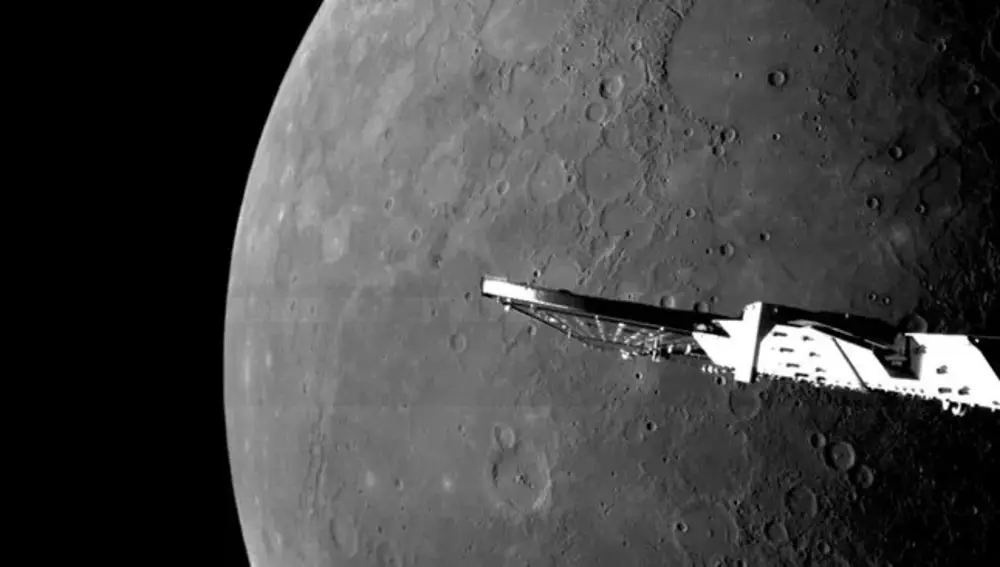
Mariner 10 and MESSENGER, the only two missions to Mercury in more than half a century
Mercury is especially interesting because the only two missions that have previously visited it left several important questions unanswered. Mariner 10 made three flybys in 1974 and 1975 and provided the first close images of its surface, in addition to confirming the existence of a tenuous atmosphere and a magnetic field.
The arrival of MESSENGER to the orbit of Mercury 2011 allowed us to study the planet for four years and mapped its entire surface for the first time. Their observations showed a world stranger than expected, with a huge metal core in relation to its size and a magnetic field whose center is noticeably displaced from the center of the planet.
MESSENGER also discovered the hollows and detected an unexpected abundance of volatile elements on the surface, materials that scientists did not expect to find in such quantities on a planet so close to the Sun. The data obtained by the mission also reinforced the evidence that There is water ice in craters in the polar regions that are never reached by sunlight..
MESSENGER’s orbit allowed study the northern hemisphere much better than the southernso BepiColombo will be able to now fill in some of those gaps. Their instruments will also use different techniques to determine the composition of the rocks and look for clues about How could a planet with such unusual characteristics form?.