
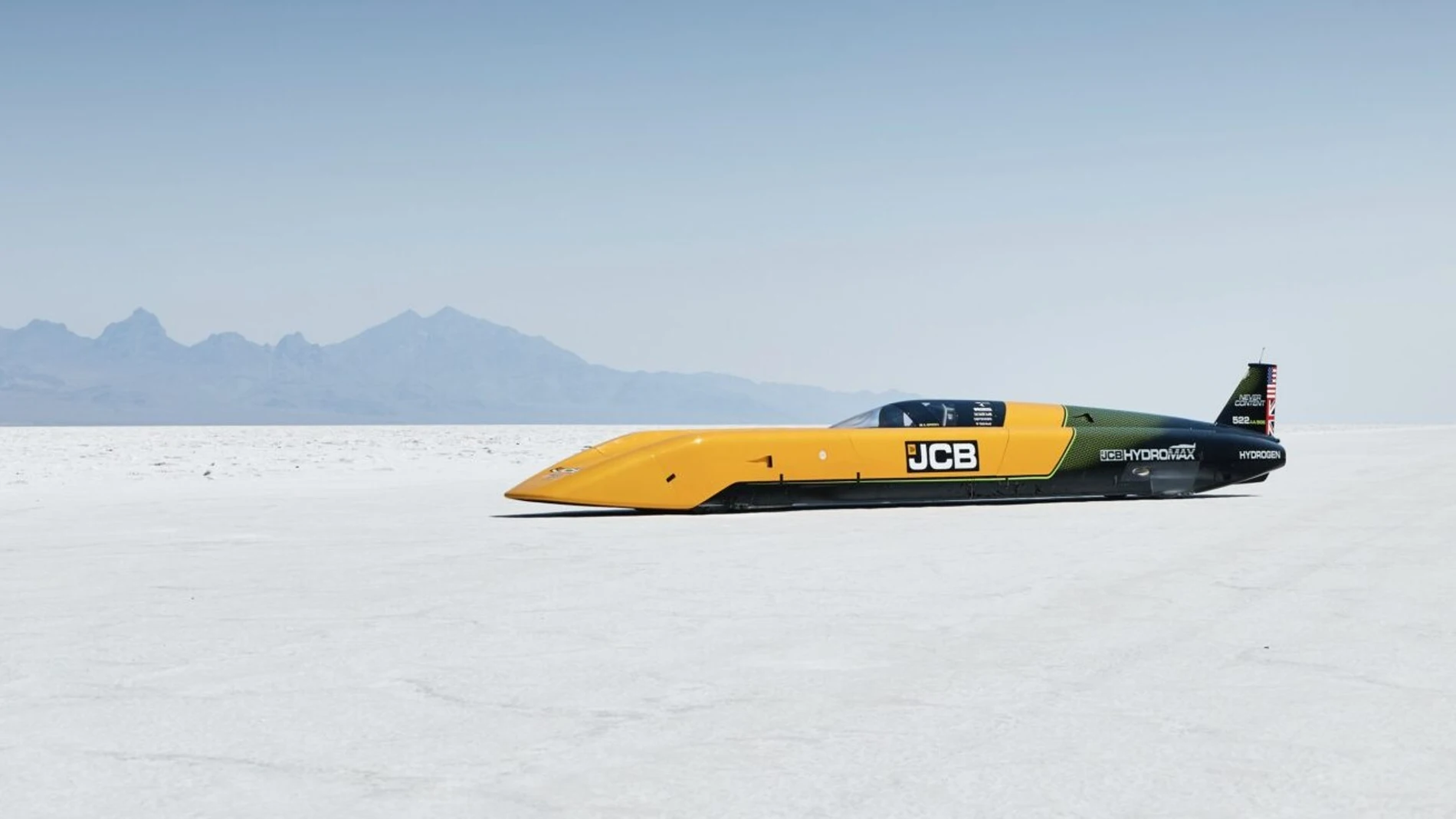
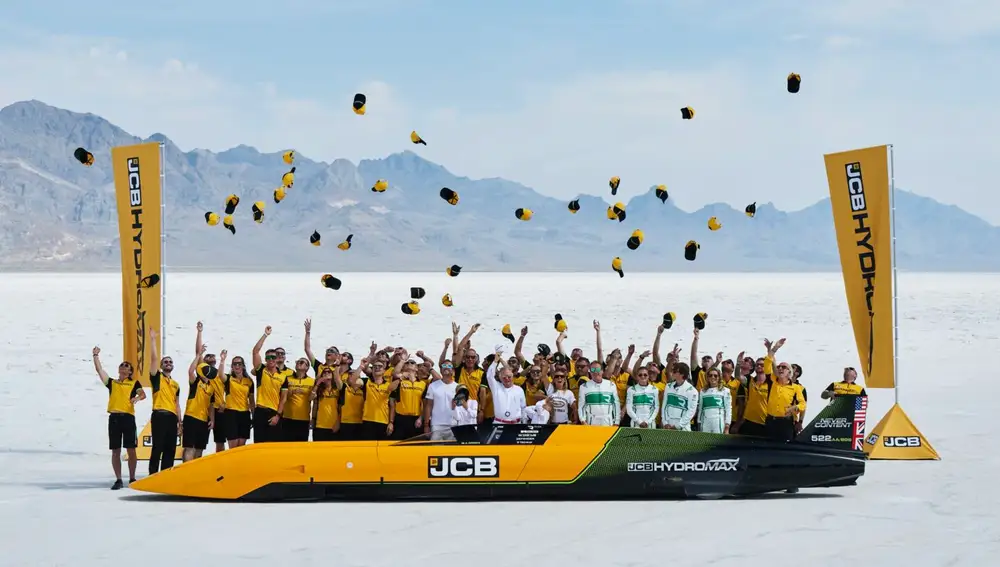
Andy Green He was already the fastest man behind the wheel, but now he also holds the record for cars with hydrogen combustion engine. The former pilot of the Royal Air Force On August 11, the British government reached an average of 653.9 km/h with the JCB Hydromax in the salt flats of Bonnevillein Utahreports Ars technica.
To obtain the mark, the Hydromax traveled a mile, 1.6kmin each direction with less than an hour of difference, so that the wind did not favor the result. The Hydromax reached 644.7 km/h in the first and 663.3 km/h in the second. The result is pending ratification by the International Automobile Federation.
Green, 64, has been accustomed for decades to speeds that seem reserved for aviation. In 1997 drove the Thrust SSC until the 1,227.985 km/h and became the first and, so far, only person to break the sound barrier on land. Nine years later he managed to JCB Dieselmax the record for diesel vehicles, still in force, with 563.4 km/h.
The JCB Hydromax is a prototype of 9.75 meters created to beat this record. It has four-wheel drive and has two motors that are jointly developed. 1,600 HP and 3,525 Nm of torquethe latter a measure of the turning force transmitted to the wheels. Does not use a fuel cella device that combines hydrogen and oxygen to generate electricity and power electric motors, but rather directly burns hydrogen inside the cylinders to produce movement. Hydrogen is introduced into them, mixed with air and a spark plug causes combustion. That explosion moves the pistons, same as in a gasoline engine.
The project is part of the investment of 100 million pounds, about 117 million eurosthat JCB has aimed to develop an alternative to diesel for the excavators, loaders and other construction and agricultural machines it manufactures. The company first tested fuel cells, but concluded that They were too expensive and fragile for use in machinery subject to dust, vibrations and shocks common in construction sites and agricultural operations. In 2020 it began developing a hydrogen combustion engine.
Other manufacturers had already explored this solution with much more modest results. bmw reached in 2004 the 298.5 km/h with the H2Requipped with a motor V12 adapted, while toyota has been competing for years with a Corolla experimental. Akio Toyodapresident of Toyota, has been one of its pilots to accelerate development in real conditions.
The standard hydrogen engine that JCB has developed for its machinery delivers 74 hp and turns around 2,200 revolutions per minutesince it is designed to provide a lot of force at low speed. The two deeply modified versions used by the Hydromax reach 800 hp each and can rotate to 3,800 revolutions.
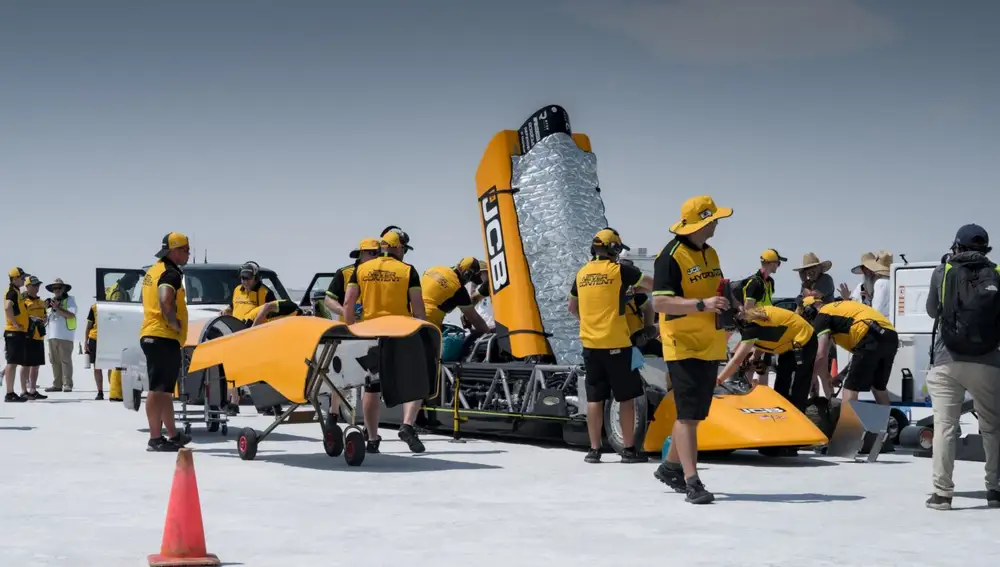
The engineers installed two camshaftsrotating axes that control the opening and closing of the valves, at the top of each engine to regulate them more precisely. They also adopted direct injectionwhich introduces the hydrogen into the cylinder at about 50 barsand a dry sump lubrication systemnecessary because the engines are installed almost lying down to fit in the narrow body and reduce the height of the vehicle.
Cooling the unit required another unusual solution to maintain power. The air compressed by the turbochargers comes out at about 200 degrees and traverses a system with up to 250 kilos of icewhich reduces its temperature below ten degrees. Being denser, cold air allows more oxygen to be introduced and generate greater power.
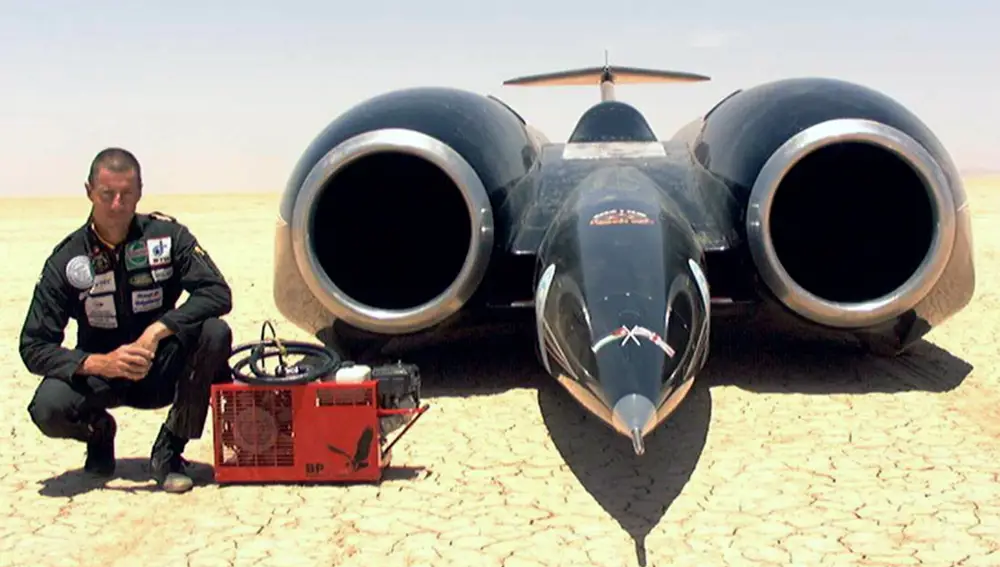
The record exceeds 298.5 km/h of the BMW H2R and the 488 km/h of the Venturi Buckeye Bullet 2which used a fuel cell. However, the Hydromax is not the fastest car ever. That title remains in the hands of the Thrust SSC, whose jet engines pushed it to 1,228 km/h without transmitting power to the wheels, which only held it on the ground and allowed it to control its trajectory.
He Challenger II belongs to a different category because its two engines V8 They did move the wheels directly. Danny Thompson caught up with him 722.2 km/h in 2018 and set the record for cars with piston engines. That figure continues above Hydromax, whose brand corresponds to vehicles that burn hydrogen.
‘Bonneville is the spiritual home of the world land speed record and the JCB Hydromax has just written its name into that history. The car handled wonderfully. It was stable, sturdy and fast. Setting a world land speed record on hydrogen, twenty years after Dieselmax, is a huge privilege. “This record represents an extraordinary achievement by a world-class team and magnificent technology,” said Green.