

“Boating Puerto Rico”, a local boat rental business, went viral for sharing videos of a “friendly” dolphin interacting with tourists in the waters of Icacos, part of the Cayos de la Cordillera de la Cordillera nature reserve. Fajardo.
However, experts warn that interacting with these species is illegal and represents a greater risk for both people and the animal, which would already be facing consequences for its health.
Several videos Shared on Boating PR’s social networks show the dolphin nicknamed “Miguelito” swimming among a sea of tourists, who chase and touch him. Some comments on social media allege that they also feed the dolphin to attract it to the boats and serve as entertainment for tourists.
However, Reinaldo Domingueza representative of Boating PR, denied that the animal feeds.
“(Tourists) don’t feed it, (the dolphin) only shares with people. It likes to have contact with people. The nickname was given to it by the captains who frequent (the area),” he added.
Domínguez mentioned that, occasionally, he observes the dolphin accompanied by two others, which frequent the island of Palomino among other surrounding islands. He stressed, however, that the shared videos do not belong to the company and are sent by third parties.
He Department of Natural and Environmental Resources (DRNA) assured that it has been aware of the situation since 2018 and that federal agencies have offered workshops to guide charter boat captains to protect marine species.
In fact, a doctoral student affiliated with the DRNA conducted a study of dolphin behavior as part of her thesis between 2024-25.
“We are concerned that, as (the dolphin) matures, it will continue to interact with people, and then begin to engage in aggressive behaviors that people interpret as recreational,” he explained. Nilda JimenezCoordinator of the DRNA Protected Species Program.
Dolphins are protected under the Federal Marine Mammal Protection Law of 1972which prohibits hunting, harassment, or any interaction with these species. Violators can face civil fines, criminal penalties, and even prison terms.
“We are monitoring him (the dolphin) because we have seen that recently he appears to be in worse health condition, he is thinner than usual. Before there were three adults with him, but they left and left him behind. So, People have to leave him still so he can invest time in being a dolphin”Jimenez continued.
On July 24, the agency responded through a Facebook post notifying that Waldemar Quiles, secretary of the DRNA, would be requesting “that all possible information be collected to guide boaters about this illegal practice that is in violation of multiple local and federal statutes.”
Since June, representatives of the DNER’s Marine Mammal Rescue program had been raising the flag at the risk of these interactions through comments in Boating Puerto Rico videos.
One of the comments stated that “the pages that share this, and take it this way, are indirectly encouraging visitors to the Island of Icacos to come and interact with this dolphin. Touching the dolphins as they are doing in this video is prohibited. It does not matter if the animal approaches you.”
In one publication on June 26, Boating PR made reference to the “famous dolphin Miguelito who lives in Icacos and likes to share with tourists,” while showing a person swimming with him and using “Seabob.” Other similar video was shared on July 13.

“Seabobs” are the equivalent of scooters electrical for aquatic environments. The Boating PR representative indicated that his company does not offer equipment rentals. However, in his Web page and social networks From Boating PR, similar “seabobs” are seen with offers to add them to the boat rental.
The company representative did not respond when asked for the name of the companies that are involved in the rental of such equipment.
Although it offers services to tourists and locals, Boating PR does not currently have a Nautical Tourism certification, which represents a violation of the Tourism Promotion Law of 2010.
As part of DRNA’s efforts, on July 23, agency officials placed signs on the coast of Icacos warning bathers about the legal consequences of interacting with dolphins and other marine mammals, since the Icacos area is also home to manatees.
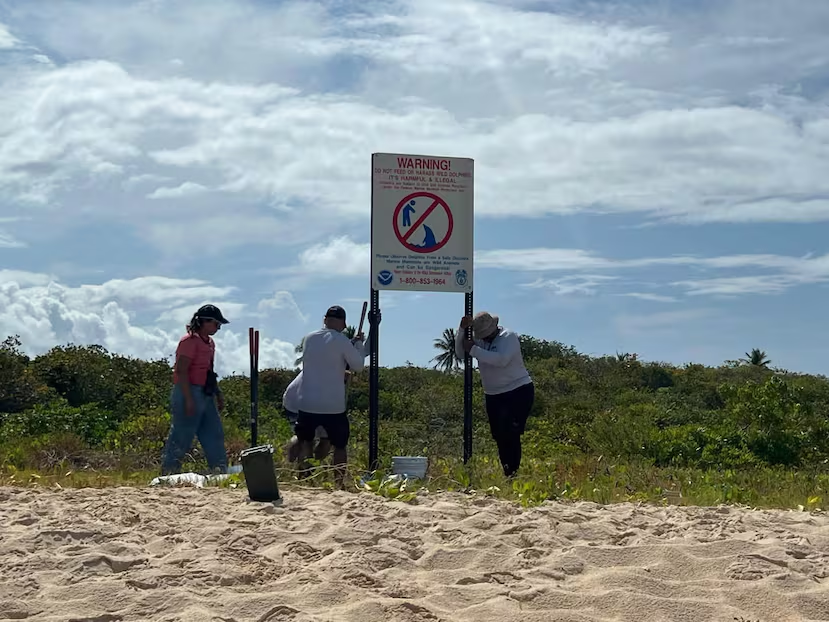
“It is important to prevent this from continuing to escalate, and people are urged to avoid the behavior of chasing or touching the dolphin. If they do not, understand that they will receive a federal and state fine,” warned Jiménez, who confirmed that they have already issued several fines to individuals for violating the protection law.
Despite this action, videos of tourists and locals swimming and touching the dolphin have been published as recently as August 6.
The DRNA urged any citizen who witnesses any interaction with the dolphin to confidentially contact the Vigilante Corps: (787) 999-2200 ext. 2910 or 2911.