
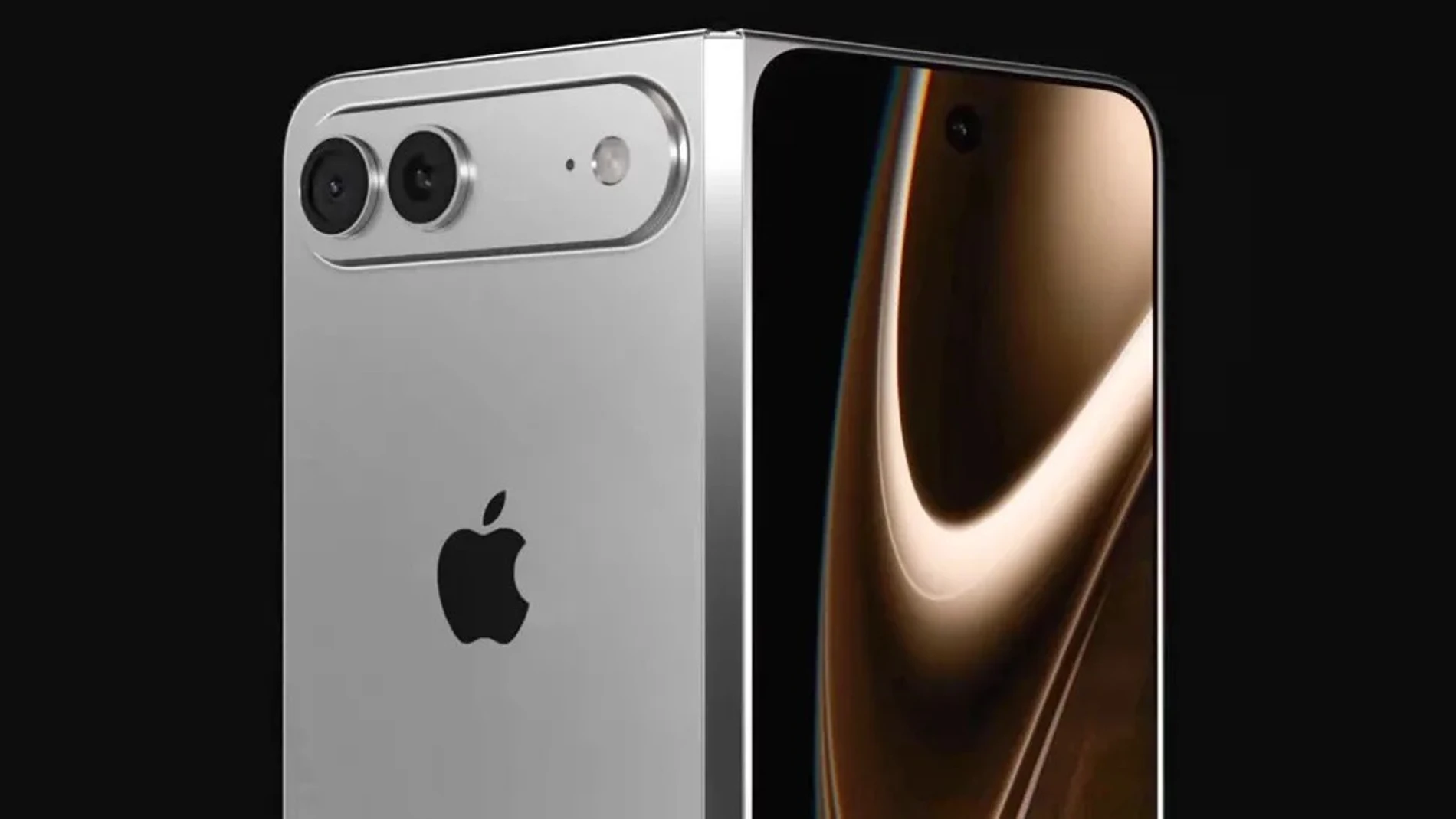
It has been rumored for months that the first foldable iPhone will be released this fall along with the iPhone 18 Pro and, as the date approaches, leaks increase; the last ones focused on the name that the device will have, the hinge and materials that it will use Apple in its construction. Although colloquially it is known as iPhone Foldthe name under which it will go on sale will be iPhone Ultra and will incorporate a liquid metal hinge and a titanium frameaccording to leaks from Fixed Focus Digital and WayLabs on the Chinese social network Weibo collected by MacRumors.
Apple has already sent prototypes to operators in different regions, which could indicate that the device is in an advanced testing phase and could reach the market. at the end of 2026, according to what is known so far, or early 2027, which would make it coincide with the iPhone 18 and 18e.
According to the medium, Fixed Focus Digital assures that Apple plans to use it in the hinge an amorphous metallic glass alloycommonly known as liquid metal, which can improve durability and reduce long-term wear.
The choice of liquid metal would not be accidental. These alloys have a non-crystalline atomic structurewhich is how amorphous is understood in materials science, a property that gives them greater elasticity and resistance than conventional metals. In practice, this design choice could help the hinge remain firm and smooth after thousands of bends and could also contribute to to reduce the fold mark.
This could be a solution for the greater reluctance that Apple has had to enter this market. Although technology has improved over the years, the first mobile phone with a folding screen was the Chinese one Royole FlexPai launched in 2018this type of screen usually presents durability problems and generate an unsightly crease in the hinge area. After Samsung entered this market in 2019, various information gathered that Apple would not do so as long as it was not able to offer a screen that did not have these problems.
The use of liquid metal would not be completely new in the foldable market. Huawei already resorted to a zirconium-based liquid metal alloy in models like the Matte Xs and the Mate X2and Oppo has also used similar materials in the hinge of the Find N3.
Apple is not starting from scratch with this material. In 2010, the company signed an agreement with Liquidmetal Technologies for use in consumer electronics, but until now I had limited it to minor parts such as the tool to remove the SIM and some internal components. Its use in a hinge subjected to hundreds of thousands of openings and closings would be a much more demanding application.
Apple would also plan to combine this hinge with an upgraded titanium alloy frameinstead of aluminum, to maintain the solidity of the device and, at the same time, reduce its overall weight. Titanium was the material chosen for the iPhone 15 Pro, 16Pro and airbut Apple returned to aluminum with the iPhone 17 Pro.
Other rumors about the folding iPhone that have been known in recent months suggest that it could have an internal screen of 7.8 inches and an external screen 5.5 incheswork with a series chip A20 accompanied by 12GB of RAM and use the modem C2 from Apple.
As for biometrics, Apple may be forced to do without Face ID because the technology wouldn’t fit in such a thin phone. Instead, we would have the return of Touch ID on a side button accessible both with the phone folded and unfolded.