
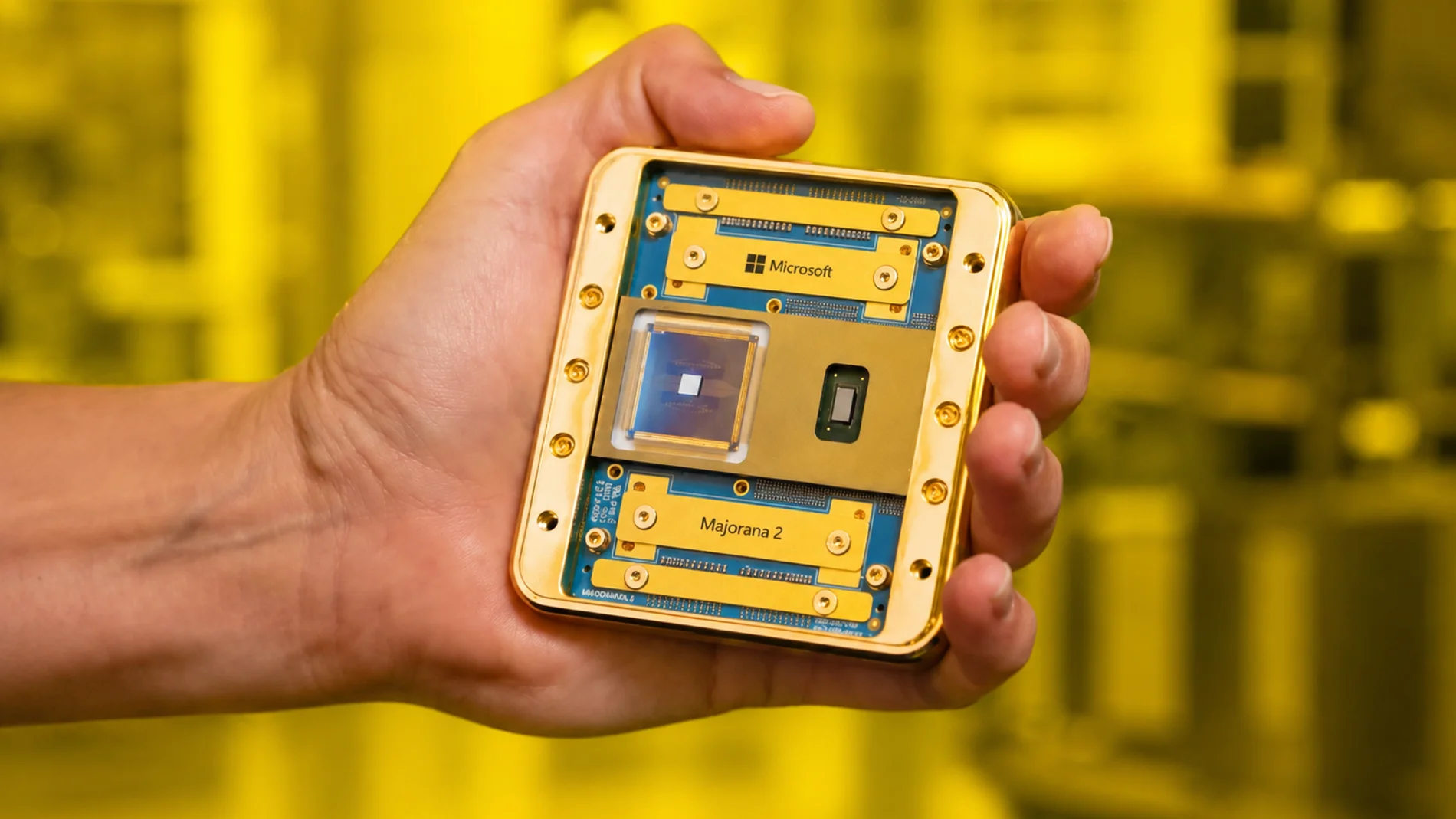
Microsoft has presented its new topological quantum chip, Majorana 2during the first day of Microsoft Buildits annual developers conference, which took place this Tuesday. Majorana 2, which arrives just over a year after its predecessor, Majorana 1multiplies the stability of its qubits by 1,000. For Microsoft, this advance drastically shortens the path to a commercial quantum computer, which it previously expected for 2035 and which it now places in 2029.
A topological quantum chip is a type of quantum processor that seeks create qubits more resistant to errors taking advantage of physical properties that better protect information from noise and interference. A qubit, or qubit, is the basic unit of information in quantum computing, the equivalent of the traditional bit in classical computing. While a bit can only be 0 or 1, a qubit can adopt both values simultaneously thanks to quantum physicsallowing extremely complex problems to be processed.
According to the company, Majorana 2 qubits can maintain their quantum state 1,000 times longer than Majorana 1which allows more reliable calculations. In the previous generation, the lifetime of qubits was measured in milliseconds. In Majorana 2, according to Microsoft, it reaches an average of 20 seconds and, in some cases, up to a minute.
Thanks to this reliability, its one-microsecond operations and the small size of its qubits, just one hundredth of a millimeter, the company ensures that its team is on its way to achieve a scalable quantum computer that will be commercially ‘valuable’ in 2029. According to Microsoft, such a device will help address issues related to global health, food supply, sustainability, energy production and other areas.
Microsoft has appealed to AI systems with autonomous agentssupervised by human scientists, to develop Majorana 2. The company had been studying the use of lead in the chip for years, but it was with the help of this AI that it has managed to overcome several important technical limitations and change the manufacturing process. So, has gone from traditional aluminum to a structure of superconducting materials based on lead.
‘It was a pretty big change and led to very, very big improvements in the quality of the device’has assured Chetan Nayaksenior technical manager at Microsoft.
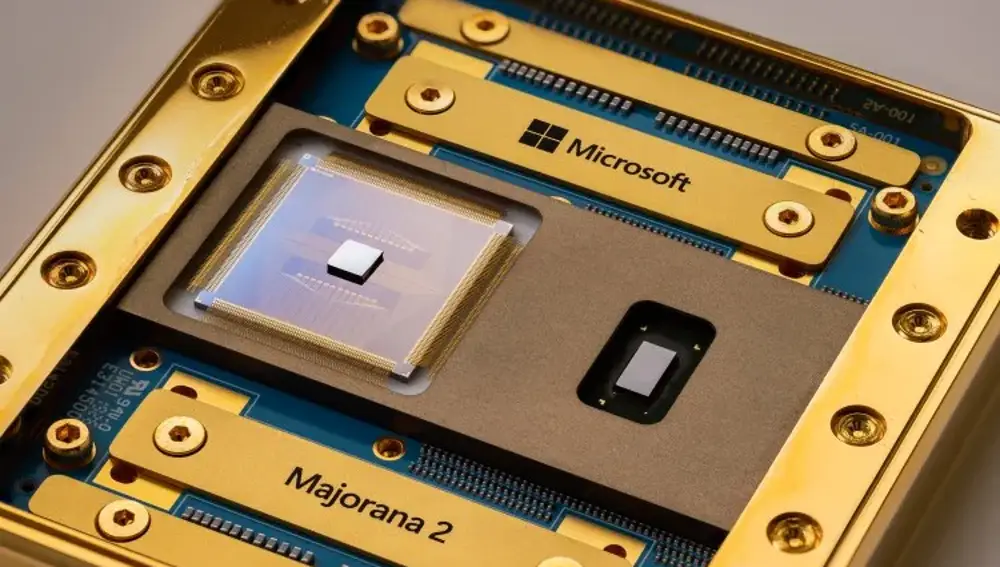
Microsoft Discovery
Along with Majorana 2, Microsoft has announced the general availability of Microsoft Discoverya tool that allows use teams of AI agents in scientific research projects. It’s the same platform the company has used to advance the development of Majorana 2, which Microsoft says demonstrates its potential to accelerate complex discoveries.
The company maintains that Discovery can help break with decades of siled research and to connect disciplines that have often advanced separately, such as physics, engineering and materials science. The Microsoft Discovery app is now available for free and in early preview for users of GitHub Copilot.