
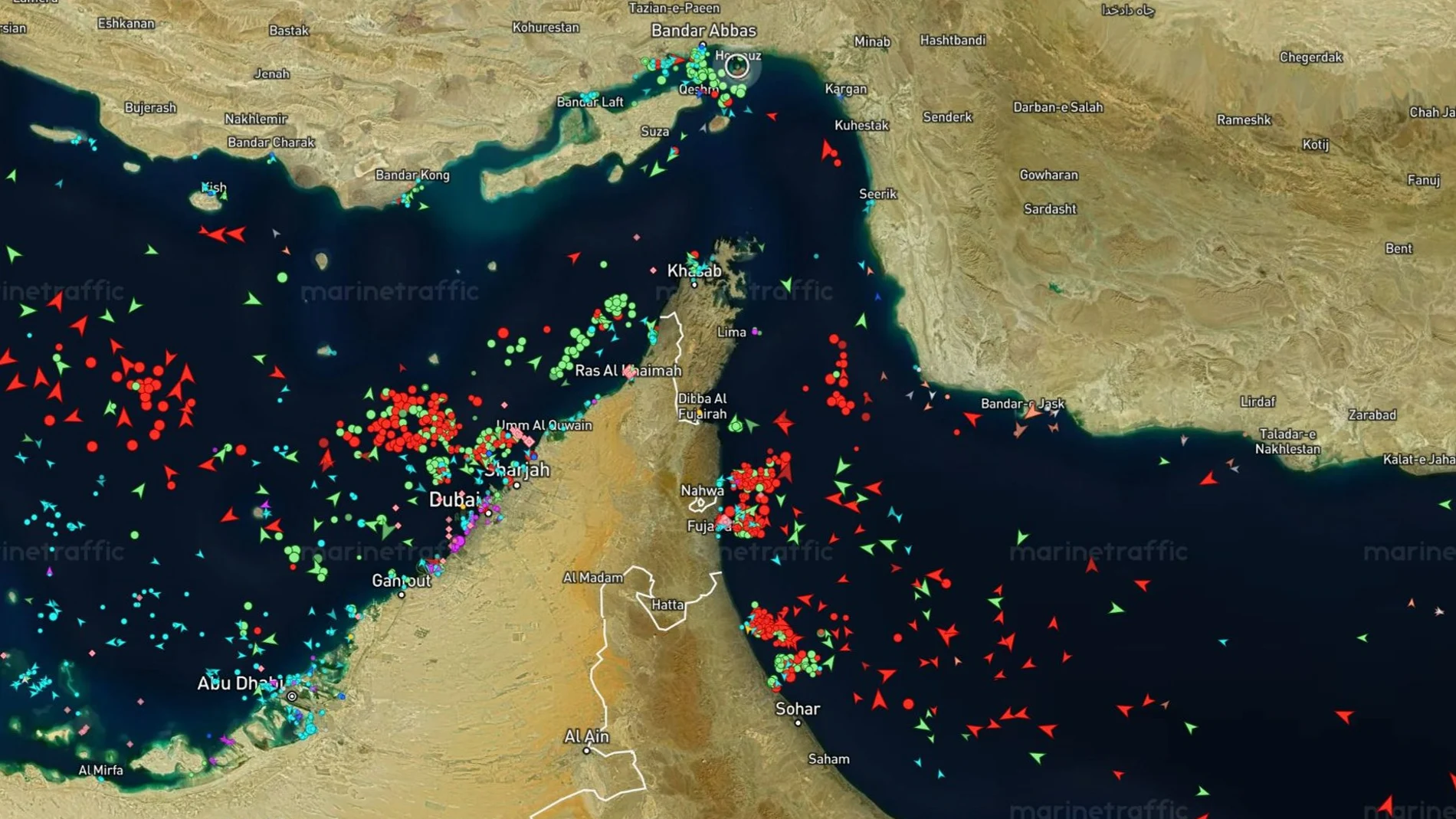
The Strait of Hormuz is once again at the center of global tension. After weeks of conflict and maritime blockade, thousands of sailors and hundreds of commercial ships remain trapped in one of the planet’s strategic routes. In this scenario, the United States has activated an unprecedented plan, called “Project Freedom.”
Announced by Donald Trump this month, the operation not only seeks to reopen maritime traffic, but also to demonstrate military capacity at a key point through which nearly 20% of the world’s oil passes. But beyond the political message, what really draws attention is the deployment of destroyers, aircraft, drones and thousands of troops ready to intervene.
What is “Project Freedom” and why has it been activated now?
This plan arises as a direct response to Naval blockade in the Persian Gulf after the outbreak of the regional conflict at the end of February.
Since then, numerous ships, especially oil tankers and gas vesselsthey have remained stranded without being able to complete their routes. The initiative seeks to guarantee the safe passage of vessels from countries not involved in the conflict and restore trust in a key sea route for the global economy.
Washington has defined the operation as a “humanitarian gesture,” although its military dimension reveals a much broader strategy.
Furthermore, one of the pillars of the operation is US Navy destroyerswarships equipped with guided missile systems. These vessels are designed to protect convoys against threats such as drone attacks, sea mines or missiles. Its role is important in an environment where explosions, interceptions and constant risks to navigation have already been reported. The presence of these vessels seeks create a safe corridor in an area currently considered “high danger.”
Air deployment is another of the central elements of “Project Freedom.” The operation will have more than a hundred aircraft, including:
- fighter jets
- surveillance aircraft
- unmanned drones
These units will allow real-time monitoring of any movement in the strait, detect threats and coordinate the protection of escorted ships.
15,000 military and aircraft carrier support
The operation also includes the deployment of approximately 15,000 troopswhich gives an idea of its magnitude. Added to this is the support of groups of naval combatincluding aircraft carriers such as the USS Nimitz. This level of deployment not only seeks to protect commercial vessels, but also deter possible interference in the area.
Trapped ships and humanitarian crisis on the high seas
Beyond geopolitics, the situation on the ground is critical. Entire crews have been trapped for weeks, with increasingly limited supplies. Shortages of water, food and increasingly precarious conditions on board have been reported.
The United States has used this argument to justify the interventioninsisting that many of these ships They belong to neutral countries that have no direct relationship with theconflict.
Likewise, Iran’s response has not been long in coming, and the Iranian authorities have warned that any intervention in the strait could be considered a ceasefire violation current.
In a context of constant tension, the combination of ships, aircraft and military strategy turns this operation into one of the most relevant movements of the year on the international stage.