
For decades, exploring the deep ocean has been a matter of endurance. Distance is not measured only in kilometers, but in autonomy: how long a machine can remain underwater without surfacing, without recharging, without being detected. In that field, every extra hour counts. That’s why the latest advance has less to do with speed and more to do with persistence.
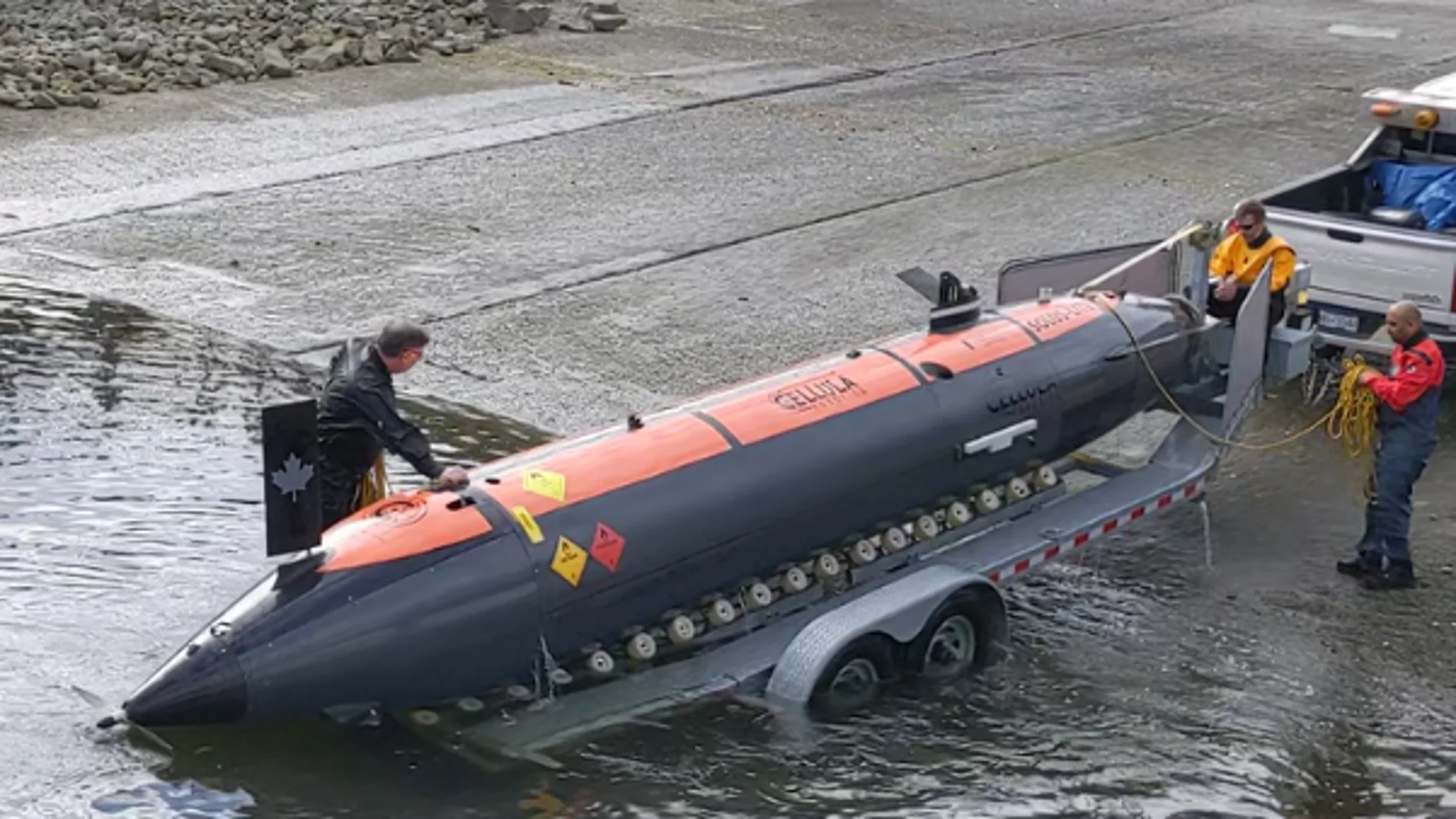
The Solus-LR, the first underwater drone, It has managed to travel nearly 2,000 kilometers powered by hydrogen. It’s not just a striking figure. It is, above all, a demonstration that underwater exploration can enter a new phase, where energy limitation is no longer the main obstacle.
The principle is simple in appearance. Instead of relying exclusively on batteries (heavy, limited and with long recharge times), the vehicle uses hydrogen as an energy source. Through a fuel cell, That hydrogen combines with oxygen to generate electricity, releasing only water as a byproduct. It is a clean, silent system and, most importantly, with an energy density much higher than that of conventional batteries. This difference is what allows us to multiply autonomy. Where there used to be days of operation, now there can be weeks. If before it was necessary to plan short routes, now the possibility of continuous large-scale missions opens up.
But the key is not only in the energy, but in what that energy allows us to do. A drone capable of traveling thousands of kilometers underwater without having to surface can map the ocean floor with unprecedented continuitymonitor underwater infrastructure such as cables or pipelines, study remote ecosystems or even participate in search and rescue operations in inaccessible areas.
There is also a strategic factor that is difficult to ignore. The capacity of the Solus LR, also known as Envoy, operating for long periods without being detected, makes this type of vehicle potential tools for surveillance and defense. In the ocean, where visibility is limited and communication complex, autonomy equals invisibility.
The use of hydrogen also introduces new challenges. Storing it safely in a high-pressure environment, managing its consumption efficiently and ensuring system reliability in extreme conditions is not trivial. Each of these points requires advanced technical solutions, especially when the margin of error, underwater, is practically non-existent.
Still, the result points in a clear direction. Just as satellites changed the way we view Earth from above, these systems are beginning to redefine how we explore it from below. Not with specific missions, but with an almost constant presence.On a planet where More than 70% of the surface is covered by oceans and much of it remains unmapped in detail.extending the time we can stay down there is not just a technical improvement. It is, in a way, an expansion of the known world itself.
Neil Manning, CEO of Cellula Robotics, the company responsible for developing Envoy, highlighted the importance of the achievement: “The relevance of this result lies not only in the distance traveled, but that it was achieved completely submerged in a mission profile that better reflects real underwater operations.””, he stated in a statement.
The Envoy measures approximately 8.5 meters long and one meter in diameter. It has a displacement of about 3700 kilograms. Smaller configurations also exist for specific mission needs, making it adaptable to various operational scenarios.
During the mission, The vehicle performed more than 4,000 turns and maneuvers, each of which increased its energy consumption. This makes the results more relevant to real operations, where these types of autonomous vehicles are used to map the seabed, inspect infrastructure and navigate unpredictable underwater environments.