
Finding more stable and usable renewable sources is key today. This guarantees the continuity of the energy supply, reduces dependence on external and unstable sources and allows the operation of the electrical system to be planned with greater security. It can also provide stability to the network, facilitates the balance between supply and demand and contributes to a more efficient and sustainable energy transition in the long term. A country always related to innovation such as the United States has made a move.
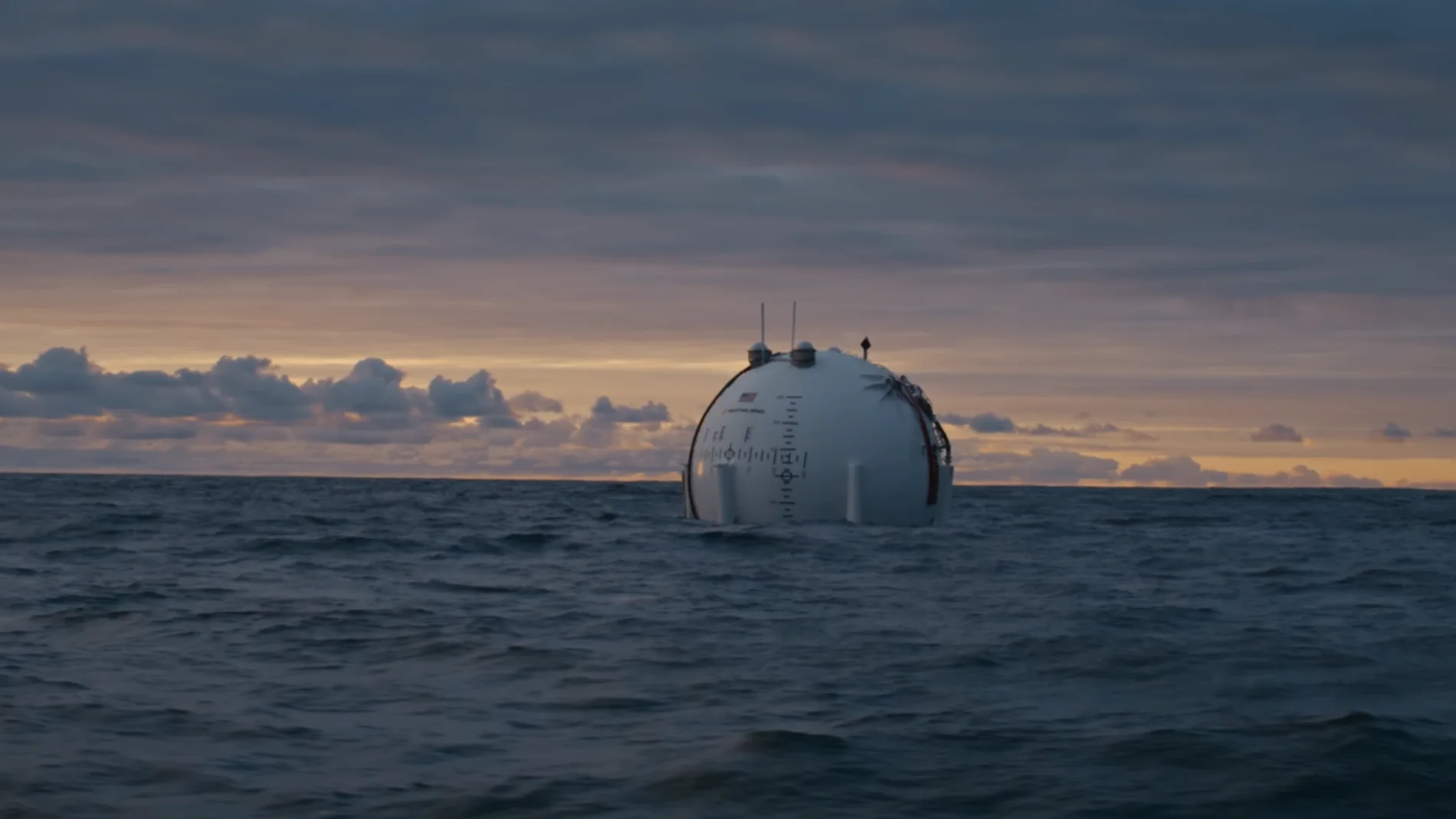
The bet comes to the place where it is most complicated to generate energy: the ocean. The project, promoted by the startup Panthalassa, has a technology that converts the movement of waves into clean electricity that has been tested in Pacific watersoff the coast of Washington state, and points towards one of the biggest focuses in the energy transition: wave energy.
The idea is simple in approach, although complex in its execution. Take advantage of an abundant, continuous and still underexploited resource to generate energy in the open sea. Compared to other renewables subject to the variability of the sun or the wind, waves offer a constant source of movement that, well channeled, can become a useful alternative for industries, infrastructures and projects with high electricity consumption. It is a very complex operation, but effective.
How this technology works at sea
The system developed by Panthalassa, within the Ocean-2 project, part of a floating structure of about 10 meters in diameter attached to a submerged tubular body. It sounds very complicated and for experts, but it means that when the waves hit the surface, The platform moves and activates an internal mechanism that transforms that kinetic energy into electricity.
The key is that the turbines are protected within the structure itself, which improves its resistance to wear and tear in the marine environment. This is what makes the difference because one of the great difficulties of this type of technology has always been its ability to withstand extreme conditions for long periods of time without losing efficiency.
During tests carried out in the Pacific, The system produced up to 50 kW, a fact that confirms that the ocean can become a new gateway for electricity generation with real and scalable applications, something that people without specific knowledge cannot even imagine.
A project with broader objectives
The interest of this Ocean-2 project is not only to produce electricity. The company is also looking at the possibility of generating green hydrogen offshorean option that could open the door to new energy supply chains less dependent on land. Another potential destination for this energy is data centers installed in the ocean.an idea that is gaining strength in a context of growing digital demand. Powering this type of installations directly from marine renewable sources would reduce emissions and relieve pressure on terrestrial electrical networks.
Its low environmental impact also makes a difference. This technology is designed to minimize the effects on marine fauna, a decisive aspect at a time when any energy expansion must coexist with greater demands for sustainability.
The United States is not the first country
Although this advance places the United States at the forefront, it is not pioneering. Other countries have been working in this field for years and have led part of the way. QOrtugal was one of the pioneers with the Aguçadoura wave park, launched in 2008, while the United Kingdom It continues to be one of the territories with the greatest investment in this type of energy. This international competition makes it clear thatWave energy has not yet reached its full potentialbut it is no longer an experimental idea without a journey.
The challenge is to scale the technology, reduce costs and demonstrate that it can be integrated into the global energy system reliably. ANDhe Panthalassa movement is not an isolated case, but a trend: seeking solutions that allow the production of clean energy in places where it previously seemed unviable. The sea, with its constant capacity for movement, ofoffers a renewable source that could complement other technologies and reinforce energy security.
What the United States is testing in the Pacific is not just a prototype, it goes much further. It is a declaration of intent in the search for new ways to decarbonize the economy. And, in this race, the ocean is beginning to gain prominence as one of the great energy reserves of the future.