
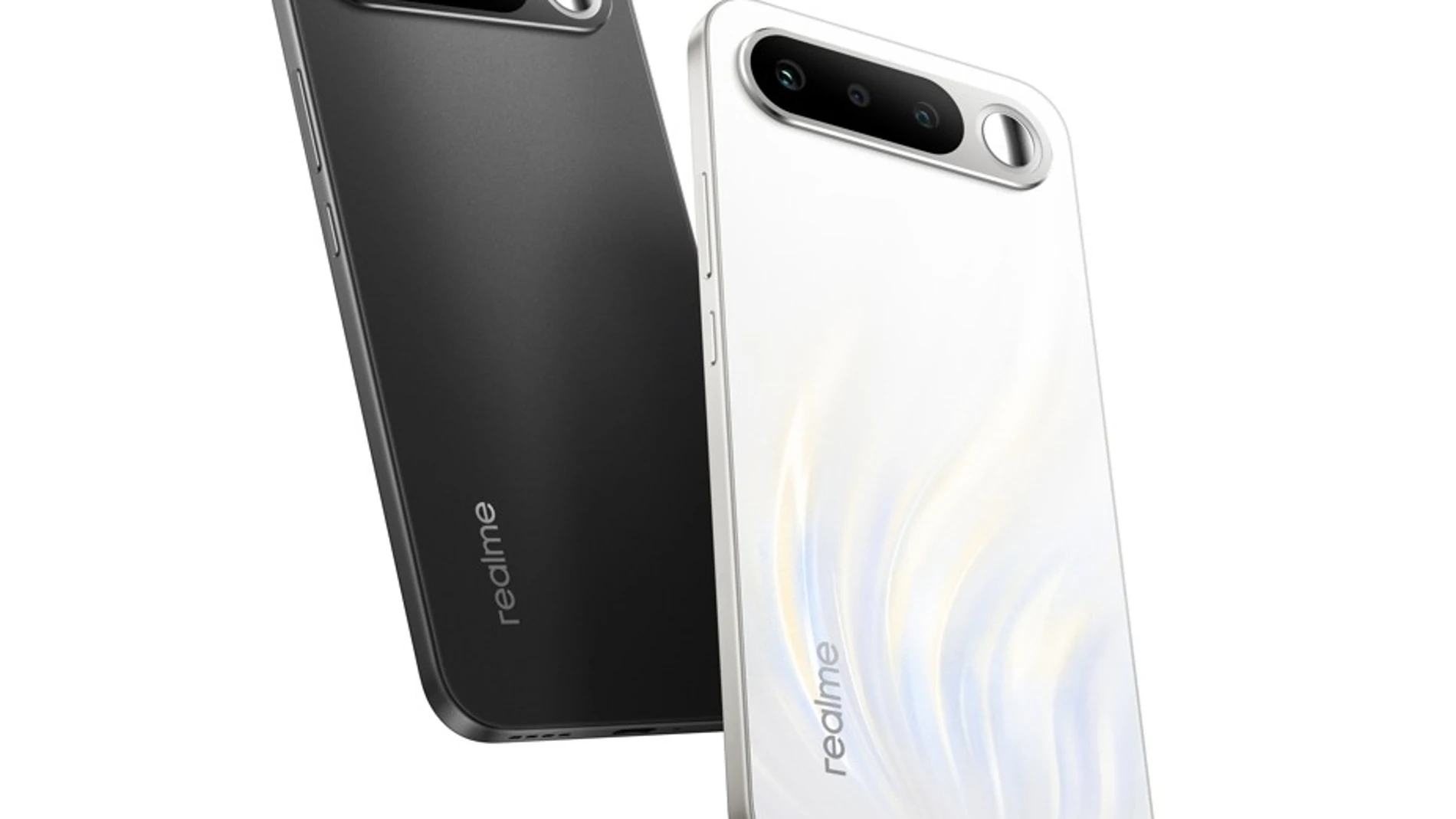
In a market where smartphones seem to have been divided between premium devices and a mid-range that often cuts back on the essentials, Realme is trying to play another game. Your new model, the realme 16 5G does not seek to compete in the field of luxury, but in something perhaps more ambitious: bringing features typical of high-end mobile phones to a price that remains, at least in theory, accessible. The bet is not new, but it is increasingly refined. And in this case, it is articulated around three very specific ideas: photography, autonomy and design.
The most striking thing, probably, is in the camera. In a price range where it is common to find more modest sensors, the realme 16 5G incorporates a dual 50 megapixel system that includes both a rear and a front camera with the same resolutionsomething rare in this segment. But beyond the number, which has already become almost a symbolic figure, the key lies in how the image is processed.
This is where what the company calls AI Portrait Master comes into play, a set of algorithms that adjust color, texture and light in real time. The intention is clear: to bring the result closer to something more natural, less artificial, especially in portraits. That is, the skin does not look like a porcelain surface nor the colors a saturated version of reality. In this effort to improve everyday photography, one of the most curious functions of the device also appears: the so-called Selfie Mirror.
The idea is simple: allow the user to take selfies with the rear camera, which is usually better, but without shooting blindly. The system acts as a kind of digital mirror that helps you frame yourself, solving a classic limitation of smartphones. It is not a technological revolution, but it is a small design gesture that responds to a very real use.
That mix between solid hardware and small practical details defines the focus of the device quite well. Because if the camera is one of its pillars, the battery is the other. The realme 16 5G incorporates a 6550 mAh batterya notable figure even above the average for its category. In practice, this translates into autonomy designed to withstand long days without anxiety about the charger, something that continues to be one of the most universal concerns among users.
Added to this is a 45W fast charge that does not seek to break records, but does offer a reasonable balance between speed and long-term battery care. A philosophy that is also reflected in the software, with a system optimized to maintain stable performance over time.
The design, for its part, tries to play in a higher league without losing sight of the context. Weighing just over 180 grams and with a contained thickness, the device opts for a clean aesthetic, with a horizontal camera module reminiscent of more expensive models. (iPhone Air?) and a rear finish that changes with light. These are details that do not directly affect performance, but they do affect perception: the feeling of using something more refined than its price suggests.
And then there’s the screen. AMOLED, with a refresh rate of 120 Hz and a brightness that reaches very high figures (4200 nits), designed to work well even outdoors. It is not just a question of specifications, but of experience: scrolling, viewing content or simply interacting with the system feels more fluid, more immediate.
However, perhaps one of the most interesting elements is not visible to the naked eye. The device is IP69 certified, an unusual resistance standard in this price range. This means protection not only against dust or splashes, but also against more demanding conditions, such as pressurized water jets. In a market where many mobile phones are still fragile by design, these types of features are beginning to make a quiet difference.
All this inevitably leads us to the key question: the price. Because that is where the speech is put to the test. The realme 16 5G is launched in Spain for 349 euros in its version with 8 GB of RAM and 256 GB of storagea figure that places it at a delicate point: high enough to demand, but still far from the psychological barrier of the high-end.
The strategy is clear. It is not about offering the best in everything, but about Select well what matters most in daily use and enhance it. A competent camera, a generous battery, a quality screen and a smooth experience. Elements that, together, build something more interesting than a simple list of specifications.