
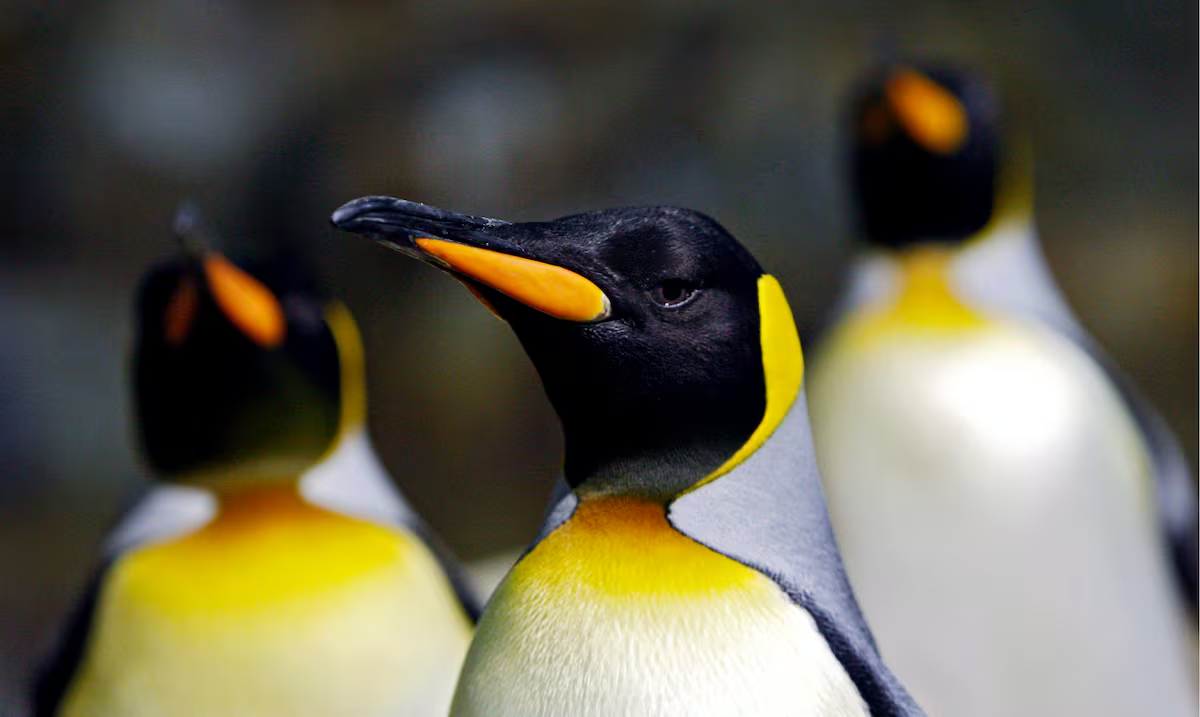
The loss and premature breakup of sea ice in the Antarcticaas well as the increase in ocean temperature are endangering the survival of two emblematic species of that region of the planet: the Emperor penguin and Antarctic fur seal.
The International Union for Conservation of Nature (IUCN) has transferred these two species to the “endangered” category (two stages prior to extinction) in an update of its Red List, which it published a month before a meeting of policy makers regarding the Antarctic Treaty.
The situation of the emperor penguin is very worrying after the study of satellite images indicated a 10% decrease in its population between 2009 and 2018, which is equivalent to more than 20,000 adults, although the projections are much more dramatic.
According to them, the population will be reduced by half by the 2080s due to changes in sea ice, the decline of which reached a record level in 2016.
The organization explained that emperor penguins need fixed ice, that is, it is attached to the coast, the seabed or stranded icebergs, for their chicks and during their molting period, when they are not waterproof.
Scientists have already observed tragedies in this natural environment, such as the collapse of a breeding colony in the sea before the offspring can swim, due to the premature breaking of the ice.
“Models considering various future climate scenarios show that, without rapid and dramatic reductions in greenhouse gas emissions, emperor penguin populations will decline rapidly during this century,” the IUCN said.
Antarctica plays the role of “freezer” of the Earth and cannot be replaced by any other system in its function of stabilizing the climate and being a refuge for unique species.
Antarctic fur seals also suffer from this situation, which have gone from being of “least concern” to being “in danger”, since their population has decreased by more than 50% between 1999 – when there were about 2.19 million mature individuals – and 2025, when they had fallen to 944,000.
This decline is due to climate change, since with the increase in ocean temperatures and the reduction of sea ice their main food, krill, has moved towards deeper waters in search of colder temperatures.
The Red List also highlights the deterioration of the situation of the southern elephant seal, whose population has been reduced by highly pathogenic avian influenza.