
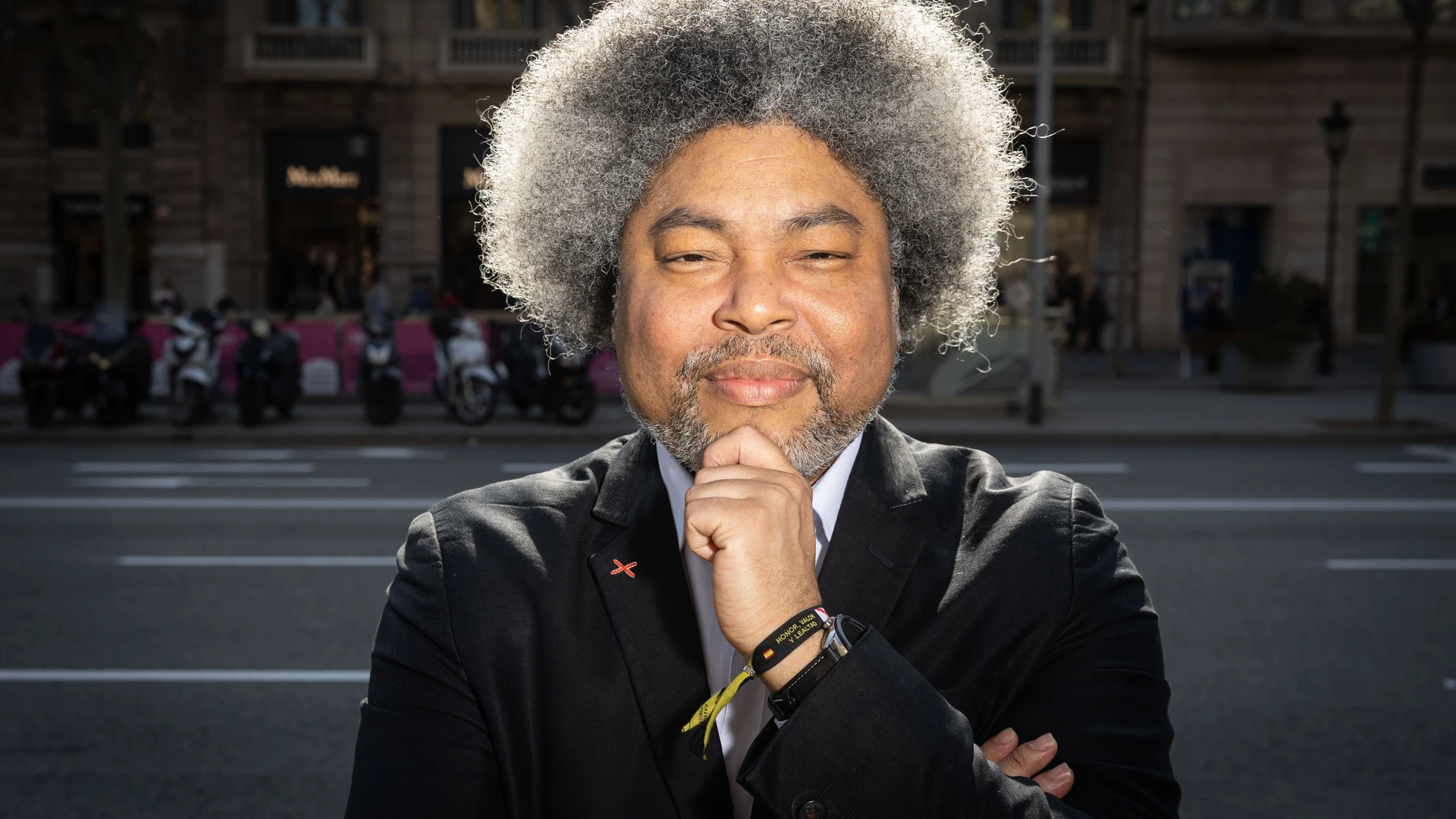
The fall of the Cuban regime is no longer presented as a distant hypothesis, but as a close event. Or at least that’s how many exile figures see it. The one of Sayde Chaling Chong is one of them. This Cuban living in Spain – one of the most combative voices against Castroism in Europe – assures that what is underway between the United States and Havana “It is not a negotiation, but a capitulation.”
You were in a recent meeting in Madrid with Mike Hammer, US head of mission in Cuba. What was said there about the island?
Not many details were given, but it was stated with complete clarity that 2026 will be the final year of tyranny. That is, at least, the forecast. Personally, I would like it to be December 31, to start on January 1, breaking with all the ideology of the Communist Party, since that day is when they took power in Cuba.
Are you surprised that Cuba has agreed to negotiate with the US about the future of the island?
This is not a negotiation, it is a capitulation. The events of January 3 in Venezuela have greatly changed the scenario. There were found individuals of Cuban origin who were part of Maduro’s personal guard. Right now the terms are being set between a winning party and a losing party. The winner is giving a certain amount of time. What we see today in Havana is, in my opinion, the last act of the international left in Cuba.
If the regime does not give in, do you see a military intervention by the United States possible?
I don’t believe it. There is an important detail: a considerable time passed between the announcement of the negotiations by Secretary of State Marco Rubio and the recognition of Díaz-Canel. Negotiations are underway with what I call the “theocratic family”, that elite that replaced religion with the cult of Fidel. There is speculation about whether or how they will leave, but I don’t sense a military intervention. They are against the wall and will end up handing over power.
Can Cuba remain under the economic control of the United States, becoming a kind of colony?
Cuba has never been a North American colony, not even a Spanish one. That story has been built since communism. It is true that it has been under the influence of the United States, but today everyone is to a certain extent: through their companies, their currency, their culture. I don’t see it as something exceptional.
And what role do Russia and China play in this scenario?
None relevant. As was seen in Venezuela, they did not intervene. They can make statements, but they are not going to get involved. Furthermore, the Cuban regime has a serious international problem for sending mercenaries to the war in Ukraine, something that has even been condemned by the European Parliament.
You have family on the island. What is life like there right now?
Very hard. My daughter spends up to 24 hours without electricity. They have to cook with charcoal. I send him money daily so he can buy whatever he finds. The situation is critical. Meanwhile, there is a total disconnect between the regime and the population. The State does not even fulfill its basic functions. People survive as best they can.
How do you interpret the symbolic gestures of support for the regime, such as Silvio Rodríguez picking up a government rifle in case there is a US invasion?
They are empty gestures. They have given him a replica rifle, not even a real one. It’s pure propaganda. Cuba does not have the technological or military capacity to confront the United States. And the population is not going to go out and fight. When the time comes, people will hide in their homes.
What role does Raúl Castro play today?
He is the one who has controlled the country since the late 80s. Fidel maintained the image, but the real power belonged to Raúl. Right now, the logical thing is that you are thinking about how to go out and protect the money that your environment has accumulated. But when there is real change, they will be brought to justice.
Is there a plan for the transition? Is there organized opposition within the island?
Yes. At the State Department they are receiving proposals from different organizations to design an orderly transition process. Regarding the opposition, it must be said that it is very weakened. The regime has been effective in repression. Some pockets remain, but the majority of the opposition is outside the country.
Who should lead that transition?
There will probably be an initial international guardianship, as occurred in other historical moments. Cuba needs to rebuild from scratch: infrastructure, institutions, everything. It is a complex process. A moral reconstruction is also needed. We must recover dignity. Communism has distorted basic values. Even the language is perverted: Cubans on the island use words like “luchar,” which means to survive no matter what, or “resolve,” which means to steal. We have to reverse that. First cover basic needs, and then rebuild society from its foundations.