
One of the experiences that many people consider at least once in their lives is taking a cruise. Staying in one of these giants of the sea, authentic floating hotels that sail across oceans while taking you from one destination to another, is as striking as it is attractive. Over time, these trips have evolved to become increasingly complete, comfortable and spectacular experiences.
But since when have cruise ships existed? Although civilizations such as Ancient Egypt already used luxurious boats on the Nile and the Romans sailed for pleasure, The modern concept was not consolidated until the 19th century. One of the first documented attempts appeared in 1835 in the Shetland Journal newspaper, which announced a tourist trip that never took place, but which aroused public interest.
It was not until 1900 when the first cruise ship conceived as such arrived. It was the Prinzessin Victoria Luise and marked the beginning of an industry that has not stopped growing. Since then, the competition has been clear: build increasingly larger, more luxurious and more surprising ships.
Icon of the Seas, the giant that changes everything
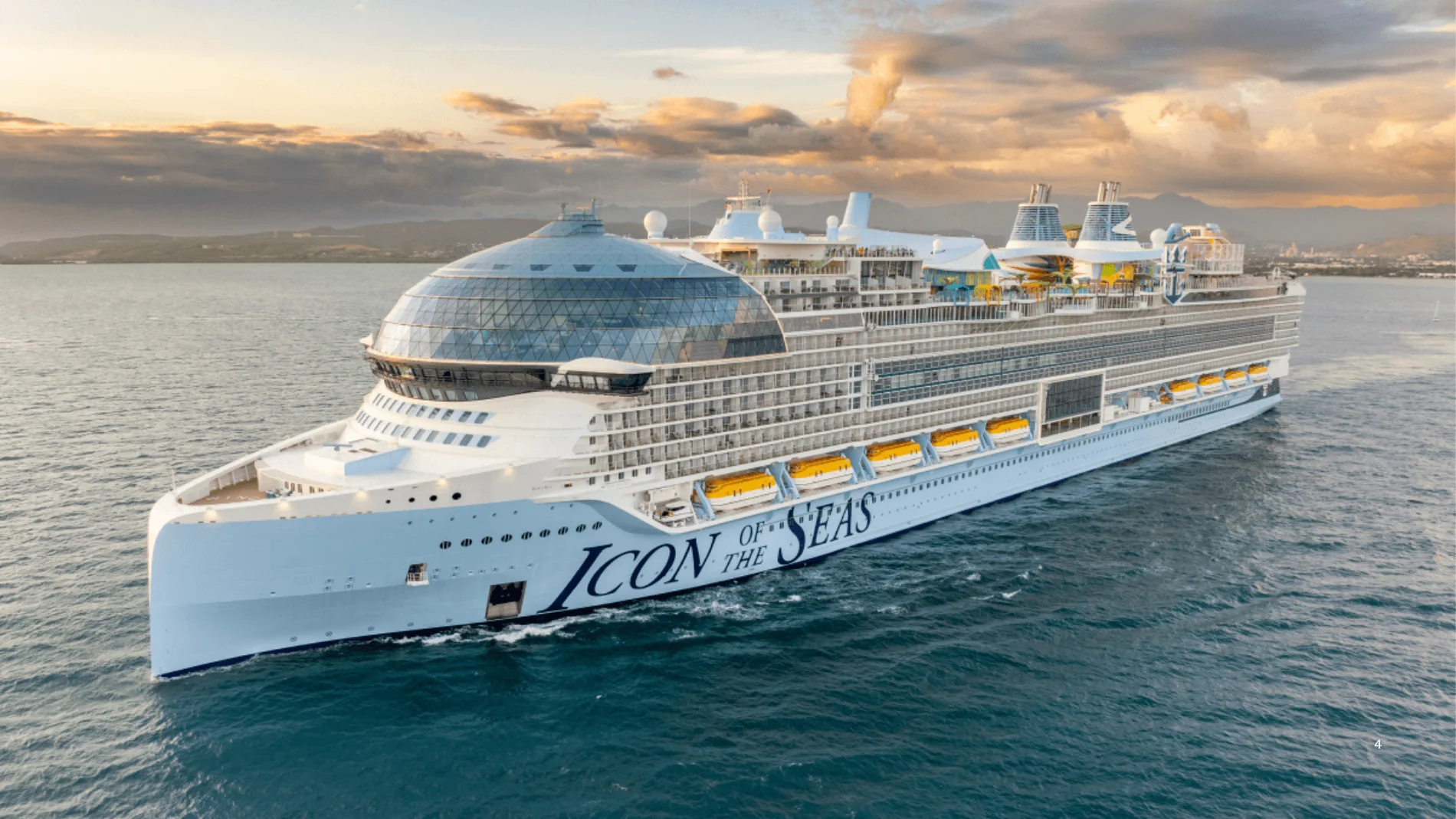
Today, That evolution has reached a new milestone with Icon of the Seas, the largest cruise ship ever built. This colossus of the seas, belonging to Royal Caribbean, impresses both with its dimensions and with what it houses inside.
Measuring 365 meters in length (equivalent to three football fields) and weighing 250,000 tons, this ship can accommodate almost 10,000 people, including passengers and crew.
A true floating city
Far from being a simple means of transportation, Icon of the Seas functions as a city on the high seas. It has 20 accessible decks, seven swimming pools, a huge water park, theaters, casinos and a wide gastronomic offer with dozens of themed restaurants and bars.
The design is designed so that thousands of people can live together without a feeling of crowding.with open spaces, relaxation areas and differentiated areas for different types of travelers.
Luxury and comfort at the highest level
The onboard experience resembles that of a five-star resort. The cabins have advanced insulation to guarantee rest, while the layout of the boat allows you to move fluidly even at times of maximum activity.
There are areas for those seeking adventure, but also quiet spaces to disconnect and enjoy the sea.
A more sustainable giant
Despite its size, the Icon of the Seas It also represents progress in sustainability. It runs on liquefied natural gas (LNG), one of the cleanest fuels available in current navigation, which considerably reduces its emissions.
In addition, it incorporates advanced energy recycling and water treatment systems, positioning itself as one of the most efficient cruise ships in the world.
The future of sea travel
Built at the Meyer Turku shipyard, This project has required years of development and complex engineering studies to guarantee its safety and stability.
If the Titanic symbolized the beginning of the era of the great liners, the Icon of the Seas represents the future of cruises by becoming a travel model where the experience on board is more important than the destination.