
Two teenagers who used artificial intelligence (AI) for creating fake nude photos of their classmates were released on probation Wednesday and placed in the custody of their parents.
The boys, who were 14 at the time, admitted earlier this month that they made 59 images of child sexual abuse. Prosecutors said they transformed photos of girls, many of them instagramwith virtual images of adults showing nudity or sexual activity.
Some of the victims were her classmates at Lancaster Country Day School, west of Philadelphia. Police said in court documents that a woman reported that her daughter said a classmate had been “taking photographs of students and using AI technology to portray underage female students as if they were naked.”
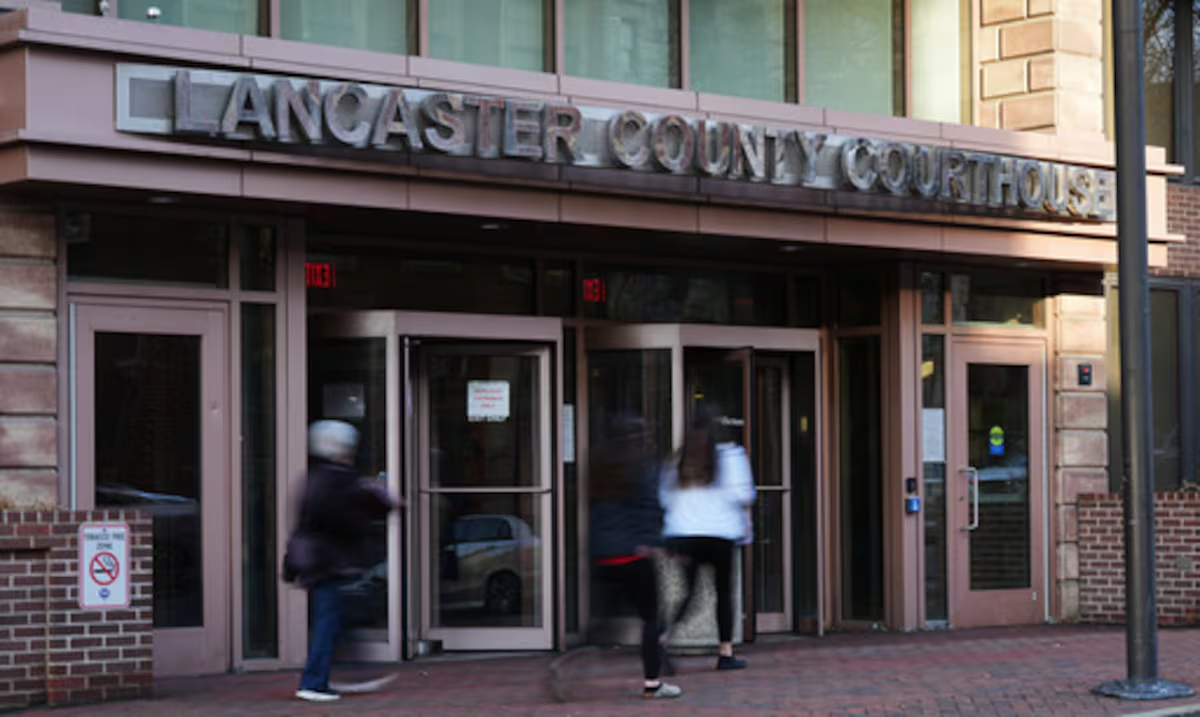
Wednesday’s hearing before Judge Leonard Brown III of the Lancaster County Court of Common Pleas was the juvenile court’s version of a sentencing hearing.
Along with probation, the boys received 60 hours of community service each. If they don’t have any additional legal problems, Brown said the case could be expunged after two years. They were also ordered to have no contact with the victims and must pay an unspecified amount of restitution.
In imposing his sentence, Brown said he had not heard either boy apologize or take responsibility for their actions. If they were adults, he said, they would probably go to state prison.
During the trial, the boys declined several opportunities to comment to the judge. One of them later declined to comment outside court.
“This has been an unfortunate, long and tortuous process for everyone involved,” Heidi Freese, lawyer for one of the boys. “There were very interesting underlying legal issues surrounding the charges in this case and those will be decided on a different day in a different case.”
Pennsylvania Attorney General Dave Sunday has said the case “exemplifies the dark side of modern technology and social media.”
“The conduct involved weaponizing technology to victimize unsuspecting children who had photos on the Internet. Needless to say, the impact on the victims is nothing short of devastating,” Sunday stated in a statement earlier this month.
The resolution of the Pennsylvania case comes days after three Tennessee teenagers sued xAI, from Elon Muskclaiming that the tools Grok of the company transformed their real photos into explicitly sexual images. The high school students are seeking class action status to represent what the lawsuit claims are thousands of people who were similarly victimized as minors.
The scandal that occurred in Pennsylvania in 2024 caused a student protest, the departure of those responsible for the center and the filing of criminal charges against the two teenagers.
Nadeem Bezar, a Philadelphia attorney who represents at least 10 of the victims, said Tuesday that he hopes to file a lawsuit “against the school and anyone else we believe guilty of creating and spreading these deepfakes.”.
He said he has not yet seen the photos, but he hopes the judicial process will determine “exactly when and where and how the school knew about it, how the boys created those images, what platforms they used to create them and how they were disseminated.”
1/12 | CES 2026: artificial intelligence transforms electrical appliances and home cleaning. CES 2026 officially starts this Tuesday, January 6, in Las Vegas, with some 3,500 exhibitors and an agenda full of launches and presentations. (Abbie Parr) – The Associated Press
Bezar said the girls’ reactions have varied, and for some it was traumatizing.
“We are talking about teenage women who set goals, who do well in their studies, who try to do everything possible to fit in and find their way in life at that early age, when everything matters,” says Bezar.
As AI has become more accessible and powerful, lawmakers across the country have passed laws aimed at banning deepfakes.
The president donald trump signed the Take it Down Act last year, which makes it illegal to publish intimate images, including deepfakes, without consent, and requires websites and social networks to remove such material within 48 hours of notification by the victim.
Forty-six states already have deepfake laws, and the remaining four –AlaskaMissouri, New Mexico and Ohio – legislation has been introduced, according to the consumer advocacy group Public Citizen.