
Cancer is not a single disease. It is, rather, millions of variations of the same problem. Each tumor arises from the patient’s own cells, with unique mutations, different rhythms and their own strategies to escape the immune system. That’s why treating cancer has never been easy: what works for one person may not work for another. In a sense, each case is deeply individual.
And yet, in that same individuality lies one of the most powerful weapons we have: our own immune system. For years, one of the most revolutionary therapies in this field is the so-called CAR-T therapy. It consists of extract immune cells from the patient (T lymphocytes, the body’s “soldiers”), genetically modify them in the laboratory so that they recognize cancer and return them to the body to attack it.
The result has been spectacular in some blood cancers. But it also has a problem: it is complex, slow and extremely expensive. Weeks can pass between extraction, reprogramming and reinfusion. AND The cost can exceed 400,000 euroswhich leaves it out of reach for many patients.
Now, a new study led by scientists at the University of California, San Francisco, published in Nature, proposes an idea that until recently seemed like science fiction: reprogramming those cells directly within the body. The advance It is based on the well-known CRISPR, the technique known as gene editing, often described as “molecular scissors.” capable of cutting and modifying DNA with great precision.
Instead of extracting the cells, the authors, led by Justin Eyquem, designed a system of two particles that travel through the bloodstream until they find the T lymphocytes. One of them acts as a guide: It is coated with antibodies that recognize a specific protein on these cells, ensuring that the treatment reaches the right place.
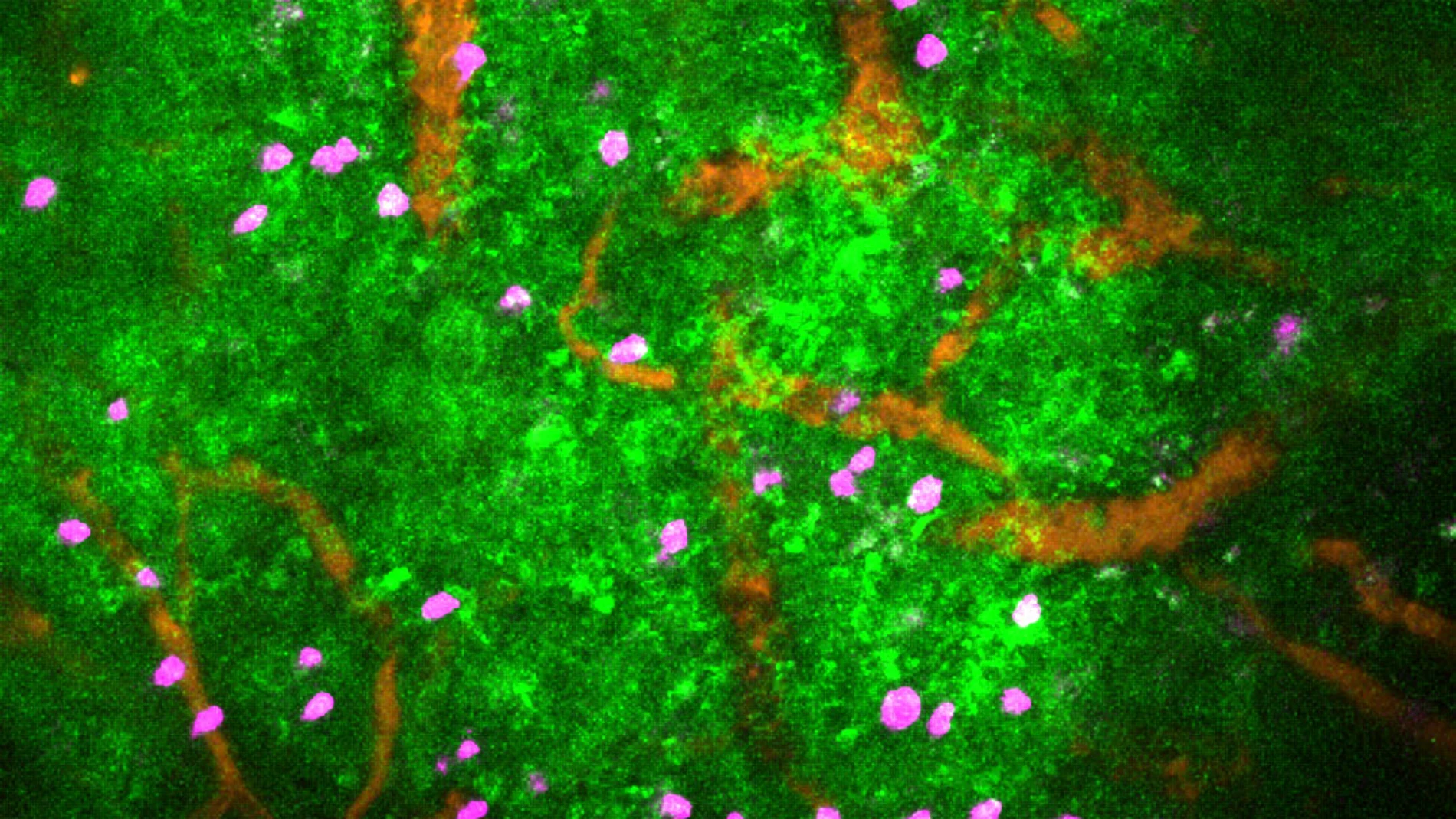
The second particle carries the genetic instructions necessary to convert these lymphocytes into cells capable of recognizing and attacking cancer. And here is one of the keys to the study: the new DNA is not inserted randomly, as occurs in previous methods, but at a very specific point in the genome, a kind of switch that is only activated in T cells.This allows for more precise, more controlled, and potentially safer modification. In the experiments, carried out in mice with “humanized” immune systems, the results were decisive.
A single injection was enough to eliminate all detectable traces of cancer in just two weeks in most cases of aggressive leukemia. The method also worked against multiple myeloma and, especially, against solid tumors, an area where traditional CAR-T therapy has had much more difficulty.
Furthermore, modified cells within the body itself They seemed to work even better than those created in the laboratory. Eyquem’s team believes that this is because, by not extracting or cultivating them outside the body, they better preserve their ability to multiply and remain active.
In some organs, these reprogrammed cells They represented up to 40% of the immune systemacting as a highly specialized attack force against the tumor. But beyond the biological results, the advance points to something perhaps even more important: accessibility.
Today, the CAR-T therapy requires highly specialized facilitiesweeks of waiting and previous chemotherapy treatments that not all patients can tolerate. In many cases, the cancer progresses while the cells are being made. If this new strategy can be translated to humans, it could eliminate much of that process. There would be no need to extract cells, send them to specialized factories, or wait weeks to receive them back. The treatment could become much more direct: an injection that activates the patient’s own immune system from within.
This would allow the therapy to be offered not only by large cancer centers, but also by smaller hospitals. In other words, could democratize one of the most advanced cancer treatments.
“I think this is just the beginning of a great wave of new therapies that will be truly transformative and save many lives”concludes Eyquem.