
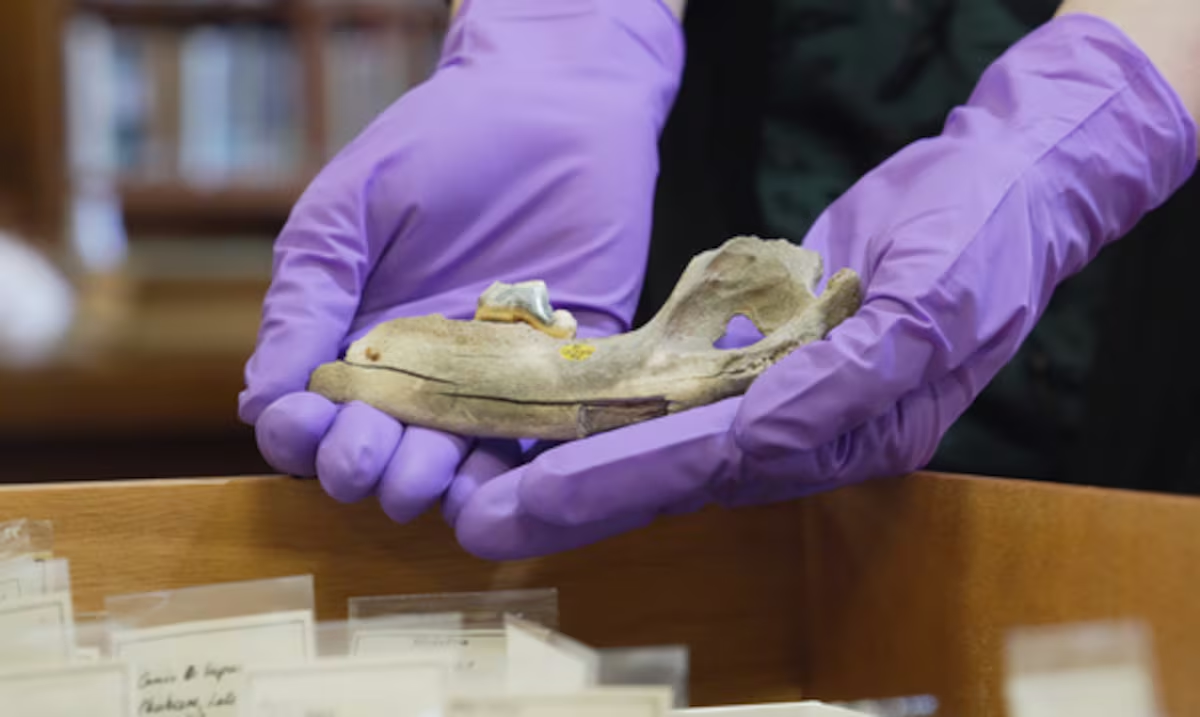
New York- Using the oldest canine genes ever studied, scientists are finding more evidence that our furry friends have been our companions for thousands of years.
Scientists believe the dogs descended from an ancient population of gray wolves somewhere in Europe either Asia. Tens of thousands of years ago, those wolves got used to living with people and became less aggressive. When domesticated, their genes changed along with their behavior, giving rise to the puppies we know today.
But when and where exactly it happened was a mystery. Scientists study fragments of DNA found in remains of ancient dogs and wolves to find out what the first dogs looked like and where they came from.
In two separate studies published Wednesday in the journal Nature, researchers have pushed back the timelines. They established a new way of studying ancient canine DNA – which is often contaminated and difficult to extract – by isolating only canine fragments.
They examined ancient genes from the remains of more than 200 dogs and wolves. The oldest ones dated back to about 15,800 years ago, putting the origin of dogs back at least 5,000 years.
“This unique relationship between people and dogs has existed for a long time and continues to exist today,” says Jeffrey Kidd, an expert in canine genomics at the University of Michigan, who was not involved in the new research.
The genes showed that dogs were already widespread in Western Europe and Asia 14,200 years ago, in a time before agriculture and livestock. These dogs lived with human hunter-gatherers who were constantly moving.
The dawn of agriculture – a fundamental change in human history – brought new peoples to Europe from southwest Asia. They mixed and mingled with Europeans, leaving a lasting and varied imprint on their genes.
But the canine genes studied by the scientists, stretching from the United Kingdom to Türkiye, remained more consistent. The arrival of new humans during the development of agriculture influenced them less and more the interactions between different groups of hunter-gatherers and their dogs thousands of years earlier.
Unlike dogs from Asia and Americawhose genes better reflect the movement patterns of their owners.
Scientists don’t know exactly what the first dogs looked like, but they have some ideas.
“We suspect that they looked like smaller wolves,” says Lachie Scarsbrook, co-author of the study and a member of the Ludwig Maximilian University of Munich.
It is also unclear how these ancient dogs coexisted with their peers. They might stand guard or help them hunt, but they probably also played with the small children.
1 / 15 | A symphony of barking: almost 2,400 golden retrievers gather in a park in Argentina. The sound of 2,397 dogs barking was unmistakable in the Argentine capital, breaking an unofficial world record for the largest number of golden retrievers gathered in one place. – Natasha Pisarenko
There is still work to be done to determine exactly when dogs emerged, the first pages of a historical relationship that still endures.
“They are humanity’s best friend, they have accompanied our societies for the last 16,000 years and will continue to do so in the future,” said Scarsbrook.