
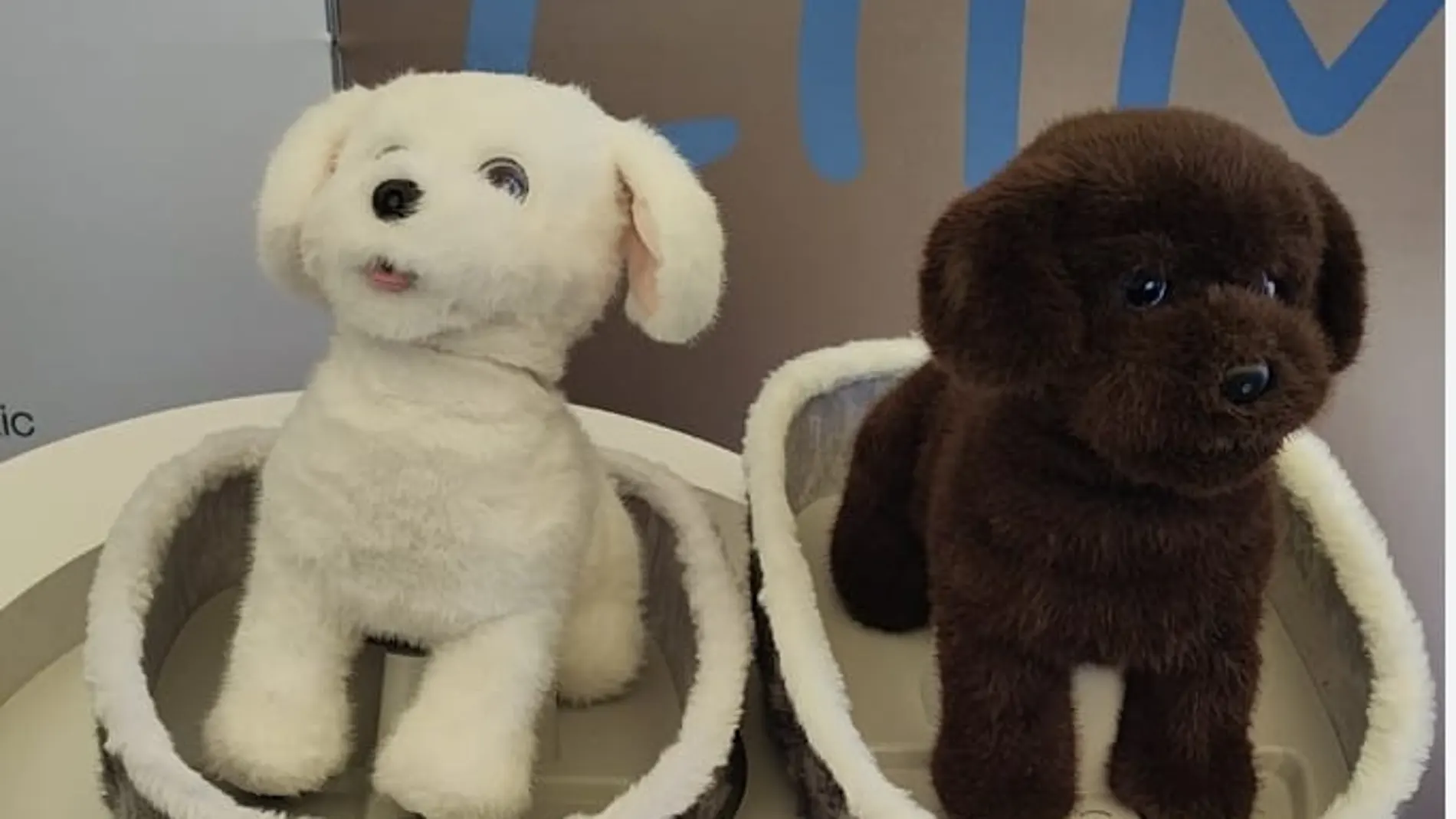
For years, home robots have had a clear and almost humble mission: clean floors, vacuum dust, mop silently, and cut grass while no one is watching. They have been efficient, discreet… and deeply impersonal. But something is starting to change. With Lilmilo, the new robot presented by the company Ecovacs, the technology takes a small, although significant, step into another territory: that of devices that not only do tasks, but also interact, accompany and, to a certain extent, coexist with us.
At first glance, Lilmilo might seem like an evolution of traditional home robots. It incorporates advanced navigation, improved sensors and recognition capabilities that allow you to move more autonomously around the home. But its design and approach point in another direction. It is not just about optimizing cleanliness, but about creating a more “friendly” presence. A device that responds, that can make sounds, that reacts to the environment and people. An object that stops being invisible and becomes something that can be interacted with.
That seemingly minor nuance is actually the beginning of a deeper transformation. And at the same time as there is enormous technological development, there is another trend that is growing strongly: loneliness. Various studies have been warning for years that social isolation, especially in older people, is not only an emotional issue, but also a health risk factor. It has been linked to a greater likelihood of depression, cognitive decline, and even cardiovascular disease.
Organizations such as the World Health Organization have begun to address loneliness as an emerging public health problem, especially in aging societies. And the data confirms it. Between 2014 and 2019, loneliness was associated with more than 871,000 deaths annually, which is equivalent to 100 deaths per hour,according to the World Health Organization.In Spain, meanwhile, the survey Perception and Experience of Unwanted Loneliness notes that 44% of people experience unwanted loneliness.
In this context, the idea of domestic robots that not only perform tasks, but also offer some type of interaction, begins to take on another meaning. It is not about replacing human relationships, something that, for the moment, is very far away, but about mitigate the absence of everyday stimuli: a voice, a movement, a response. For a person who lives alone, even a minimal interaction can break the feeling of emptiness.
A delicate question arises here. Can a robot really accompany you? The answer, for now, is ambiguous. Devices like Lilmilo do not feel, understand emotions or establish real connections. But, and this is important, Yes, they can generate the perception of interaction, something that the human brain, especially in contexts of isolation, tends to interpret as presence.
It’s not something new. It already happens with virtual assistants, robotic pets or even everyday objects to which we attribute human traits. The difference is that now that illusion is intentionally designed. And that opens a debate: if a technology can reduce the feeling of loneliness, even through a simulated interaction, is that enough? Lilmilo is not, yet, a companion in the full sense of the word. But it is no longer a simple appliance either. Its AI system allows it to deduce not only who it is interacting with in the home, it also has different personalities to respond to those interactions.
Its “skin” hides a network of touch sensors that allow it to respond to touch throughout its body. They have microphones and a camera mounted on their nose to detect movement. To this it adds moving parts such as the head, neck and tail that allow it to simulate the behavior of a dog, the integrated speakers for barking and, finally, it has an active heat emission system that adds a layer of complexity: it seems alive. Thanks to these qualities Lilmilo can become the next step in home robots: people robots.