
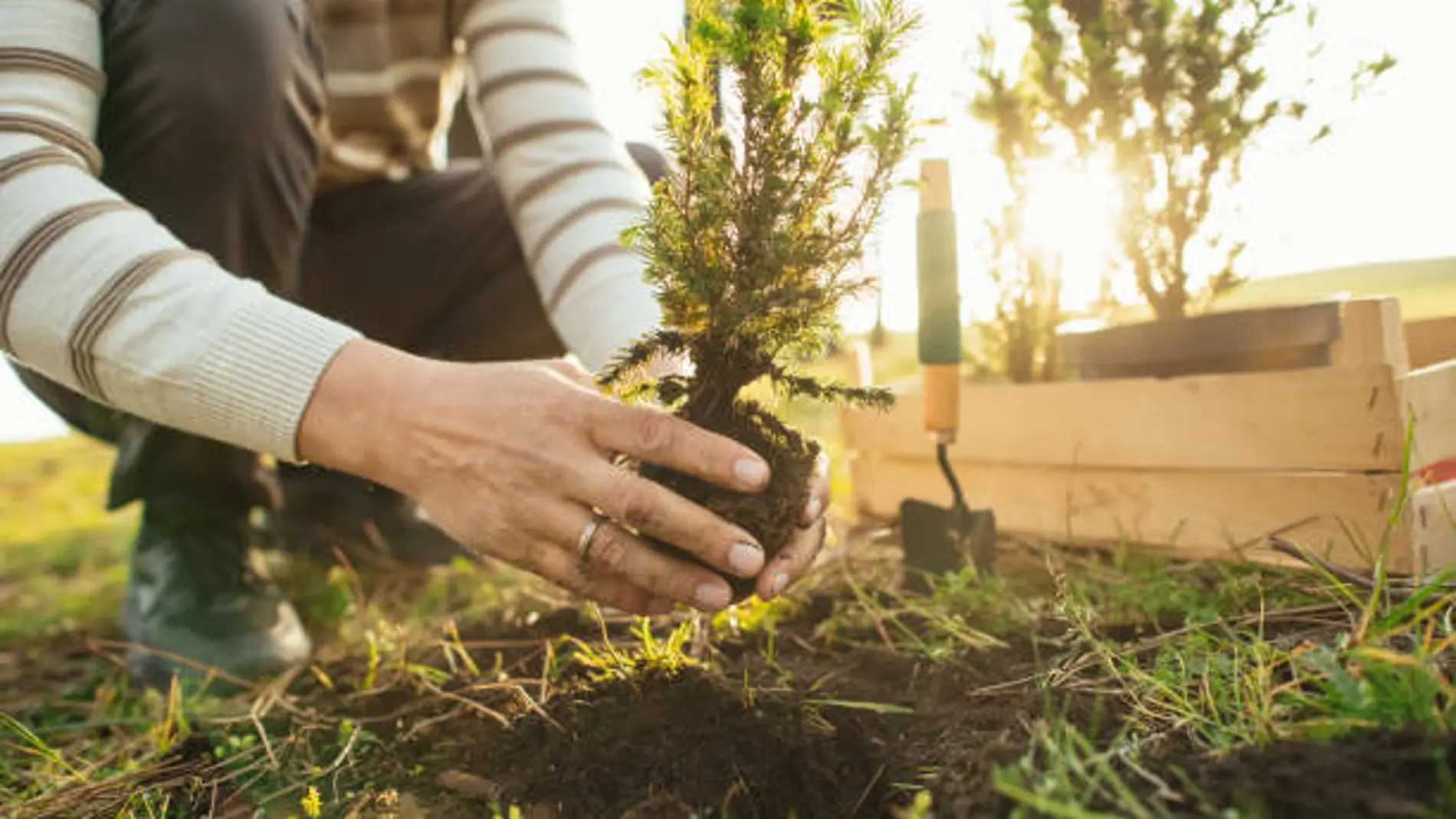
One of the ideas that has most affected the population is that plant trees can help combat climate change. During photosynthesis, trees emit oxygen and absorb carbon dioxide, a major greenhouse gas.
This is why planting trees has become a routine for many. Thanks to this, excess harmful gases are captured and the impact on the atmosphere is reduced. However, not everything seems to depend on the number of trees planted, but other factors come into play.
And several researchers from the Federal Polytechnic School of Zurich show that the climate impact of a forest It depends more on its location than its sizethat is, having a smaller number of well-placed trees can generate the same cooling effect as large quantities that are poorly distributed.
Better quality than quantity
With this new study, the idea when it comes to planting trees changes completely. For many years, citizens had a popular idea that a greater number of trees meant a greater benefit. However, this research shows that the equation works in a completely different way.
For this reason, researchers have created a map with the tropical areas that are most efficient for global reforestation with up to 50% less land and a similar climate effect. Now, the place where the forests grow is more relevant than the total reforested area.
In this way, the perspective on this matter changes completely. Environmental objectives are modified, as are land use and public policies.. Instead of expanding projects indiscriminately, the most efficient path seems to be to correctly choose the location of the plantation to obtain greater cooling and a lower risk of the opposite effect.
Less surface area equals the same result
Studies have shown that land with a difference of up to 450 million hectares achieved a very similar result for global cooling. These data rethink the debate on reforestation on a global scale and modify the focus: geographical efficiency with respect to the amount of plantation.
What are the most useful areas?
Tropical regions, as parts of the Amazon, West Africa and Southeast Asiaseem to be the most favorable for the forest restoration. In these areas, trees absorb a significant amount of carbon from the atmosphere and also help cool the air by releasing moisture.
This mechanism strengthens cloud formation and reduces some of the solar energy that heats the surface. Therefore, tropical zone They bring together the strongest combination of carbon capture and positive climate effect.
The consequences of reforestation
The study also issues an important warning, since reforestation has limits. In the most ambitious scenarios, the reduction in global temperature would reach about 0.25°Csomething insufficient on its own to solve the climate crisis.
In addition, a series of risks appear such as forest monocultures vulnerable to pests and fires, replacement of non-forest natural ecosystems and conflicts with agricultural uses or local communities.
The positive impact of reforestation
However, if applied correctly, reforestation can generate benefits that go far beyond the climate. These are:
- Recovery of biodiversity, especially in degraded tropical areas.
- Improvement of water cycles, with greater retention of moisture in the soil.
- Reduction of erosion and protection against extreme events.
- Creation of more stable microclimates for agriculture and local communities.