
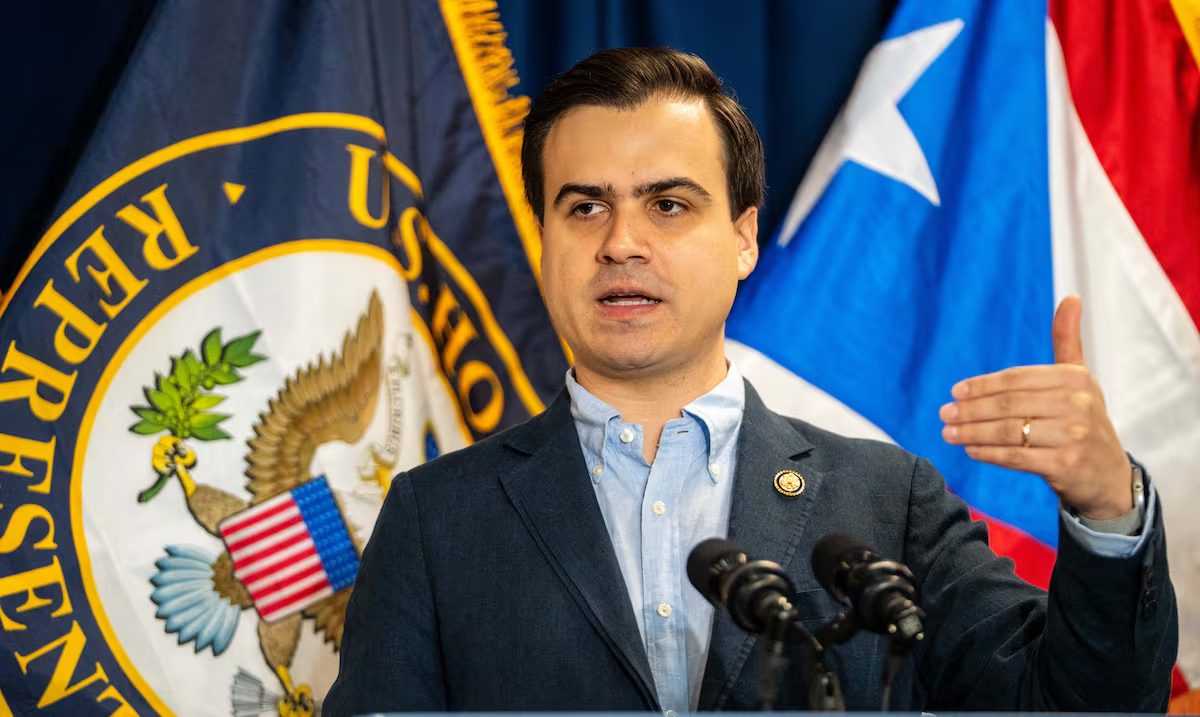
Washington D.C. – The resident commissioner in Washington, Pablo Jose Hernandezpresented federal legislation that seeks to dedicate, over the next five years, a total of $100 million for research that helps protect electric grids from cyber attacks.
Bill 7696 would place in the hands of the Department of Homeland Security a grant program that can assist universities and national laboratories in developing “advanced testing environments” that simulate hacker attacks against power grids in the United States and its territories.
Legislation requires reporting to Congress on the risks faced by electrical systems and advances in research. According to the bill, the grants must be available from this fiscal year 2026 until 2030.
The other legislation, numbered 7697, would order the US State Department to launch a comprehensive international strategy that provides support “for the modernization of electrical grids through artificial intelligence.”.
According to the resident commissioner, the strategy must be developed in coordination with the departments of Energy, Homeland Security and Commerce, through pilot projects, technology, cooperation and job training with “international partners.”
Although they were announced this Tuesday, the bills were submitted to the United States House of Representatives last February 25.
“Our power grid is essential to everything from hospitals to national security, yet it faces increasing risks from cyberattacks and extreme weather events.”indicated Hernández, who highlighted that he is a member of the Innovation and Technology Working Group of the Coalition of New Democrats.
He added that “Artificial intelligence gives us new tools to defend these systems, strengthen their resilience and modernize the way our energy infrastructure operates, but it must be developed responsibly”.
The measures only have Democratic co-sponsors: Sam Liccardo (California) and Adelita Grijalva (Arizona).
Hernández highlighted that he is presenting the measures at a time when experts and legislators fear an increase in cyber threats against critical infrastructure, which also suffers from symptoms of aging and faces the consequences of climate change.
“A vulnerable electric grid invites disruption from our adversaries and slows American innovation. Strengthening and modernizing our energy infrastructure will protect our national security and boost our innovation economy,” Liccardo said.
Grijalva stated, for his part, that “the United States power grid faces growing threats from sophisticated cyberattacks to climate-driven disasters and we need to stay ahead.”
According to Hernández, the projects were written in consultation with researchers from the University of Puerto Rico in Mayagüez.