
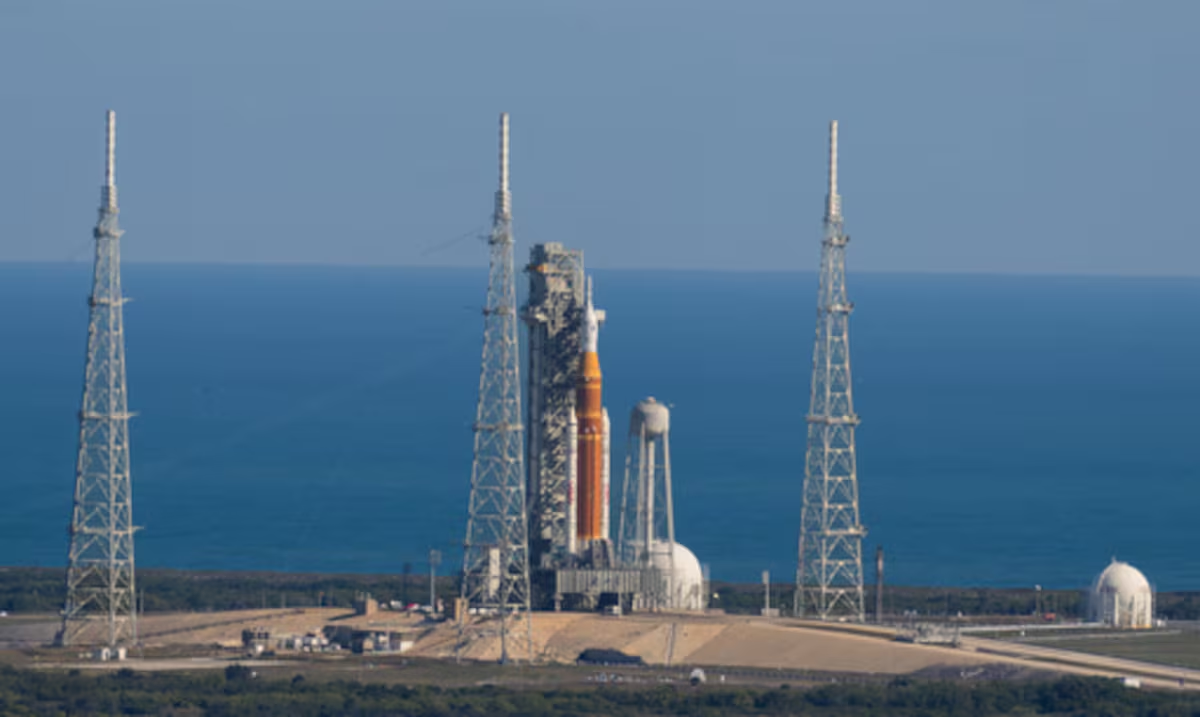
Cape Canaveral, Florida – The POT retested the fuel of its giant lunar rocket this Thursday, after leaks interrupted the initial dress rehearsal and delayed the first lunar trip by astronauts in more than half a century.
For the second time this month, launch teams began pumping more than 700,000 gallons (2.6 million liters) of supercold fuel into the rocket atop its launch pad.
It is the most critical and difficult part of the account after two days of practice. The result will determine whether the launch of the Artemis II lunar mission with four astronauts in March is possible.
1/11 | This is what it looked like when Artemis I began with the launch of the new lunar rocket. Almost three months after the first launch attempt, the powerful lunar rocket of the Artemis I mission took off towards the orbit of the Moon. – The Associated Press
During the test two weeks ago, dangerous amounts of supercold liquid hydrogen leaked from connections between the pad and the Space Launch System’s 322-foot rocket. Engineers replaced a couple of gaskets and a clogged filter in hopes of passing the repeat test in the Kennedy Space Center.
NASA will not set a launch date for the Artemis II mission until it passes the fueling demonstration. Like last time, the crew – three Americans and one Canadian – watched the test from afar.
The earliest astronauts could fly is March 6. They will become the first people to fly to the Moon – making a 10-day round trip without stops – since Apollo 17 in 1972. They will not orbit or land.
The POT has been fighting hydrogen fuel leaks since the days of the space shuttle, which provided many of the SLS engines. The first Artemis test flight, with no one on board, was grounded for months by hydrogen leaks before finally taking off in November 2022.
Going years between flights compounds the problem, according to new NASA administrator Jared Isaacman, a tech entrepreneur who funded his own trips to orbit through SpaceX.
Only two months into the job, Isaacman is already promising to redesign the fuel connections between the rocket and the pad before the next launch of Artemis III. This mission, which is still a few years away, will attempt to land two astronauts near the south pole of the Moon.
“We will not launch unless we are prepared and the safety of our astronauts will remain the top priority,” he declared last week on X.
This story was translated from English to Spanish with an artificial intelligence tool and was reviewed by an editor before publication.