
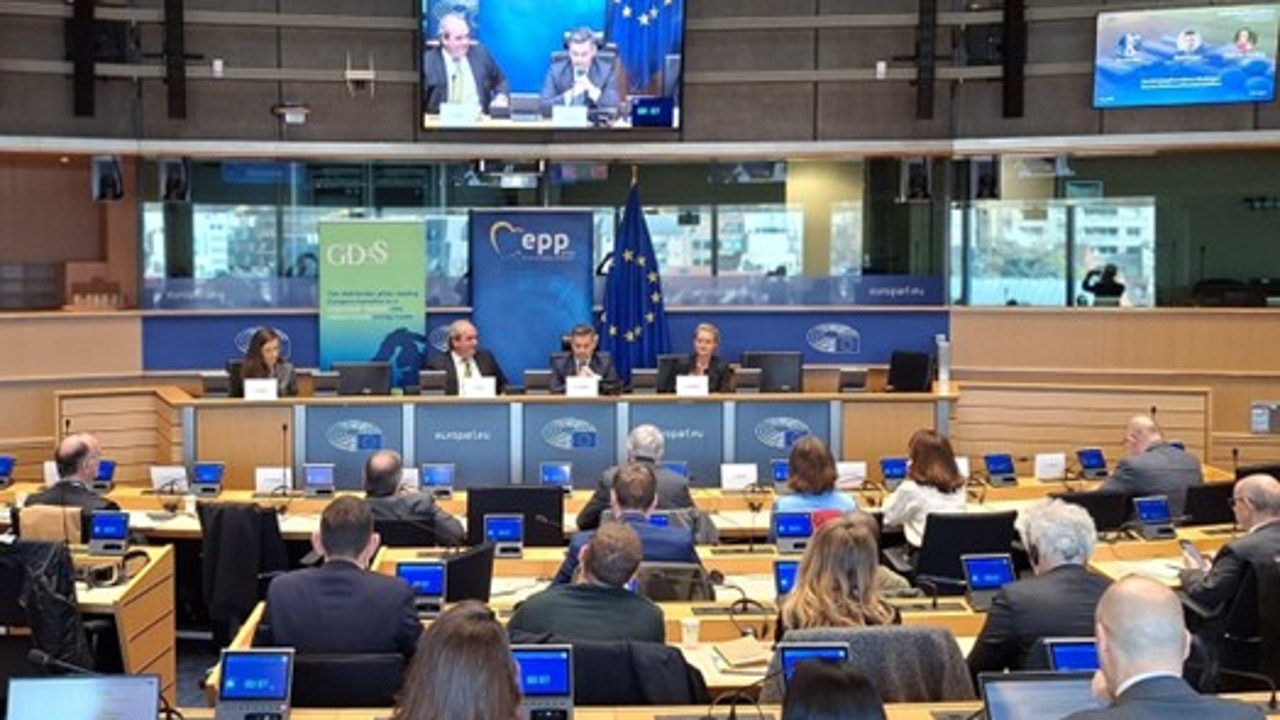
Biomethane plays a strategic role in the European energy transition and in achieving carbon neutrality goals. Its relevance was evident during the recent conference “Farmers’ Role in the Energy Transition: Unlocking Europe’s Biomethane Potential”, held at the European Parliament.
The meeting, promoted by several European parliamentarians, included, among others, the collaboration of Gas Distributors for Sustainability (GD4S), the main European association of natural and renewable gas distribution companies, made up of 12 large operators in 10 countries, including Nedgia in Spain; the Confederation of Portuguese Farmers and the European Committee of the Regions. In addition, it brought together institutional representatives from the agricultural and energy sectors in a debate forum on biomethane as a lever for rural development and energy independence for the continent.
The importance of biomethane in European energy independence was underlined by Raúl Suárez, CEO of Nedgia and member of the board of the GD4S Association, whose objective at European level is to promote decarbonization, promoting the use of renewable gases (such as biomethane and hydrogen) through its extensive distribution networks and which represents more than 60 million customers.
In his speech, Suárez shared real concrete experiences that demonstrate how gas distribution can be an engine of innovation and connection from the territory. “Biomethane is not a promise for the future, it is a reality that we must scale to strengthen Europe’s energy independence,” he stated, also highlighting the potential to create new opportunities for farmers and energize a local and circular economic model.
The Spanish representative recalled that European network operators, including Nedgia, manage two million kilometers of networks ready to integrate green gas, which makes it possible to take advantage of existing infrastructure and move towards an efficient and sustainable transition.
In fact, and according to the report “Gas for the climate: a path to 2050”, maintaining and taking advantage of gas infrastructure could mean savings of up to 217 billion euros annually in system costs, while boosting local employment, regional development and industrial competitiveness.
The study, prepared by a European consortium of gas infrastructure companies, analyzes how renewable and low-emission gas can be key for the European Union to achieve the goal of net zero emissions in 2050.
Opportunities for farmers
During the course of the conference, the emphasis was placed on the empowerment of farmers and regions, as well as collaboration with distribution system operators to build a sustainable and resilient energy system at the European level.
Farmers play a fundamental and leading role in the European energy transition, transforming the agricultural sector from a mere energy consumer to a key producer of renewable energy, mainly through the production of biomethane. This renewable biogas, obtained from organic agricultural and livestock waste, is crucial for decarbonization, Europe’s energy autonomy and the creation of a circular economy.
The CEO of Nedgia illustrated the positive impact of biomethane on agricultural competitiveness, using two success stories in Spain as an example. Specifically, he referred to the case of the Torre Santamaria Farm in Catalonia, whose dairy farm has diversified its activity through the production of green gas from manure and agricultural by-products, generating organic fertilizers reused in the pastures themselves. In times of low milk prices, biomethane income has allowed the farm to be economically sustained.
And he also referred to the Cobirgy Project, an initiative being developed in Castilla y León, promoted by more than 300 ranchers to sustainably manage manure in an area vulnerable to nitrate contamination. Thanks to a biomethane plant that injects the gas into the network and reduces the concentration of nitrates in the digestate, reuse as agricultural fertilizer is facilitated, solving the serious environmental risk and ensuring the viability of local livestock farming.
In Suarez’s opinion, both cases demonstrate the capacity of biomethane to integrate environmental, agricultural and energy solutions, generating a positive impact on the rural economy and the transition towards environmentally friendly energy.
Recommendations for the future
In conclusion, the CEO of Nedgia insisted on the need to accelerate the deployment of biomethane through a stable and pragmatic regulatory framework, which simplifies project authorization procedures, recognizes the key role of network operators in connecting local producers and supports predictable mechanisms such as purchase agreements or guarantees of origin. In addition, he highlighted the importance of ensuring technological neutrality, allowing each region to choose the most appropriate solutions for its geographical and economic context.