
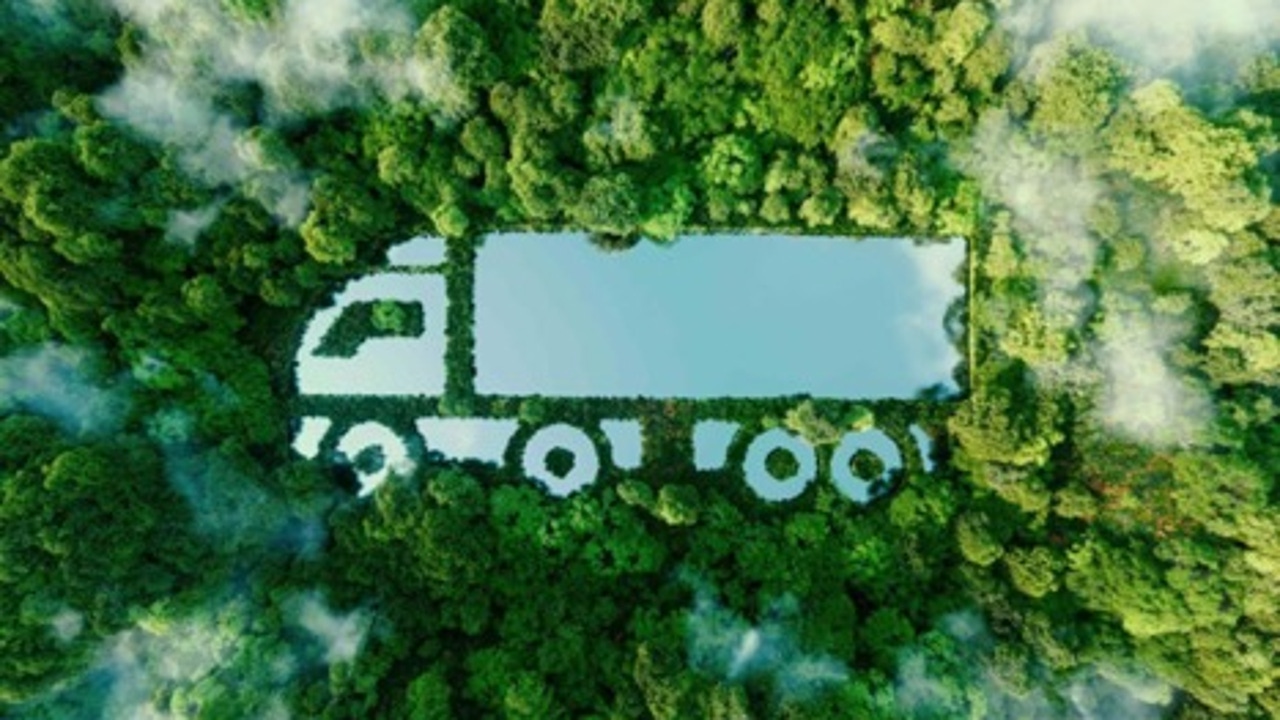
The transportation sector has become one of the largest emitters of greenhouse gases (GHG) worldwide, contributing significantly to global warming. According to the International Energy Agency, around 24% of global CO2 emissions come from this sector, including cars, trucks, planes and ships, all essential for the economy, but not good for the environment.
In Spain, the Ministry for the Ecological Transition and Demographic Challenge (MITECO) raises the figure to 30.7%, with road transport being the main emitter, with 28.4% of the national total.
The transition towards clean and renewable energy sources is essential to guarantee a sustainable future, especially in the transport sector, whether for people or goods. However, and beyond the coordination efforts that must be made on a global scale, numerous challenges and uncertainties still remain to be resolved. However, there are already multiple initiatives and technological advances that are driving a significant transformation in the field of transportation, directing it towards a more efficient and environmentally friendly model.
More sustainable models
Natural gas for vehicles, also called NGV (natural gas for vehicles), is a more economical and sustainable alternative to traditional fuels. It is the same natural gas that is used for heating or hot water, but under special pressure and temperature conditions that allow charging in vehicles: compressed natural gas (CNG) for passenger cars and light vehicles, and liquefied natural gas (LNG) for heavy and long-haul trucks as it provides ranges of more than 1,500 km.
Its use reduces emissions of NOx, particles and CO2, as well as noise pollution. Energy companies such as Naturgy promote the development of renewable gases such as biomethane and hydrogen, adapting infrastructure to facilitate the energy transition and collaborating with transport companies on green hydrogen refueling solutions.
This collaborative spirit frames the agreement signed a few weeks ago between Naturgy and Venture Global – an American company that produces and exports liquefied natural gas – for the acquisition of one million tons of liquefied natural gas (LNG) annually. As Jon Ganuza, general director of Supplies and Wholesale Markets at Naturgy, explains. “We continually analyze the opportunities that may arise for new sources of supply in the current geopolitical context and transformation of the global energy model.” In his opinion, “this contract strengthens our role as a global supplier of natural gas and helps us guarantee a safe, flexible and competitive supply to all our customers.” In fact, the Spanish energy company manages one of the largest and most diversified portfolios of gas purchase and sale contracts in the sector, with a presence in Europe, the United States, Asia and the Caribbean.
Electric vehicles (EV) are also emerging as one of the possible solutions. Countries like Norway and Germany are leading the way with policies that encourage the adoption of these types of vehicles through subsidies and exponential growth in charging infrastructure. According to the International Energy Agencyit is expected that by 2030 there will be more than 230 million EVs on the roads globally.
Strengthening public transportation constitutes another key strategy. Cities such as Singapore, Copenhagen, London or Paris stand out worldwide for their efficient and ecological public transport systems. In Spain, cities like Barcelona have deployed a network of bike lanes that exceeds 300 km, and their public transport fleet includes electric and hybrid buses. Madrid has also renewed its bus fleet with electric and natural gas models.
Digitalization and new forms of mobility
Artificial intelligence and big data are revolutionizing traffic management and energy efficiency. Intelligent systems allow decision-making in real time, optimizing routes and “anticipating traffic jams.” In addition, shared mobility, electric bicycles and scooters are reducing dependence on private vehicles and promoting more sustainable alternatives. Digitalization is also applied to the management of green corridors, designed specifically for heavy and goods vehicles, seeking to reduce polluting emissions, optimize traffic flow and promote the use of clean technologies in long-distance transportation.
In the field of land transport, green corridors, both for people and goods, are making their way into the field of innovative solutions. Countries such as Germany, France and Spain develop routes that connect ports and logistics centers, equipped with charging stations for electric and gas trucks. Germany, for example, is testing electrified highways with catenaries for hybrid trucks, while the Spanish Mediterranean corridor aspires to integrate North Africa with Eastern Europe, through an efficient and sustainable railway network.
The airline sector also joins sustainability with green routes between airports and the adoption of Sustainable Aviation Fuels (SAF). Several countries have begun to develop green corridors between major airports. These routes often connect strategic cities and have incentives for airlines that adopt greener practices. For example, the Madrid-Barcelona corridor has reduced emissions by up to 15% on flights that use sustainable fuels and optimized routes.
In the airline sector, collaboration is also gaining ground. This same year, Naturgy has announced the signing of a contract with AENA – the Spanish airport operator – to supply renewable gas to its airport network, in order to reduce emissions associated with the consumption of thermal energy in its facilities.“This agreement illustrates how biomethane is already a reality to promote a fair energy transition, especially in industrial sectors where it is emerging as the best solution to reduce emissions without losing competitiveness,” he says. María Higueras, director of Industrial Market at Naturgy.