
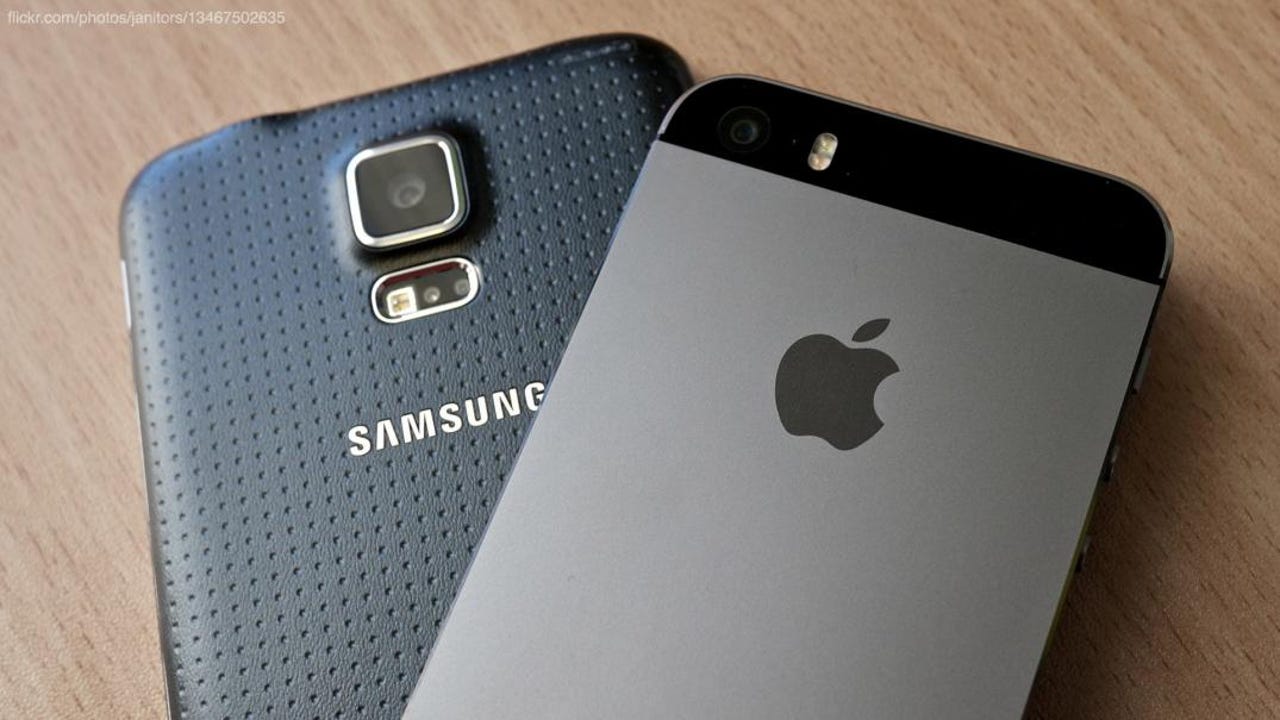
We like Apple’s smartphones more or less, we must recognize that their sales have been stable for more than a decade: always about 230 million units sold globally. Some year they touch the 240 and another just above 220, but there is the balance.
In this panorama, Samsung, its greatest competitor, is debated betweenfigures above 320 million and aciagos data that barely touch the 220 million. The same extreme oscillation, an enormous thermal amplitude in the figures, It is seen in Xiaomi, Huawei and other close competitors. Each with their own internal war.
Samsung is A larger and more turbulent ocean, in constant agitation, with dozens of new annual modelsagainst the four of Apple. Xiaomi is like a river of bravas, which goes up and down quickly, in its prices and qualities, while Huawei was a tsunami that crashed with a political earthquake that stopped its destination.
The smartphones market, there is no doubt, is A brutal scenario where only Apple, thanks to its unique ecosystem and brandhas managed to build a stability strength. For all others (those mentioned and Oppo, Realme, Nothing, OnePlus, Honor …), it is a constant battle with immense volatility.
Apple has reached a remarkable level of stability, but it is a specific type of stability: that of a mature and premium giant based on selling high -price phones and high profit margin to a base of faithful customers Within a strictly controlled ecosystem (iOS, macos, app store, services).
But the iPhone sales plateau is monthly and not annual: They are mainly linked to product launch cycles and reach their maximum point after an important release. Then they decrease significantly to the next release. Thus, the loyalty of iPhone users is obvious: People not only buy an iPhone; It enters a universe of products and services that work perfectly.
The ecosystem (the definitive exclusion) is based on the compatibility of the apple devices. For example, If we want to take advantage of an Apple Watch, we need an iPhone, otherwise we lose much of its functionalities. This is the extreme, but the AirPods, the laptops and the iPad, also have problems to socialize with other operating systems. Not as many as the famous clock, but …
One of the advantages that support Apple’s success or at least its fidelity is that iOS is known for its simplicity, intuitive design and absence of Bloatware. To this is added the long -term software support (more than 5 to 6 years of iOS updates) and the sensation of malware security.
Another notorious section is your brand identity. Apple has mastered its brand as a symbol of luxury, creativity and aspiration. The iPhone is a status symbol, they are against the world.
And finally, privacy. Apple promotes itself as the alternative focused on privacy to Google and Android. Whether it is totally true or not, this message resonates strongly in a segment of users and reinforces its loyalty.
But all this has several problems, since Apple’s strategy is a double -edged sword. The first of them, and the most cited, is the complacency with innovation. The captive public (Sales in Plateau) makes innovation be delay: Why innovate if they will buy? That is what causes, year and year too, teasing in networks on the improvements of the iPhone on duty.
Then we have endogamy. A successful, but very closed ecosystem becomes a goal for regulators (the word monopoly resonates that fear goal, Google or Microsoft). The demand of the US Department of Justice against Apple (precisely for monopoly) is a direct attack on its business model, claiming that It uses its monopolistic power to catch users and developers. Forced changes in Imessage, the rates of the App Store or access to the NFC (Apple Pay) chip could be a complex problem, facilitating the user output.
China’s dependence constitutes a huge geopolitical and operational risk. Apple’s manufacture is overwhelmingly concentrated in China. Very overwhelmingly: up to 90%. Any interruption, either by political tensions (for example, Taiwan), a pandemic or trade wars or Trump’s rates, They could paralyze their supply chain and stop the constant flow of devices.
Apple must also be alert to generational change. While the brand is solid, There is a risk that younger generations do not perceive the same value. If a competitor (or a new device category) captures your attention and Apple is seen as your parents’ brand, the loyalty cycle could break. In a nutshell: Apple can become, for our children, the nokia of our older brothers.
The strategy makes them vulnerable to specific and catastrophic threats (regulatory measures, collapse of the supply and erosion chain of their brand image), instead of daily competitive threats facing competition.
Thus, contrary to the rest of the manufacturers, Your future does not depend on winning new customers, but to continue contributing enough value to their devices so that their current users never want. At the moment when the apple of Paradise becomes a prison from which they cannot leave, its greatest strength will become its greatest weakness.