
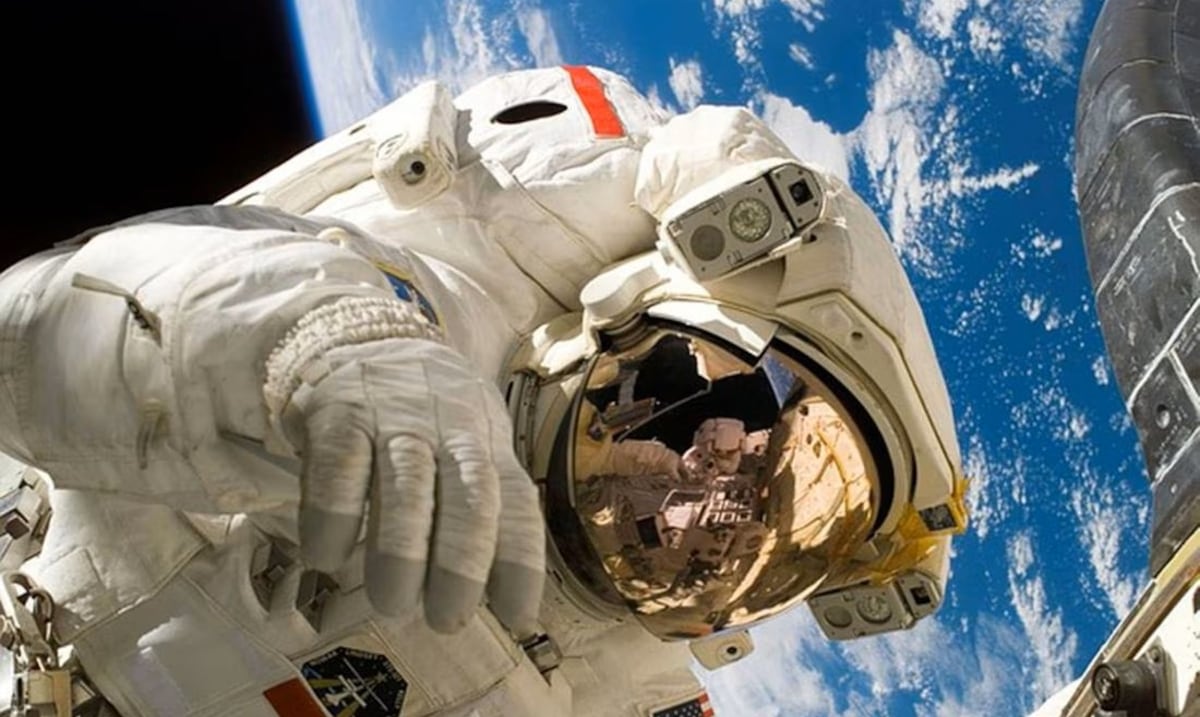
Space flights accelerate the aging of human stem cells and human hematopoietic parentswhich are vital for the health of blood and the immune system, according to a study led by the University of California in San Diego.
The results show that these lost part of their ability to produce new healthy cells, became more prone to DNA damage and showed faster signs of aging at the ends of their chromosomes after the space flight, all signs of accelerated aging.
The researchers, who among other tools used artificial intelligence, focused their experiments on four replenishment missions of Spacex to the International Space Station. The details are published in Cell Stem Cell magazine.
“The space is the definitive stress test for the human body,” says Catriona Jamieson, director of the Sanford Institute of Stem cells and medical professor at the Californian University.
These findings are of “vital importance” because they show that space stress factors, such as microgravity and galactic cosmic radiation, can accelerate molecular aging of blood stem cells.
“Understanding these changes not only informs us about how to protect astronauts during long -term missions, but also helps us to model human aging and diseases such as cancer here on earth. It is an essential knowledge now that we enter a new era of commercial space trips and research in low terrestrial orbit.”
1/8 | Space operation: astronauts stranded in space begin their journey back to land. This image taken from a NASA video shows the Spacex capsule that transports NASA Suni Williams and Butch Wilmore astronauts before decoupling the International Space Station. – The Associated Press
Previous studies of the POT They demonstrated that spatial flights can affect the immune function and the length of telomeres (extremes of chromosomes).
One of them, the twin study, was a one-year-old experiment (2015-2016) in which astronaut Scott Kelly spent 340 days aboard the space station while his twin, Mark Kelly, remained on earth.
The work did a Monitoring of changes in genetics, physiology, cognition and microbiome, and discovered alterations in gene expression, changes in the length of telomeres and changes in intestinal microbiome. However, many of these modifications were reversed or returned to normal after Kelly returned to land.
Real -time monitoring
To carry out the current study, the researchers, also from the company Space Tango, developed a novel “nanobiorreactor” platform, miniaturized 3D biosensors systems that allowed to cultivate human stem cells in space and monitor them with image tools based on artificial intelligence.
The cells exposed to between 32 and 45 days of space flight showed distinctive characteristics of aging. The researchers observed that space flights trigger a series of changes in hematopoietic stem cells very similar to those that occur as we age.
These became more active than normal, exhausting their reservations and losing the ability to rest and recover, a key feature that allows stem cells to regenerate over time.
1/9 | 56 years ago we played the moon: look at the photos that are still astonishing the world. On July 20, 2025, 56 years of the arrival of man on the Moon in the Apollo 11 mission (NASA)
Its ability to produce new healthy cells decreased, while signs of molecular wear, such as DNA damage and shortening of chromosomes (telomeres), became more pronounced.
The cells also showed signs of inflammation and stress within their mitochondria “The energy producers of the cell,” and began to activate hidden sections of the genome that normally remain inactive to maintain stability. These responses to stress can affect immune function and increase the risk of diseases.
It should be noted that, when these cells exposed to space were subsequently placed in a “young and healthy environment”, part of the damage began to be reversed, which suggests that it could be possible to rejuvenate aged cells with adequate interventions.