
The Chinese media have echoed a new Huawei patent, but this time it has nothing to do with cameras, sensors or microprocessors, it is a market in which, usually, We do not mention the Chinese giant: that of electric vehicles.
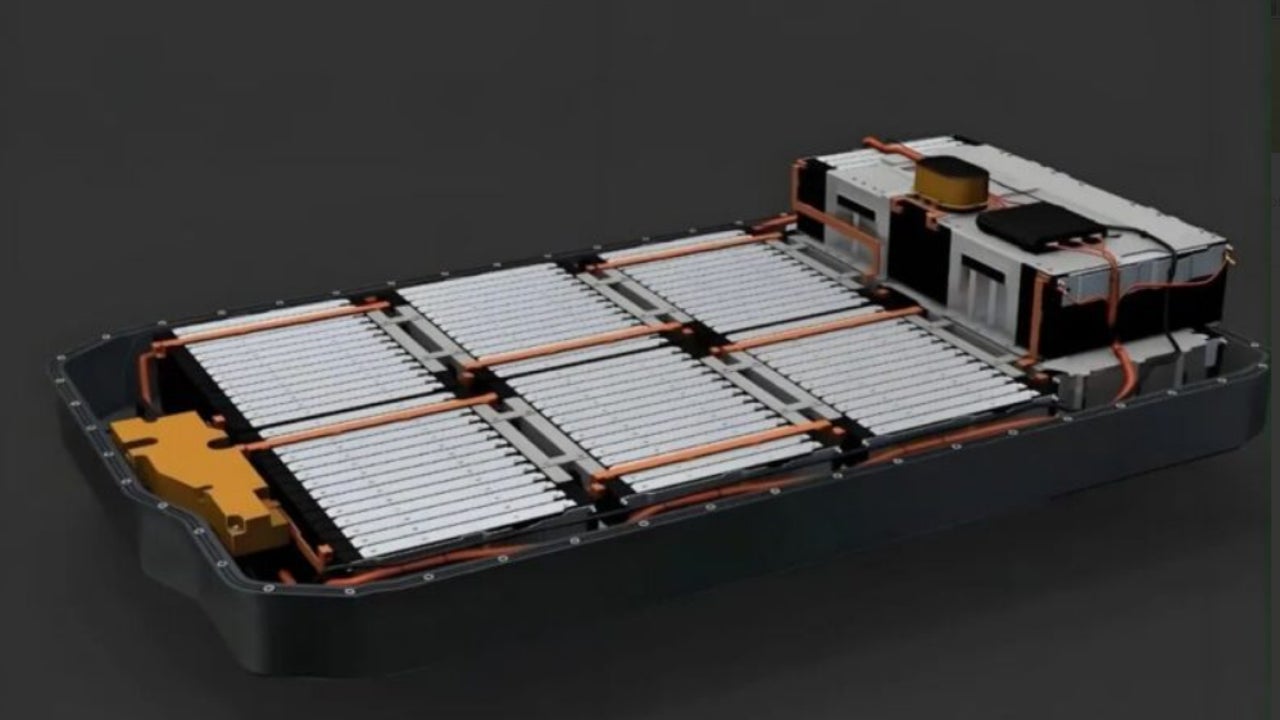
These days Huawei would have presented a patent detailing the design of A solid state battery based on sulphide with energy densities between 360 and 460 wh/kgapproximately two or three times higher than typical batteries of current electric vehicles.
While it is true that Huawei does not manufacture vehicles, it does collaborate closely with car manufacturers for Integrate advanced manufacturing technologies in models of electric vehiclesincluding intelligent systems and, now potentially, its innovations in batteries.
By promoting the development of solid state batteries, Huawei joins a growing list of car manufacturers and global technology companies such as BMW, Mercedes-Benz, Volkswagen and Byd, which compete for Develop safer, light and faster load batteries to transform the future of electric mobility.
Huawei’s patent application reveals that your battery uses A nitrogen sulphide electrolyte doping method (Doping in this case consists precisely in adding nitrogen) to reduce secondary reactions in the lithium interface.
Sulfur electrolytes are a crucial material known for its exceptional conductivity and high cost, which Sometimes it even exceeds gold. Its use in batteries is very sought after, since they facilitate the movement of lithium ions between the cathode and the anode during loading and unloading cycles.
In this way, they play a crucial role in battery performance, influencing factors such as energy density and cyclical stability. These electrolytes can be liquid or solid, and it is precisely the solid state electrolytes that are becoming important due to their potential to overcome the shuttle effect observed in liquid electrolytes.
However, beyond this detail, the company maintains most of its technology secret, as competition to produce solid state batteries intensifies safely. Huawei theorizes that its battery technology could offer an autonomy of approximately 3000 kilometers and reach a 10 % to 80 % load in less than five minutes, which would mark a revolutionary advance for electric vehicles.
While Huawei’s claims have generated enthusiasm, experts warn that These estimates are, for the moment, theoretical, And its practical application depends on the load infrastructure, which has not yet been commercially developed.
Huawei’s incursion is not really strange: Since its beginnings it has innovated in this sector, specifically for mobiles, smart and portable watchesbut this (we know) would be his first time in electric vehicles.
In recent times, China can boast its domain in batteries for electric vehicles. While the megawatt load has monopolized holders Recently, solid state battery technology He has been discreetly developing between racks for some time.
The country is expected to be one of the first to market solid state batteries. Solid state batteries differ from traditional lithium -ion batteries mainly in their electrolyte. Rather A liquid or gel electrolyte, solid state batteries use a solid electrolytewhich offers possible advantages in terms of energy density, security and useful life.