
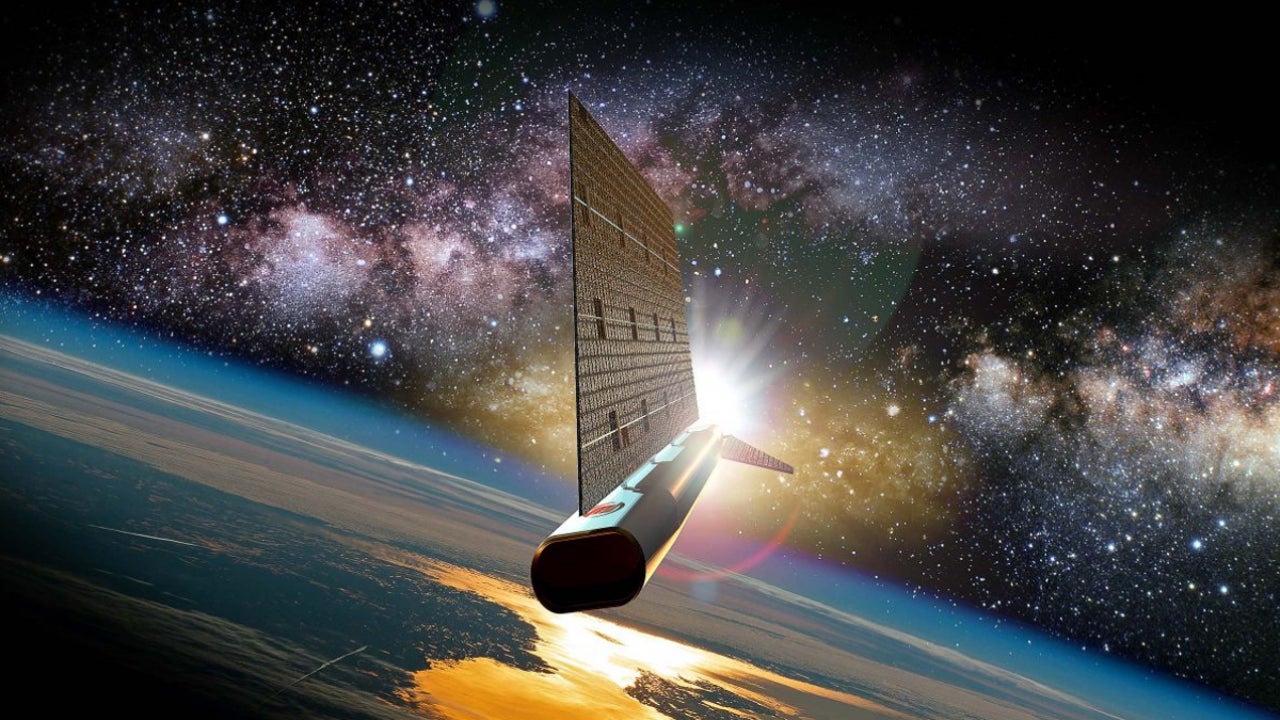
The sun is the largest source of energy in space, producing more energy per second than humanity has consumed in the last 70 years, according to NASA. Most of The spacecraft use solar panels to take advantage of the continuous energy of the sun and provide energy for various needs, such as thermal and payload operations.
Without weight or size limit, the idea of wearing giant solar panels to space would be a logical solution to feed extraplanetary ships. And they have done it. Recently, Redwire Corporation, announced the completion Successful of The first display test of its drop -down solar panels (Rosa) For the Lunar Gateway Space Station. The whole set is known as Irosa for being part of the International Space Station (ISS, in English).
The panels are designed to feed Gateway electric propulsion systems, a small space station that will be the first in lunar orbit. The mission, led by NASA, is expected to be launched in 2027 as very soon. The multipurpose space station will support missions to the lunar surface, science in lunar orbit and human spatial exploration, including missions to Mars.
In total it is about 8 drop -down solar panels 19 meters long by 6 meters wide. Each IROSA unit can generate more than 20 kilowatts of electricity and have been installed to help the ISS maintain their functionality and meet their research and operations needs, since the original solar panels have been degraded over time.
With this robust energy supply, Gateway will offer wide capacities for exploration and research sustained in deep space, What could allow ambitious activities such as the extraction and use of resources, while providing peaceful knowledge of space and improves the safety of astronauts.
Irosa uses a drop -down design, where Flexible solar panels are stored in a compact roll and then displayed in space. This allows us to expose a greater surface to sunlight, generating more energy and minimizing the necessary volume for storage and launch.
Another advantage is that Irosa panels are installed in the ISS in front of the existing solar panels, integrating with the structure and electrical energy system of the station. IROSA technology, too It is being considered for other spatial applications, such as the Lunar Gateway position and the Dart mission.