

Russia has displayed for the first time since the beginning of the invasion of Strategic Bombers Ukraine TUPOLEV TU-160 to carry out missile attacks in Ukrainian territory. This operational change has been confirmed by the Ukraine Air Force, which has assured that Two Tu-160 participated in a formation of seven Russian strategic bombers who launched a coordinated attack a week ago, shooting a total of 36 long-range cruise missiles kh-101 against objectives throughout Ukraine.
This has meant a change against Russia’s usual operation to use bombers TU-95ms For this type of missions. The TU-160, called by NATO as Blackjack, is one of the jewels of the Russian air fleet, The world’s largest and most fast supersonic bomber. Due to its capacities, technical complexity and operational cost it has traditionally been reserved for strategic deterrence functions, but now it is participating in direct combat missions in Ukraine.
The webing operation of Ukraine has caused the entrance to the War of the TU-160
The reason seems to be the Cobweb operation that the SBU (Ukraine Security Service) carried out on June 1 and in which it infiltrated Russia more than a hundred FPV drones. These attacked in a coordinated way Five Russian Air Bases And they damaged or destroyed more than 40 Russian military aircraftincluding strategic bombers TU-95ms, TU-22m3 and TU-160. Ukraine said he had ended with a Third of the Russian Bomber Fleetwhich has led to the entrance of Tu-160 in the war.
TU-95ms vs Tu-160
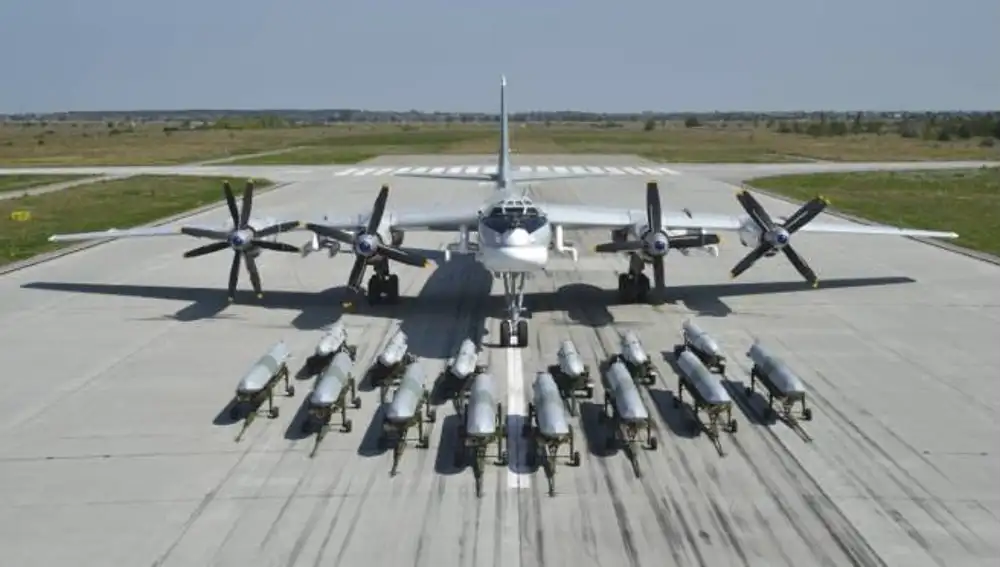
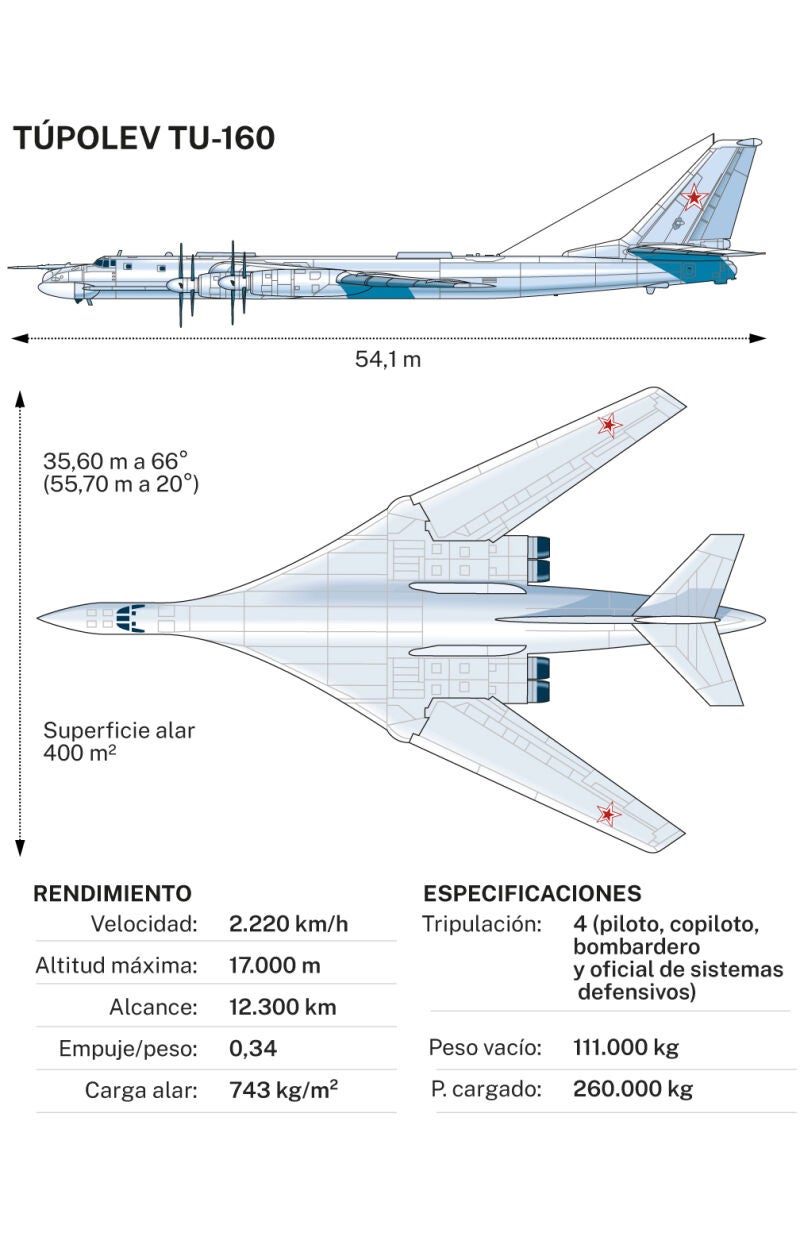
Compared to TU-95ms, the TU-160 represents a Considerable jump in benefits and design. While the TU-95ms is an apparatus with turbophelic propulsion introduced in the 50 Heavy reaction bomber and supersonicconceived for high -speed missions and large payload. You can overcome Mach 2 (2,470 km/h) and has a combat radius of approximately 7,300 kilometers without refueling.
Its speed reduces the exposure time to air defenses, which makes it a platform with the highest survival capacity in hostile environments. The TU-95ms, although reliable and capable of transporting a somewhat smaller missile load, is slower and more vulnerable to modern anti-aircraft systems.
Weapons, power and wings of variable geometry
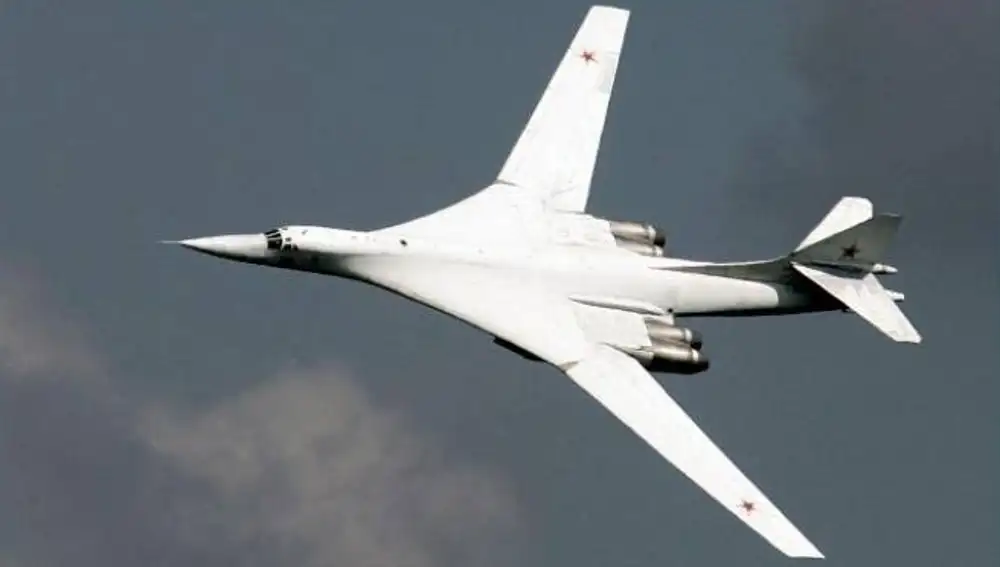
In addition to the KH-101up to 12, the TU-160 can be equipped with a wide variety of weapons, including cruise missiles KH-55SMhypersonic missiles (developing capacity partia the variant TU-160m) and strategic nuclear weapons. Its load capacity reaches 40,000 kilogramsdistributed in two internal wineries.
It is propelled by Four Turbofán Kuznetsov NK-32 motorsthe most powerful ever installed in a bomber, capable of providing not only speed, but also an acceleration sustained in supersonic flight. The plane has a length of 54.1 metersa maximum wingspan (with extended wings) of 55.7 metersand an operational roof of 15,000 meters.
One of its most characteristic elements are its Variable geometry wingsa design that allows you to modify its angle during the flight. In extended positions it offers greater support in takeoffs or cruise speed optimized for consumption, while when retreating at acute angles allows to reach high speeds and improve supersonic flight maneuverability.
The TU-160 does not have a direct equivalent in the Ukraine Air Force, which lacks strategic bombers. Its only reasonable parallel is in the United States with the B-1b Lancera supersonic bomber also with variable geometry wings and designed during the Cold War, although with a more tactical approach and a lower load capacity than the TU-160. He B-2 Spiritalthough more technologically advanced, it follows a different philosophy more focused on stealth than speed.
The Second War of TU-160

Until now, the TU-160 I had only participated in real operations in Syriawhere it was used in 2015 and later years to launch cruise missiles against objectives of the Islamic State from long distances. However, its use was limited and symbolic, focused more on the demonstration of capacities than on tactical need. What happened now in Ukraine Mark Your first sustained use in large -scale conventional combat and reflects an escalation by Russia in its air campaign.