
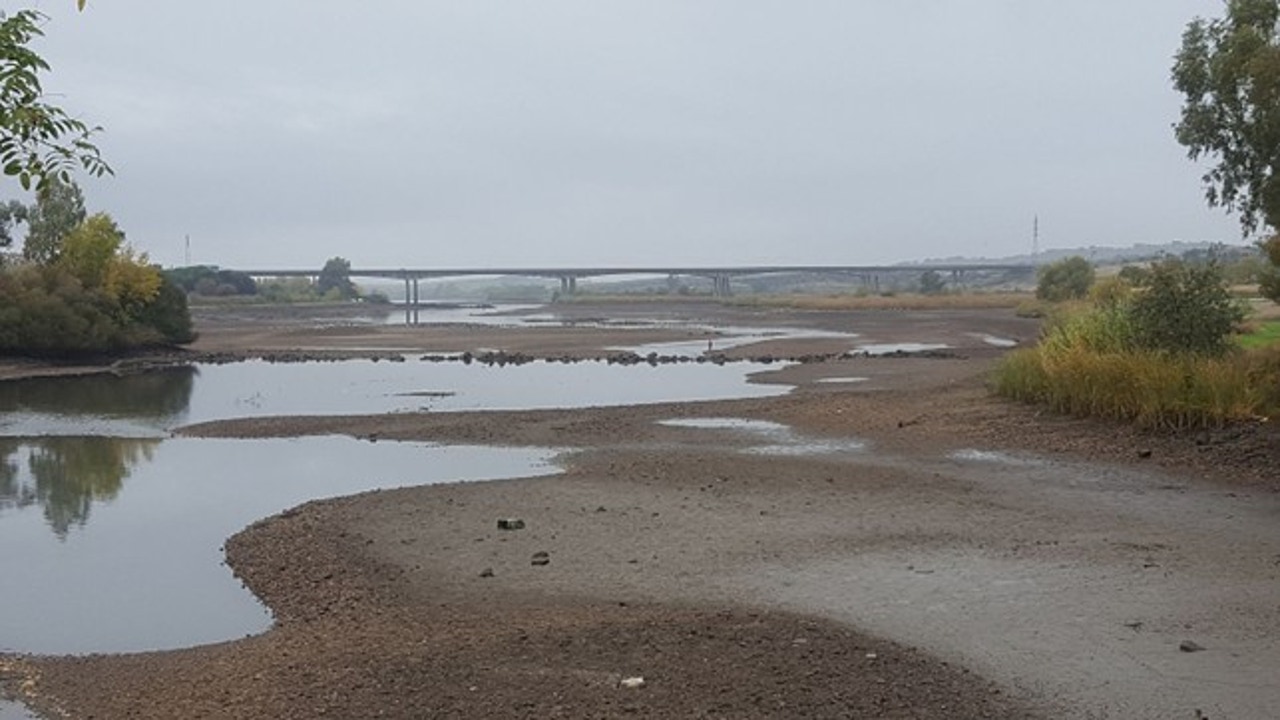
The year 2023 was the driest for rivers around the world since 1991, confirming the trend registered in the last five years in which the river flows have been below normal.
To this decrease in fresh water levels, the fact that glaciers recorded the greatest deprivation of mass recorded to date in the last 50 years should also be added. Specifically, 2023 was the second consecutive year in which all regions of the world, which have glaciers, experience losses of ice.
These are some of the main conclusions of the third annual edition of the Report ‘State of World Water Resources’, prepared by the World Meteorological Organization (OMM).
The report on the state of world water resources, also includes information on the volumes of the lakes and reservoirs, data on soil humidity and more details about glaciers and the equivalent in snow water. It includes contributions from experts in hydrology, including national weather and hydrological services, world data centers, members of the World Hydrological Modeling Community and support organizations such as NASA and the German Center for Research of Geosciences.
Consequences of climate change
In addition, according to scientists, as a consequence of the increase in temperatures, the hydrological cycle has accelerated, which has made it more irregular and unpredictable and makes “we face increasing problems of excess or shortage of water. A warmer atmosphere retains more moisture, which favors intense rainfall. The fastest evaporation and the desiccation of the soils worsen drought conditions, “says Celeste Saulo, general secretary of the OMM.
At the same time, the climatic crisis is making natural meteorological phenomena more and more extreme, with exacerbated impacts and increasingly erratic patterns. 2023 was the hottest year measured on the planet. There were droughts and heat waves and episodes of torrential rain and overflow of rivers that caused deadly floods in North Africa, Europe and in Spain were recorded.
As the OMM general secretary states, “water is the canary in the coal mine of climate change.” “We receive relief signs in the form of rainfall, floods and droughts that are increasingly extreme that a high price in lives, ecosystems and economies are charged. The thaw in general and the thaw of glaciers in particular, threaten the long -term water security of many millions of people. And, however, we are not taking the necessary urgent measures.”
What about rivers?
The year 2023 was characterized by mainly drier river discharge conditions compared to the historical period. As in the previous two years, more than 50% of the worldwide hydrographic basins showed abnormal conditions, most of them deficit. There were fewer basins that showed conditions above normal.
The OMM review shows that, 45% of the territory of the world’s river basins was drier or much drier than its historical average. This figure has passed from the 19% registered in 1991 to 45% of 2,023, which would come to corroborate that, in these 34 years, the percentage of basins and land whose rivers carry less water than normal increases progressively and recurrently.
According to the World Meteorological Organization, the drought and reduction of the flow of the great rivers of the world, such as the Mississipi and the Amazon, affected large areas of the American continent. The Amazon, for example, registered its lowest level since 1902 at the height of the Brazilian city of Manaos. The Asian river basins of the Ganges and the Mekong also registered conditions lower than normal.
On the contrary, other rivers overflowed in areas, such as East Africa, New Zealand or the Philippines, causing floods with tragic consequences. As in different areas of the European continent, in which flows higher than normal were also recorded.
Among the rivers that brought more water than average, the report stands out the Danube and in Dnieper. In the case of Spain, within the areas with less water, the Guadalquivir and Guadiana basins appear. The most flow basins are the Cantabrian and Galicians.
5 reasons to protect rivers
Today, which is celebrated the International Day of Action for Rivers, it is a good time to remember its importance for life on Earth.
Environmental. The rivers play a crucial role in the maintenance of biodiversity. They house a variety of species of fish, aquatic plants and other organisms that depend on fresh water to survive.
Ecological The rivers act as ecological corridors, connecting different habitats and allowing the movement and migration of species.
Economic. Fishing, irrigation and tourism agriculture are just some of the economic activities that depend on rivers.
Industrialists The hydroelectric energy generated by its flow is an important source of renewable and sustainable electricity for many countries.
Cultural and spiritual. For many cultures, rivers have a deep spiritual and symbolic meaning. They are considered sacred and they are attributed healing and purifying powers.